
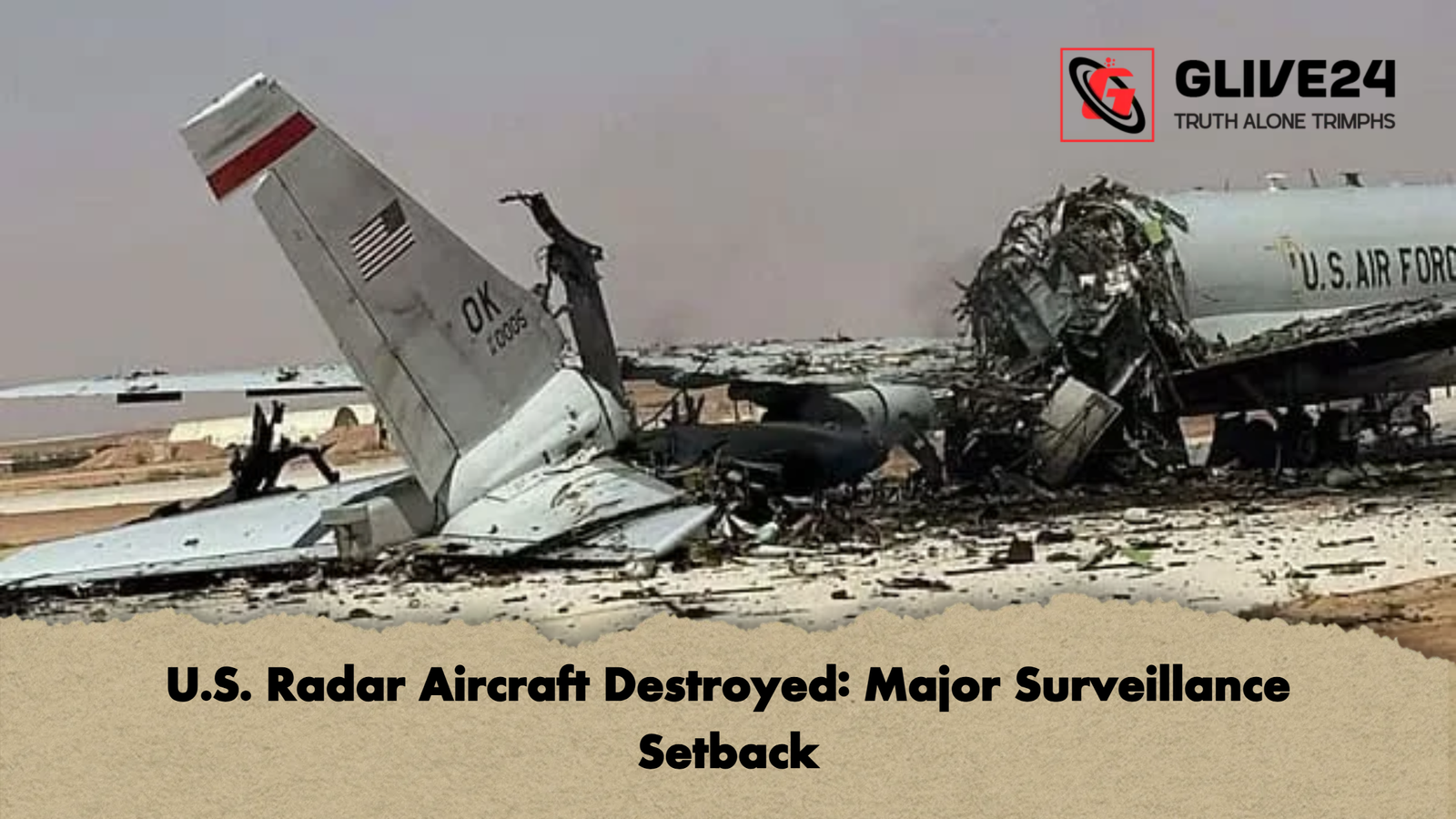
A precision strike by Iranian missiles on a U.S. E-3 Sentry radar aircraft stationed in Saudi Arabia has dealt a significant blow to American aerial surveillance capabilities in the Middle East, analysts warn. The incident raises concerns about Washington’s ability to detect and respond to threats from Iran in real time.
Images analysed by CNN show the wreckage of the aircraft, with its tail section broken and the distinctive dome-shaped radar lying on the tarmac. This radar is a critical component of the Airborne Warning and Control System (AWACS), which provides early warning, battlefield management, and command coordination for U.S. forces. The attack occurred at the Prince Sultan Air Base, a key strategic hub for American operations in the region.
CNN military analyst and former U.S. Colonel Cedric Leighton commented, “The loss of an AWACS aircraft is a substantial hit to U.S. surveillance capability. Without it, coordinating fighter jets and defending against incoming missiles becomes far more challenging.”
The E-3 Sentry aircraft have served as a cornerstone of U.S. military operations for decades. Each aircraft is capable of monitoring up to 120,000 square miles from the sky, simultaneously tracking hundreds of aerial targets, including enemy aircraft and missiles. Currently, the U.S. maintains a fleet of 17 such aircraft, which collectively represent a major strategic advantage.
The following table summarises the key specifications and operational significance of the E-3 Sentry:
| Feature | Description |
|---|---|
| Model | E-3 Sentry (AWACS) |
| Role | Airborne surveillance, command, and control |
| Coverage Area | Approximately 120,000 sq miles |
| Target Tracking | Hundreds of aircraft and missiles simultaneously |
| Fleet Size | 17 aircraft in U.S. service |
| Operational Period | Several decades of active service |
Over the weekend, photos of the destroyed aircraft circulated widely on social media. When cross-referenced with satellite imagery, CNN confirmed that the attack took place at the Prince Sultan Air Base.
An earlier CNN report noted that at least ten U.S. service members were injured in the attack, though fortunately, there were no fatalities.
Experts emphasise that the strike is not merely a tactical loss but also a strategic challenge. The destruction of an AWACS aircraft could temporarily create gaps in early warning and battlefield coordination across the region, compelling the U.S. military to rely more heavily on alternative surveillance platforms and satellite intelligence. The incident underscores the growing risks posed by missile threats in the Middle East and the potential vulnerability of high-value assets even within allied territories.
With tensions already high between Washington and Tehran, analysts suggest that U.S. forces may need to adapt quickly, deploying additional assets to maintain situational awareness and ensure the continued protection of both personnel and strategic infrastructure.