
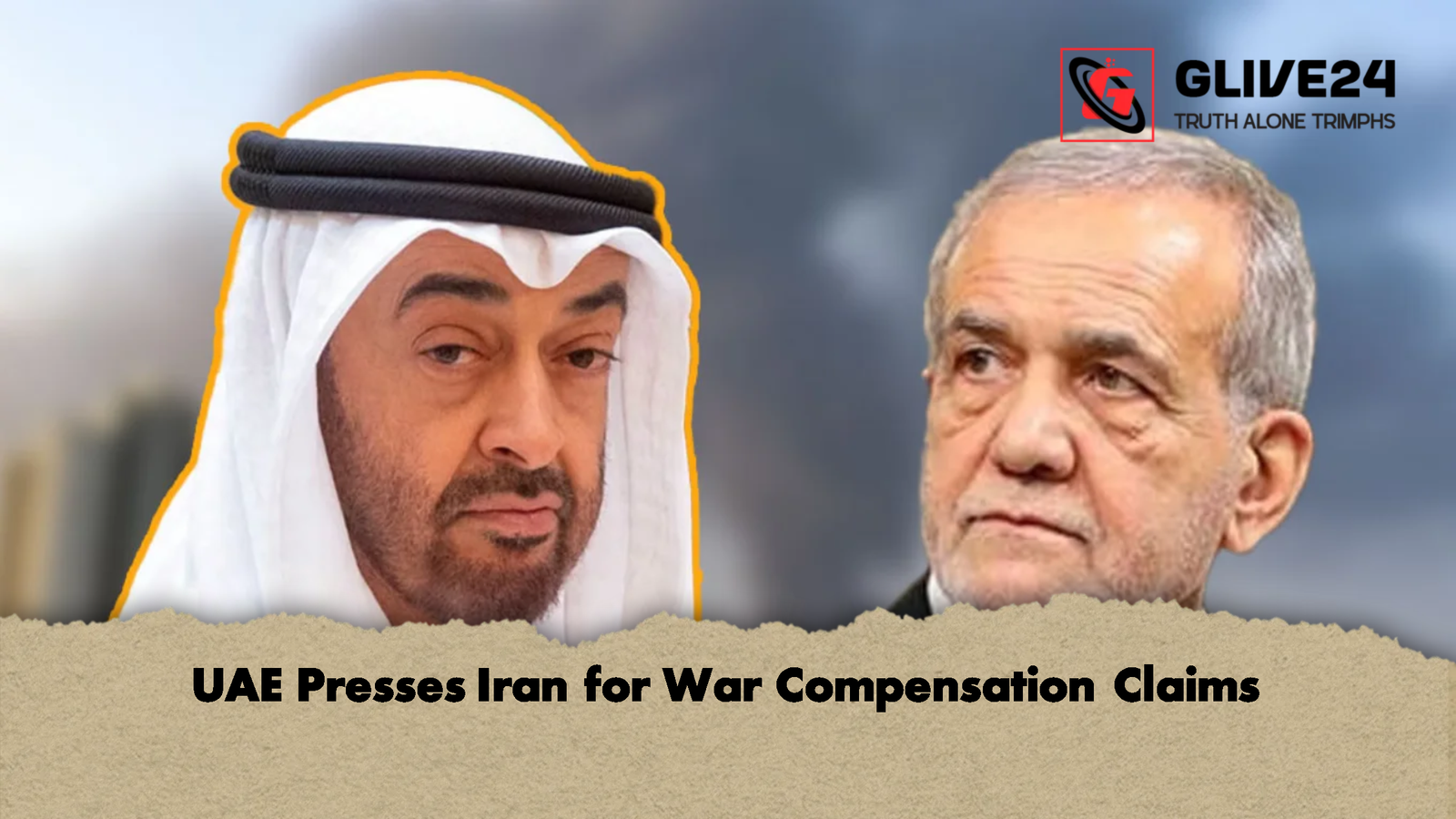
The United Arab Emirates (UAE) has formally demanded that Iran provide compensation for alleged damage to Emirati territory and infrastructure, following recent missile and drone strikes attributed to Tehran amid escalating regional hostilities.
The claim was issued on Sunday by Anwar Gargash, diplomatic adviser to the UAE President, in a statement posted on social media platform X (formerly Twitter). His remarks signal a marked intensification in diplomatic rhetoric between Gulf Arab states and Iran, as tensions across the Middle East continue to rise.
The demand comes against the backdrop of a wider regional conflict that began on 28 February and has now entered its 30th consecutive day. The ongoing hostilities have reportedly involved repeated cross-border strikes and retaliatory actions across several theatres, drawing in multiple regional actors and deepening geopolitical instability.
Table of Contents
UAE Outlines Conditions for Political Resolution
In his statement, Gargash stressed that any meaningful political settlement addressing the crisis in the Gulf region must be built upon several firm and non-negotiable principles, which he described as essential for ensuring long-term stability and preventing renewed escalation.
He set out three central conditions:
- Verifiable guarantees against future attacks, ensuring that no further missile or drone strikes would be launched against neighbouring states
- A binding mutual non-aggression framework between regional countries to reduce the risk of future conflict
- Financial compensation from Iran for alleged damage inflicted on civilian populations and critical infrastructure
According to Gargash, any compensation mechanism should specifically account for destruction caused to residential areas, industrial facilities, and other essential infrastructure components, which he claimed had been impacted by recent military activity.
Accusations of Deception and Escalation
The UAE adviser also accused Iran of having misled neighbouring states prior to the outbreak of the current hostilities. He alleged that Tehran engaged in what he described as a pattern of deceptive diplomacy before the escalation of the conflict.
Gargash characterised Iran’s conduct as part of a “deliberate pattern of aggression”, arguing that such actions have severely undermined trust between Iran and Gulf Cooperation Council (GCC) member states.
In strongly worded remarks, he further described Iran as a “primary threat to Gulf Arab security”, reflecting the increasingly hardened stance taken by several Gulf governments amid the ongoing crisis.
Wider Regional Context and Reciprocal Claims
The UAE’s demand forms part of a broader pattern of reciprocal accusations and compensation claims emerging from all sides of the conflict. Iran had previously sought compensation from both the United States and Israel, alleging that military actions by those countries caused significant damage to Iranian territory.
The UAE’s latest position therefore represents a mirrored diplomatic response, suggesting that compensation claims may become a formalised element of future negotiations or post-conflict settlement discussions.
Analysts note that this development highlights the increasing legal and economic dimensions of the conflict, which is no longer confined solely to military confrontation but is now extending into diplomatic and financial arenas.
Comparative Positions on Compensation
| Party | Position on Compensation | Basis of Claim |
|---|---|---|
| Iran | Previously demanded compensation from the United States and Israel | Alleged military strikes causing domestic damage |
| United Arab Emirates | Now demanding compensation from Iran | Alleged missile and drone strikes on Emirati infrastructure |
| Gulf Arab states (as outlined by UAE) | Call for non-aggression guarantees and security assurances | Protection of regional stability and civilian safety |
Rising Diplomatic Strain in the Gulf Region
The UAE’s public stance reflects growing concern among Gulf Arab states regarding the potential spillover effects of the conflict, particularly in relation to energy infrastructure, civilian safety, and regional trade stability.
By linking compensation demands to broader security guarantees, Abu Dhabi appears to be advocating for a structured post-conflict framework. Such a framework, if adopted, would combine financial restitution with binding political commitments designed to prevent further escalation.
However, as of now, Iran has not issued an official response to the UAE’s latest demand.
With the conflict now extending into its second month, diplomatic observers anticipate further exchanges of accusations and counterclaims. There are increasing concerns that the dispute may become entrenched within a prolonged diplomatic and legal standoff, complicating efforts to achieve immediate de-escalation or a comprehensive peace settlement.