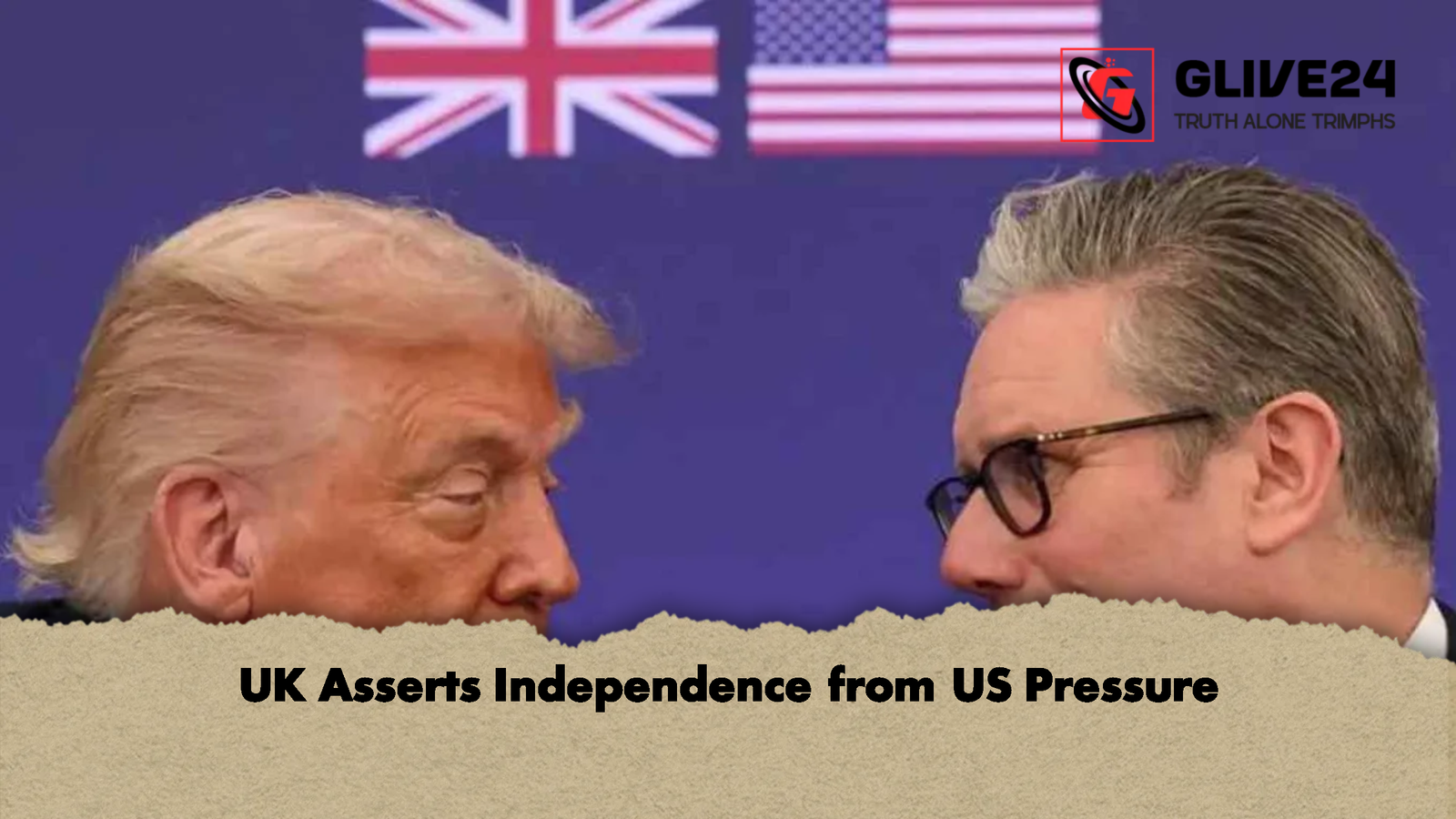
The United Kingdom has made a clear and measured response to former US President Donald Trump’s threats, asserting that London is not compelled to automatically comply with American demands. UK officials simultaneously characterised Trump as an “extremely transactional” leader, emphasising that his repeated statements on Iran should be interpreted in that context rather than as binding directives for British foreign policy.
Table of Contents
Government Position on US Demands
When asked about Trump’s warning that allies could face reprisals if they fail to provide ships to reopen the Strait of Hormuz, UK Minister for Work and Pensions Pat McFadden stated that Britain is under no obligation to act solely because the US requests it.
Addressing Trump’s criticisms over Britain’s perceived “lack of enthusiasm” in supporting US and Israeli operations in Iran, McFadden urged the distinction between presidential rhetoric and substantive policy matters. He noted to the Financial Times that Trump had expressed frustration at the UK not sending vessels to the strait—a strategically vital maritime route currently disrupted by Iranian counterattacks—highlighting the threat to international trade.
Strategic Planning and Defensive Measures
Rather than dispatching ships, the UK plans to deploy mine-clearing drones to maintain safe navigation through the strait. Officials emphasise that blindly following Trump’s demands could intensify tensions and escalate the regional crisis.
McFadden commented: “The Prime Minister and President will discuss these matters directly. I cannot presently provide a detailed list of equipment or assets. Our stance is that we do not wish to become a primary combatant in this conflict.”
Context of UK-US Relations
Despite these tensions, McFadden reassured that the longstanding UK-US alliance remains robust, underpinned by strong personal and institutional ties. “This does not mean the UK must automatically endorse every US intervention or decision,” he added.
Prime Minister Keir Starmer has made significant efforts to maintain positive relations with Trump, including extending a second state visit to the White House, unprecedented in recent British diplomatic history. Nonetheless, Trump has repeatedly criticised Britain’s cautious stance regarding military support in Iran, including remarks earlier this month suggesting Starmer was “not Winston Churchill.”
Public and Legal Justifications
Downing Street emphasises that Britain’s defensive posture—including monitoring Iranian drones and missile activities—aligns with international law and reflects public opinion. The government seeks to support regional security while avoiding direct engagement in offensive operations.
A telephone conversation between Starmer and Trump on 15 March reaffirmed shared concern over reopening the Strait of Hormuz to global shipping, a key step in stabilising international commodity prices disrupted by ongoing Middle East tensions.
UK Policy Overview
| Issue | UK Stance | Notes |
|---|---|---|
| US demands for ships | Not automatically obliged | Exploring alternative measures, avoiding direct confrontation |
| Strait of Hormuz | Maintain safe passage | Deploying mine-clearing drones rather than combat vessels |
| Support for US-Israel operations | Defensive only | Avoid becoming primary combatant |
| UK-US alliance | Strong and enduring | Personal and institutional ties remain intact |
| Legal alignment | Complies with international law | Reflects British public opinion |
The UK’s approach reflects a pragmatic balance: supporting regional stability while asserting independence in foreign policy, signalling to both allies and adversaries that British decisions are guided by law, strategic interest, and national priorities rather than external pressure.