
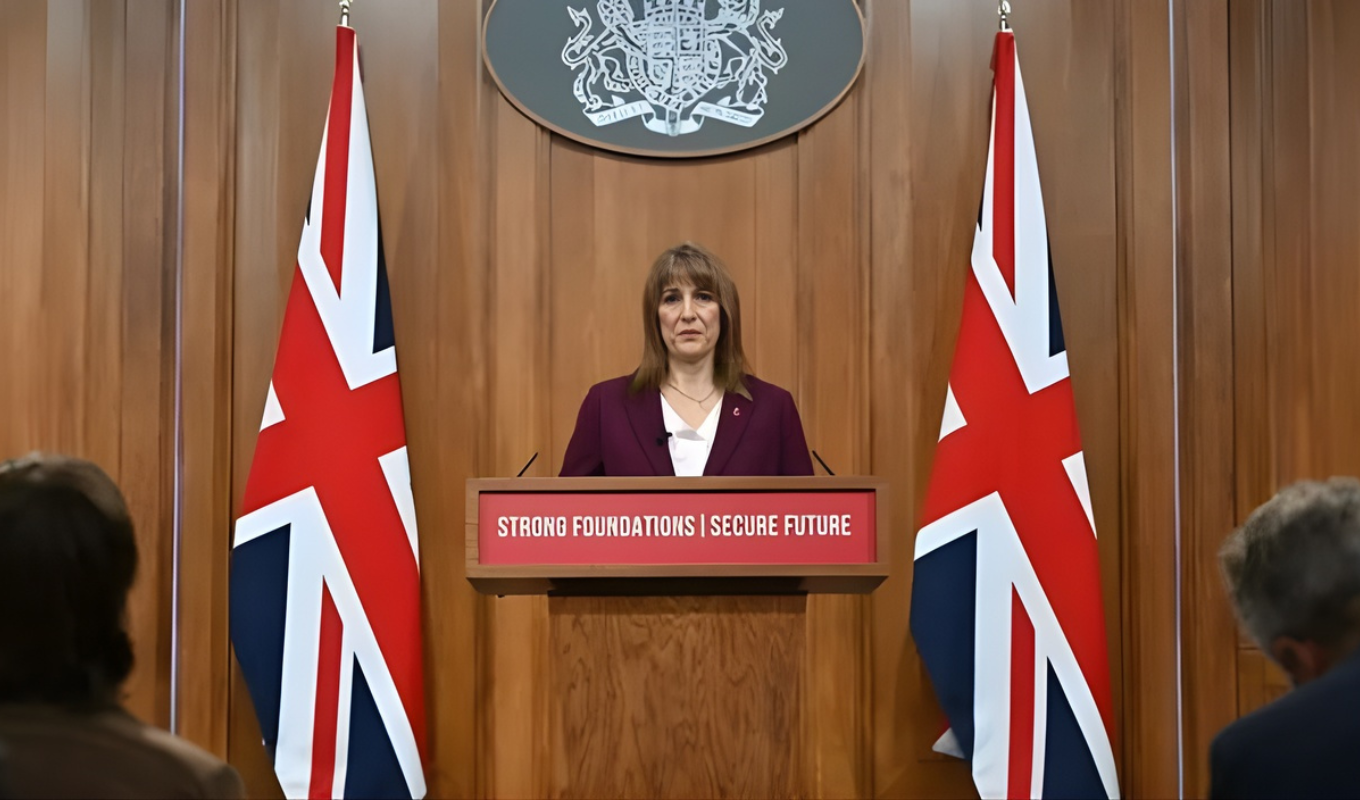
Britain’s economy showed signs of further weakness in the third quarter, with official data released on Thursday revealing a slowdown that adds to the challenges facing the Labour government as it prepares for its annual budget.
Gross Domestic Product (GDP) grew by just 0.1 percent in the July-September period, a significant decline from the 0.3-percent growth recorded in the second quarter, according to the Office for National Statistics (ONS).
The growth figure was well below the 0.2 percent expansion that analysts had anticipated for the third quarter, adding to concerns about the state of the economy.
This latest data follows earlier figures showing that UK unemployment had risen more than expected, reaching 5.0 percent in the third quarter, just ahead of the crucial November 26 budget statement.
Since taking power in July last year after 14 years of Conservative leadership, Prime Minister Keir Starmer’s Labour Party has faced challenges in driving consistent economic growth. Many analysts point to decisions made by Chancellor of the Exchequer Rachel Reeves, particularly her decision to raise business taxes in her first budget last year, as a contributing factor to the country’s sluggish economic performance.
Reeves has signalled that taxes could rise again on certain salaries in the upcoming budget, aimed at reducing government debt and ensuring the funding of public services.
“There’s more to be done to build an economy that works for working people,” said Reeves in response to the latest economic figures. “At my budget later this month, I will take the fair decisions to build a strong economy,” she added.
In September alone, the economy contracted by 0.1 percent, largely due to a cyberattack on car manufacturer Jaguar Land Rover, which disrupted the manufacturing sector, according to ONS data.
“Growth slowed further in the third quarter with both services and construction sectors weaker than in the previous period,” said Liz McKeown, ONS Director of Economic Statistics. “There was a particularly marked fall in car production in September, reflecting the impact of a cyber incident, as well as a decline in the often-erratic pharmaceutical industry,” she added.
The third-quarter growth figure was a significant drop from the 0.7 percent expansion seen in the first quarter of the year, highlighting the ongoing economic difficulties.