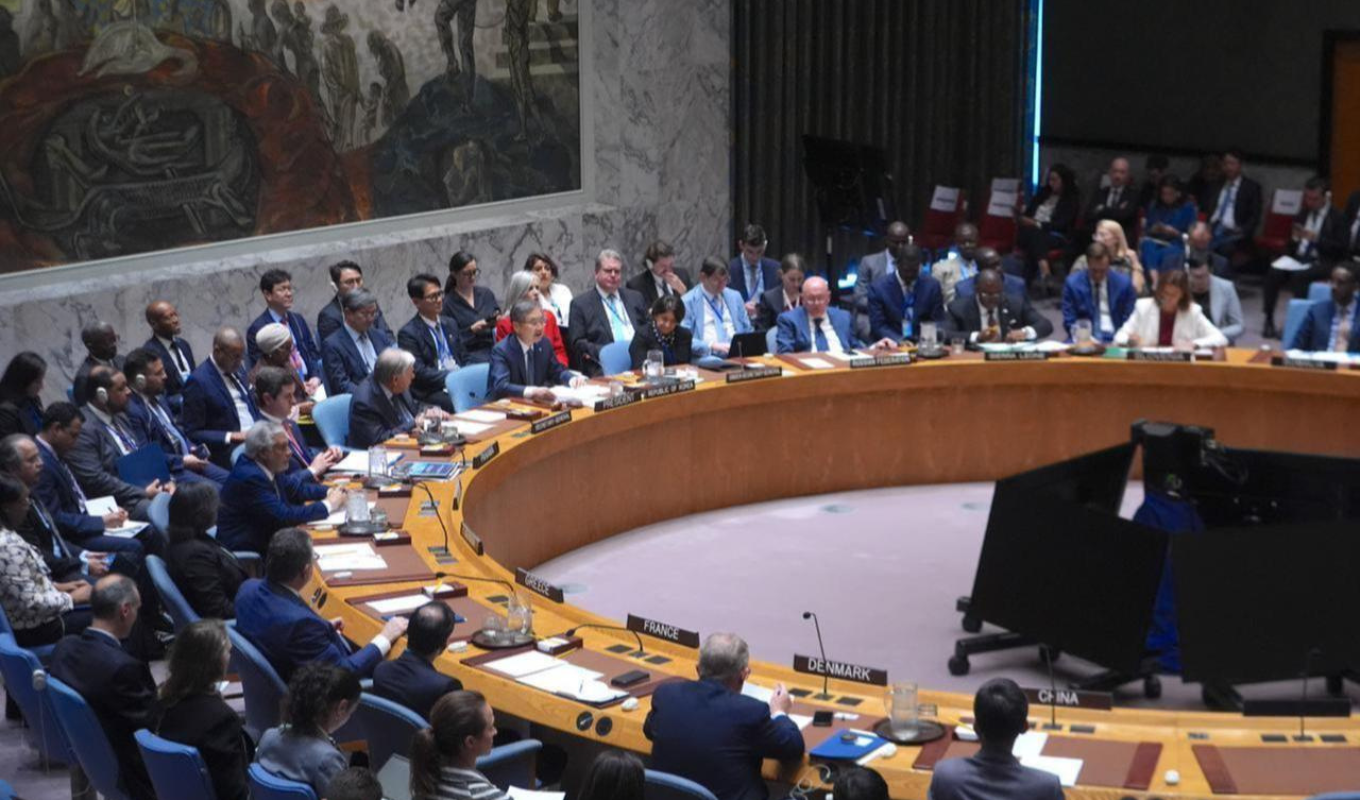
The United Nations Security Council on Friday voted in favour of a resolution endorsing Morocco’s autonomy plan for Western Sahara, describing it as the “most feasible” solution to the decades-long territorial dispute. The decision sparked widespread celebrations in Rabat, while drawing sharp condemnation from Algeria.
Western Sahara, a vast and mineral-rich former Spanish colony, remains largely under Moroccan control. However, the territory has been contested for decades by the pro-independence Polisario Front, backed by Algeria.
Previously, the Security Council had called on Morocco, the Polisario Front, Algeria and Mauritania to resume dialogue in pursuit of a comprehensive settlement. But under the initiative of the administration of former US President Donald Trump, the Council pivoted towards supporting Morocco’s 2007 proposal, which grants Western Sahara autonomy under Morocco’s exclusive sovereignty.
The resolution was passed with 11 votes in favour, three abstentions, and Algeria declining to participate. It stated that autonomy for Western Sahara within Moroccan sovereignty could serve as the basis for future negotiations aimed at resolving the conflict, which has persisted for half a century.
“Genuine autonomy under Moroccan sovereignty could constitute the most feasible solution,” the resolution declared.
King Mohammed VI of Morocco hailed the Security Council’s endorsement as a “historic” moment, saying, “We are opening a new and victorious chapter in the process of reaffirming the Moroccan identity of the Sahara.”
In Rabat, thousands of jubilant citizens flooded the streets, dancing and singing in celebration of the UN vote. “The Sahara is Moroccan and always has been!” they chanted, interspersing patriotic slogans with the national anthem.
Meanwhile, in Smara, a city located within the disputed region, residents celebrated the news by setting off fireworks as soon as the outcome was announced.
The resolution builds upon a significant shift in US foreign policy initiated by Donald Trump in 2020. During his first term, Trump formally recognised Morocco’s claim over Western Sahara in exchange for Morocco’s decision to normalise relations with Israel— a move that fulfilled major diplomatic ambitions for both Rabat and Washington.
Since then, key European powers including Spain, France, Britain and Germany have publicly voiced support for Morocco’s sovereignty over the territory.
Trump, who has repeatedly sought to bolster his credentials as a global peacemaker and has expressed aspirations of receiving a Nobel Peace Prize, often highlights his administration’s role in mediating conflicts from Gaza to Kashmir.
UN envoy for Western Sahara, Staffan de Mistura, welcomed Washington’s renewed engagement with the issue but expressed concern over what he described as a “lack of detailed provisions” in Morocco’s autonomy framework.
Algerian Ambassador Amar Bendjama sharply criticised the adopted text, saying it “does not faithfully or sufficiently reflect the UN doctrine on decolonisation.”
“It falls short of the expectations and legitimate aspirations of the people of Western Sahara, represented by the Polisario Front, who have resisted for over 50 years for the right to determine their own destiny,” Bendjama added.
The Security Council’s resolution calls upon UN Secretary-General António Guterres and Special Envoy de Mistura to initiate negotiations based on the Moroccan plan to reach a mutually acceptable settlement. It also extends the mandate of the UN peacekeeping mission in Western Sahara for an additional year.