
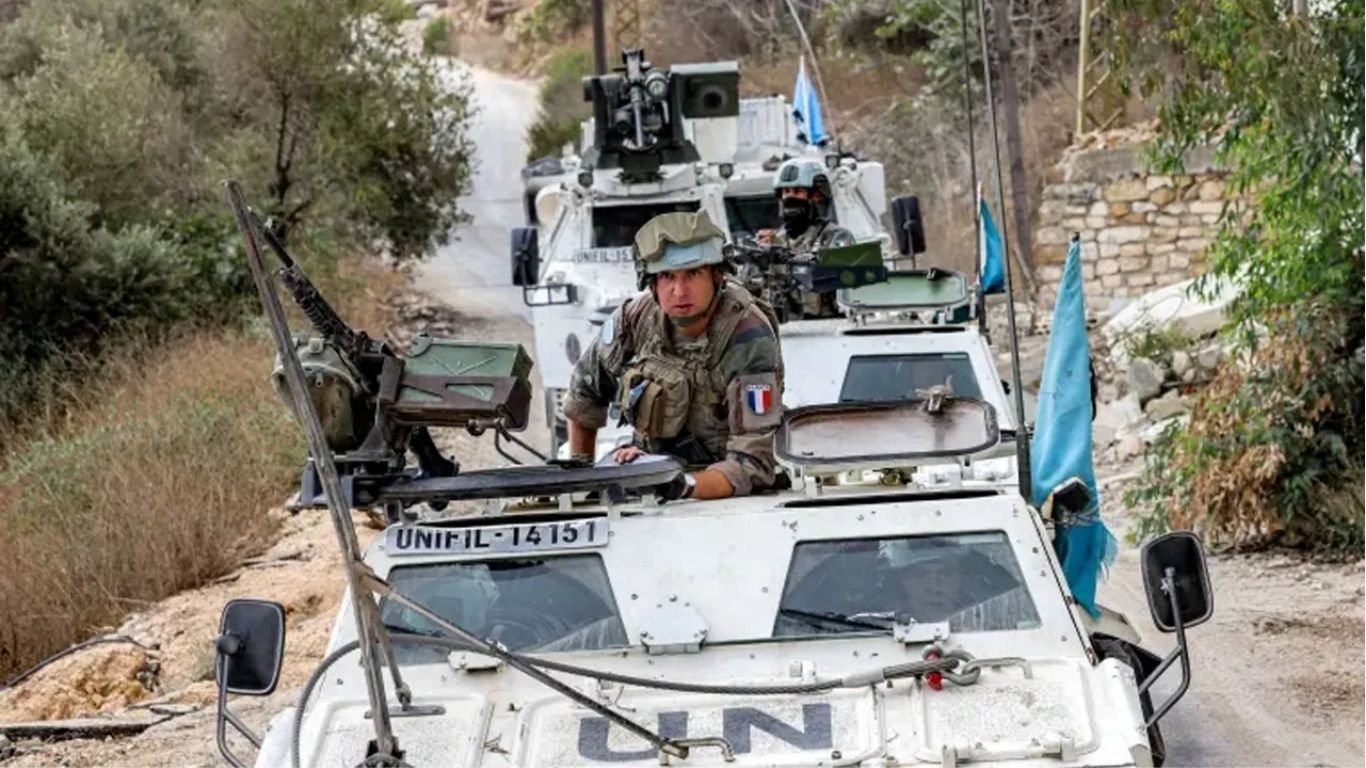
Tensions along the Lebanese–Israeli border escalated further on Sunday after UNIFIL confirmed that its peacekeepers came under fire from an Israeli Merkava tank positioned near an Israeli-built structure on Lebanese soil. The heavy machine-gun fire landed perilously close—around five metres—from the peacekeepers, who were carrying out a planned patrol in the area.
The Israel Defense Forces later claimed the incident was the result of misidentification during “poor weather conditions,” saying that troops believed they had sighted two suspicious figures and fired warning rounds to deter them. Once the individuals moved away, a subsequent review revealed that they were in fact UN peacekeepers, not hostile actors. The IDF emphasised that no deliberate shot had been directed towards UN personnel.
UNIFIL said the presence of the Israeli tank prevented their patrol team from withdrawing immediately, forcing them to wait nearly half an hour before they could safely relocate. While no casualties were reported, the near miss has heightened concern among international observers.
The incident comes at a sensitive time. UNIFIL and the Lebanese Army have been jointly enforcing a fragile ceasefire negotiated last November following months of cross-border exchanges between Israel and Hezbollah, intensified by regional instability following the outbreak of the Gaza conflict. Under Resolution 1701, which ended the 2006 war, Israel was required to withdraw fully from southern Lebanon. However, it continues to hold five positions it considers strategically vital, a stance Lebanon and UN officials say undermines long-term stability.
Israel’s ongoing air and ground attacks inside Lebanon, justified by claims of targeting Hezbollah fighters, have repeatedly placed civilians and international personnel in danger. UNIFIL has previously accused Israel of endangering its peacekeepers, and Sunday’s incident adds to a growing list of violations.
In a strongly worded statement, the peacekeeping mission urged the IDF to halt all forms of aggressive conduct near its personnel, warning that such actions not only breach international agreements but also risk triggering a wider escalation in one of the Middle East’s most volatile border zones.