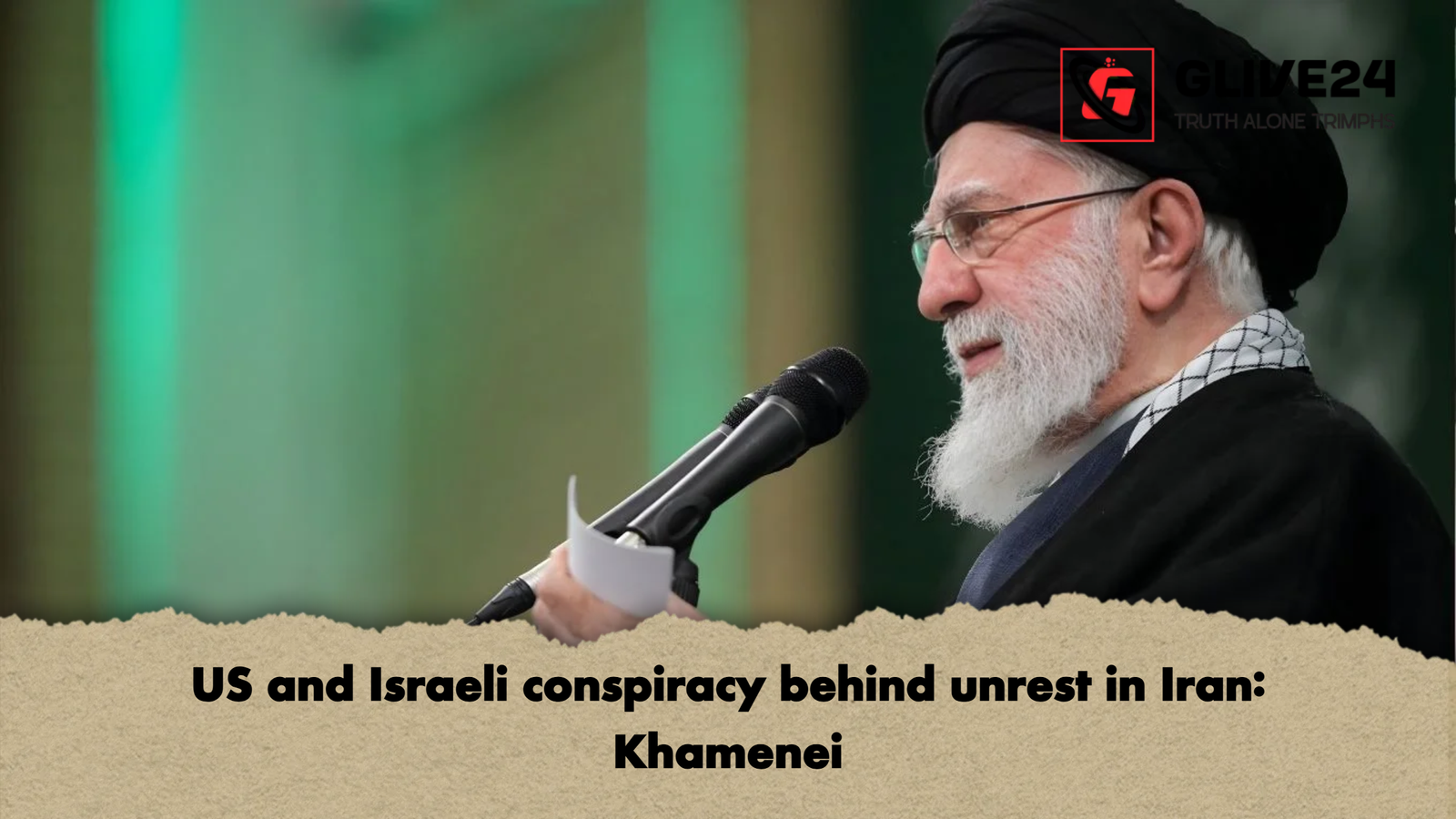
Iran’s Supreme Leader, Ayatollah Ali Khamenei, has accused the United States and Israel of orchestrating the recent wave of unrest and protests across Iran, describing the situation as a calculated conspiracy aimed at undermining the Islamic Republic. Breaking a notable period of public silence, Khamenei made the remarks during a graduation ceremony for police cadets in Tehran, signalling the leadership’s firm stance amid continuing domestic tension.
In his address, Khamenei rejected the notion that the demonstrations were a spontaneous or organic expression of popular discontent. Instead, he argued that the disturbances were deliberately engineered by Western powers and their regional allies, who, in his view, have long sought to halt Iran’s political, economic and scientific progress. According to the Supreme Leader, foreign actors exploited a moment of national grief to advance a broader destabilisation agenda.
Central to his comments was the death of 22-year-old Mahsa Amini, whose passing in custody triggered widespread protests. Khamenei acknowledged that her death was deeply painful and sorrowful, stressing that it had caused genuine distress among Iranians from all walks of life. However, he sharply distinguished between public mourning and what he characterised as organised violence. Acts of arson, vandalism and attacks on public and religious property, he said, could not be justified under any circumstances and did not reflect the values or intentions of ordinary citizens.
The Supreme Leader claimed that the United States and Israel had been “waiting for an opportunity” and seized upon Amini’s death as a pretext to incite unrest. In his assessment, hostile foreign media outlets and intelligence networks played a significant role in amplifying tensions, spreading misinformation and encouraging confrontation with state institutions.
During the speech, Khamenei offered strong praise for Iran’s security forces, commending them for what he described as restraint and dedication in the face of provocation. He asserted that individuals who disrupted public order under the banner of protest were, in reality, advancing the objectives of Iran’s enemies. By contrast, he portrayed the wider population as committed to national unity and stability, insisting that the Iranian people would not allow external conspiracies to succeed.
Khamenei concluded with a stern warning against foreign interference in Iran’s internal affairs. He emphasised that any attempt to disturb the country’s security with outside backing would be met with decisive action. At the same time, he sought to reassure citizens that the unrest would not derail Iran’s long-term development, maintaining that the nation had endured similar challenges in the past and emerged resilient.
The Supreme Leader’s remarks underscore the leadership’s narrative that recent protests are primarily driven by external manipulation rather than domestic grievances. This position continues to shape official responses and policies as Iran navigates a period of heightened internal and external pressure.
Key Elements of Khamenei’s Address
| Aspect | Main Points |
|---|---|
| Cause of unrest | Alleged US and Israeli conspiracy |
| Mahsa Amini’s death | Described as tragic but exploited politically |
| Nature of protests | Characterised as organised violence, not spontaneous |
| Role of security forces | Praised for protecting public order |
| Message to foreign actors | Zero tolerance for interference |
| Assurance to citizens | Unrest will not hinder national progress |
Together, these statements reflect Tehran’s determination to frame the crisis as a matter of sovereignty and resistance to foreign influence, while reinforcing the authority of state institutions at a critical juncture.