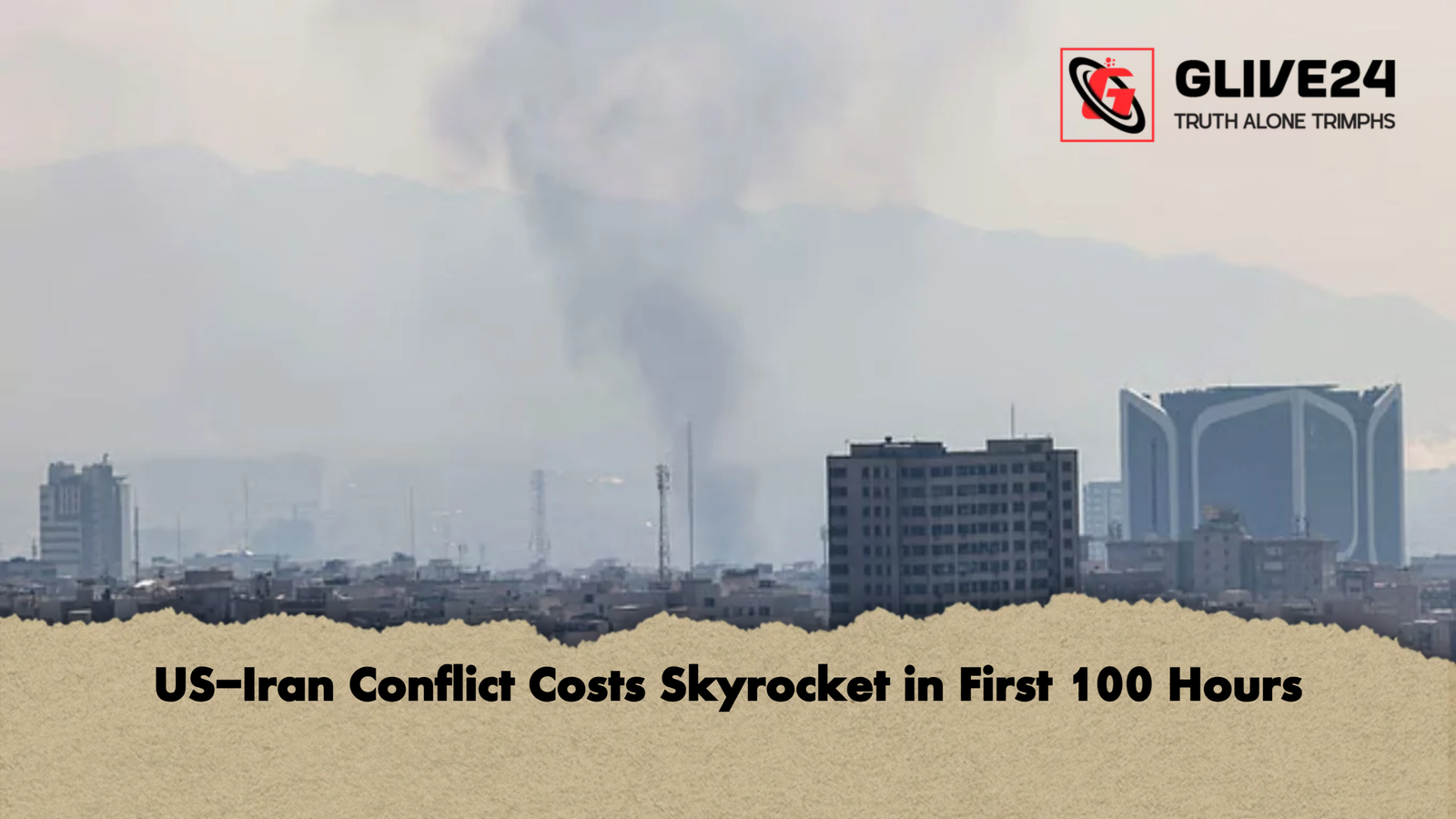
The initial 100 hours of the United States and Israel’s recent military operations against Iran have already incurred staggering costs, with Washington reportedly spending nearly $3.7 billion. This equates to an average of approximately $891.4 million per day, primarily driven by the extensive deployment of munitions and advanced weaponry.
A recent analysis by the Washington-based think tank, the Centre for Strategic and International Studies (CSIS), has highlighted the extraordinary financial scale of the operation. As of the seventh day of the conflict, the United States continues to utilise stealth bombers and precision-guided ordnance in sustained strikes against Iranian targets.
Researchers Mark Cancian and Chris Park emphasised that only $200 million of the $3.7 billion expenditure fell within pre-approved defence budgets. The remaining $3.5 billion was spent outside standard allocations, meaning the Pentagon may soon request additional funds to cover the shortfall. Such moves could present significant political challenges for the Trump administration and become focal points for anti-war criticism.
Domestically, rising inflation, increased energy prices, and the broader cost of living could further reduce public support for the conflict. President Donald Trump, who pledged during his campaign to avoid foreign wars, now faces mounting scrutiny, even among his own political base.
Due to limited public disclosure from the Department of Defense, CSIS based its analysis on estimated unit costs and logistical data provided by the Congressional Budget Office (CBO). The following table summarises early munitions usage and associated costs during the first 100 hours:
| Expenditure Category | Quantity / Details | Cost (USD) |
|---|---|---|
| Munitions Used | 2,000+ | $3.7 billion |
| Resupply Costs | 2,000+ | $3.1 billion |
| Daily Spending Outside Budget | – | $758.1 million |
US Secretary of Defense Pete Hegseth has indicated that bombardments over Iran are set to escalate dramatically, with additional fighter squadrons, enhanced defensive capabilities, and more frequent airstrikes expected in the coming days. Analysts note that while military intensity often fluctuates, expenditures outside budgeted allocations are likely to remain extraordinarily high.
Humanitarian consequences have already begun to emerge. The Iranian Red Crescent reports that at least 1,332 people have been killed since the outset of the conflict, including 181 children. The Lebanese Ministry of Public Health confirms that at least 123 fatalities occurred in Lebanon this week, with an additional 26 deaths reported across Iran, the United States, Israel, and Gulf Arab nations.
The CSIS report underscores that covering these costs will require additional funding, posing both political and administrative challenges for Washington. It also highlights how rapidly military operations can generate both financial strain and widespread humanitarian impact in just a matter of days.