
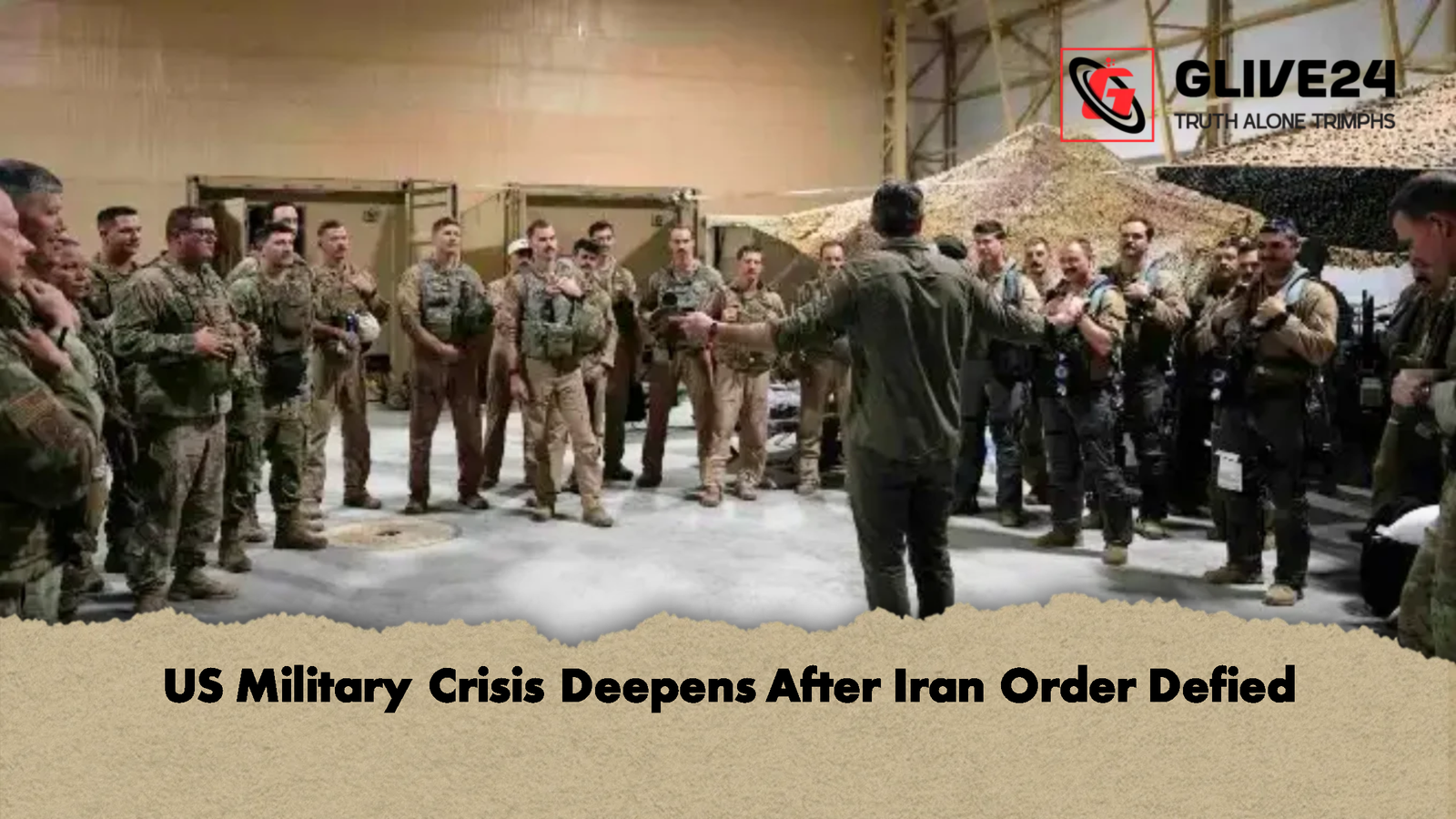
A deepening constitutional and military crisis has erupted in the United States after senior commanders reportedly refused to carry out a directive from Donald Trump to launch a large-scale ground operation against Iran, triggering the dismissal of a dozen top-ranking generals and exposing a rare and गंभीर rift between the White House and the armed forces.
According to emerging reports, the order—issued amid escalating tensions in the Middle East—was rejected by senior military leadership, including the Chairman of the Joint Chiefs of Staff. The refusal has reportedly led to the removal of at least 12 high-ranking officials in what analysts are describing as one of the most significant leadership shake-ups in modern US military history.
The extraordinary development has fuelled intense debate in Washington over whether the officers acted in accordance with legal and constitutional obligations by resisting what they may have considered an unlawful or strategically unsound directive, or whether their stance represents an unprecedented breach of civilian control over the armed forces.
Table of Contents
Command structure under strain
Supporters of the directive argue that the President, as Commander-in-Chief, holds ultimate authority over military operations, and that any resistance from senior officers undermines the established chain of command. From this perspective, the dismissals are being framed as a necessary step to preserve operational discipline and civilian supremacy.
However, critics warn that the situation reflects a dangerous erosion of institutional safeguards designed to prevent politically driven military escalation. They argue that experienced military leaders serve as a critical check against impulsive or destabilising decisions, particularly in relation to sensitive regions such as the Middle East.
Some defence analysts have further cautioned that replacing senior commanders with politically aligned figures could increase the risk of miscalculation, potentially drawing the United States into a wider and more unpredictable conflict in the region.
Fallout within the Pentagon
The dismissals have reportedly created significant disruption within the Pentagon’s command structure. Questions are now being raised about how key leadership vacancies will be filled and what impact the upheaval may have on ongoing military operations and strategic planning.
Military insiders describe an atmosphere of heightened uncertainty, with concerns that the internal dispute could undermine cohesion at a time of growing international tension. The scale of the personnel changes has also raised concerns among allies, who are closely monitoring the stability of US command structures.
Key developments at a glance
| Category | Details |
|---|---|
| Issuing authority | Donald Trump |
| Reported directive | Large-scale ground operation against Iran |
| Military response | Refusal by senior commanders |
| Officials removed | 12 top-ranking officers |
| Senior figure affected | Chairman of Joint Chiefs of Staff (reported) |
| Core issue | Civilian control vs military legal judgement |
| Strategic concern | Potential escalation in Middle East |
Broader implications
The standoff has sparked wider debate over the balance of power between political leadership and military command in the United States. While civilian oversight of the armed forces remains a cornerstone of American governance, the scale of the dismissals has raised fears of institutional instability during a period of heightened geopolitical volatility.
International observers are also watching closely, warning that prolonged internal discord within the US defence establishment could weaken deterrence and complicate diplomatic efforts to de-escalate tensions involving Iran and the broader Middle East.
As the situation continues to unfold, both political and military institutions in Washington face mounting pressure to restore clarity in the chain of command and prevent further escalation of what is rapidly becoming a highly sensitive constitutional and strategic crisis.