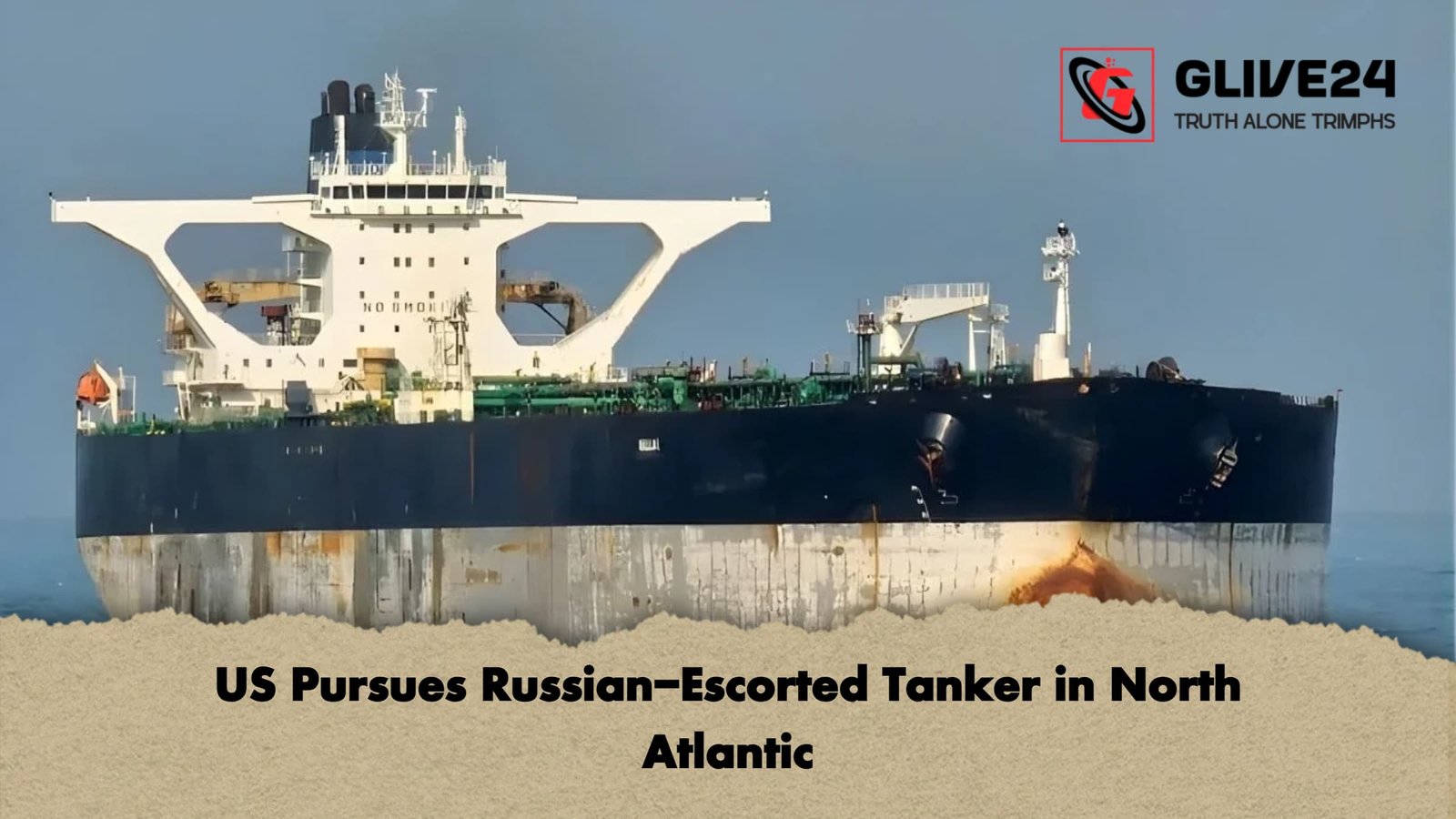
A volatile maritime confrontation is unfolding in the North Atlantic as United States forces close in on a tanker linked to Venezuelan oil interests. The vessel, formerly identified as the Bella 1 but recently rechristened the Marinera, has become the focal point of a geopolitical tug-of-war involving Washington, Moscow, and the recently destabilised administration in Caracas.
A Shadowy Transatlantic Flight
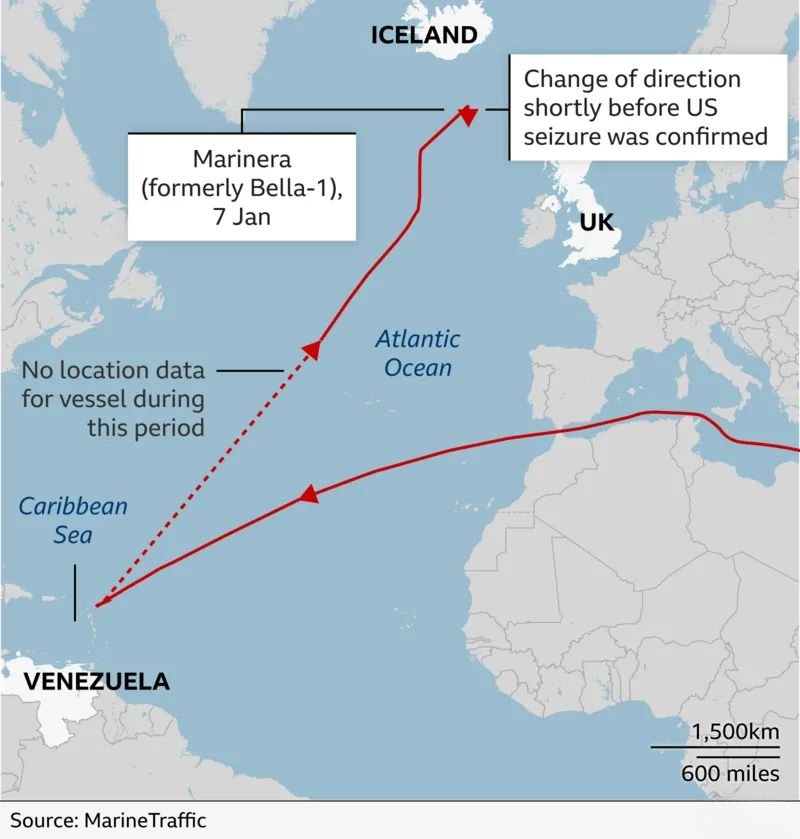
The Marinera is currently navigating the waters between Iceland and the British Isles, shadowed by an escalating military presence. According to US officials, the vessel has undergone a “dark fleet” transformation, switching its registry from Guyana to the Russian Federation mid-voyage to evade a US seizure warrant.
The Kremlin has responded by deploying a submarine and several naval escorts to protect the tanker. Meanwhile, the US has mobilised approximately ten military transport aircraft and a fleet of helicopters, signalling a potential boarding operation. This escalation follows President Donald Trump’s recent mandate for a “blockade” of sanctioned vessels—a policy enacted shortly after the dramatic extraction of Nicolás Maduro from Caracas by US forces.
Table: Tracking the ‘Marinera’ Standoff
| Category | Details | Geopolitical Significance |
| Identity | IMO-tracked (formerly Bella 1) | Fixed identity despite name/flag changes. |
| Current Flag | Russian Federation | Grants sovereign protection under UNCLOS. |
| Escort Force | Russian Submarine & Navy | Heightens risk of direct military friction. |
| US Assets | Legend-class Cutter & Aircraft | Signals intent for physical seizure. |
| Location | 300km South of Iceland | Proximity to UK/NATO maritime zones. |
| Allegation | Sanctions Evasion | Transporting Iranian/Venezuelan crude. |
The Legal and Military Impasse
The reflagging of the Marinera represents a sophisticated legal gambit. Maritime intelligence analysts note that while a ship’s underlying identity (IMO number) remains constant, the Russian flag complicates enforcement. Under the UN Convention on the Law of the Sea, “stateless” vessels are vulnerable to boarding; however, a Russian-flagged ship is technically a sovereign extension of Moscow.
Despite this, Washington remains resolute. US officials have indicated a preference for seizing the vessel rather than sinking it, citing its history of transporting sanctioned Iranian and Venezuelan oil. The US Southern Command has maintained a posture of “vigilance,” asserting its readiness to intercept “vessels of interest” transiting the region.
A Potential NATO Flashpoint
The Kremlin has voiced “grave concern” regarding the “disproportionate attention” afforded to a vessel it describes as “peaceful.” This standoff places the United Kingdom in a delicate position, as the vessel has recently skirted the western coast of the UK. While the Ministry of Defence has declined to comment, any US military operation launched from or near British territory would traditionally require prior diplomatic notification.
As the Marinera continues its journey through the North Atlantic, the world watches to see if the US will risk a direct confrontation with Russian naval escorts. The situation serves as a stark reminder of how maritime trade routes have become the new front lines in a broader global conflict over energy and sovereignty.