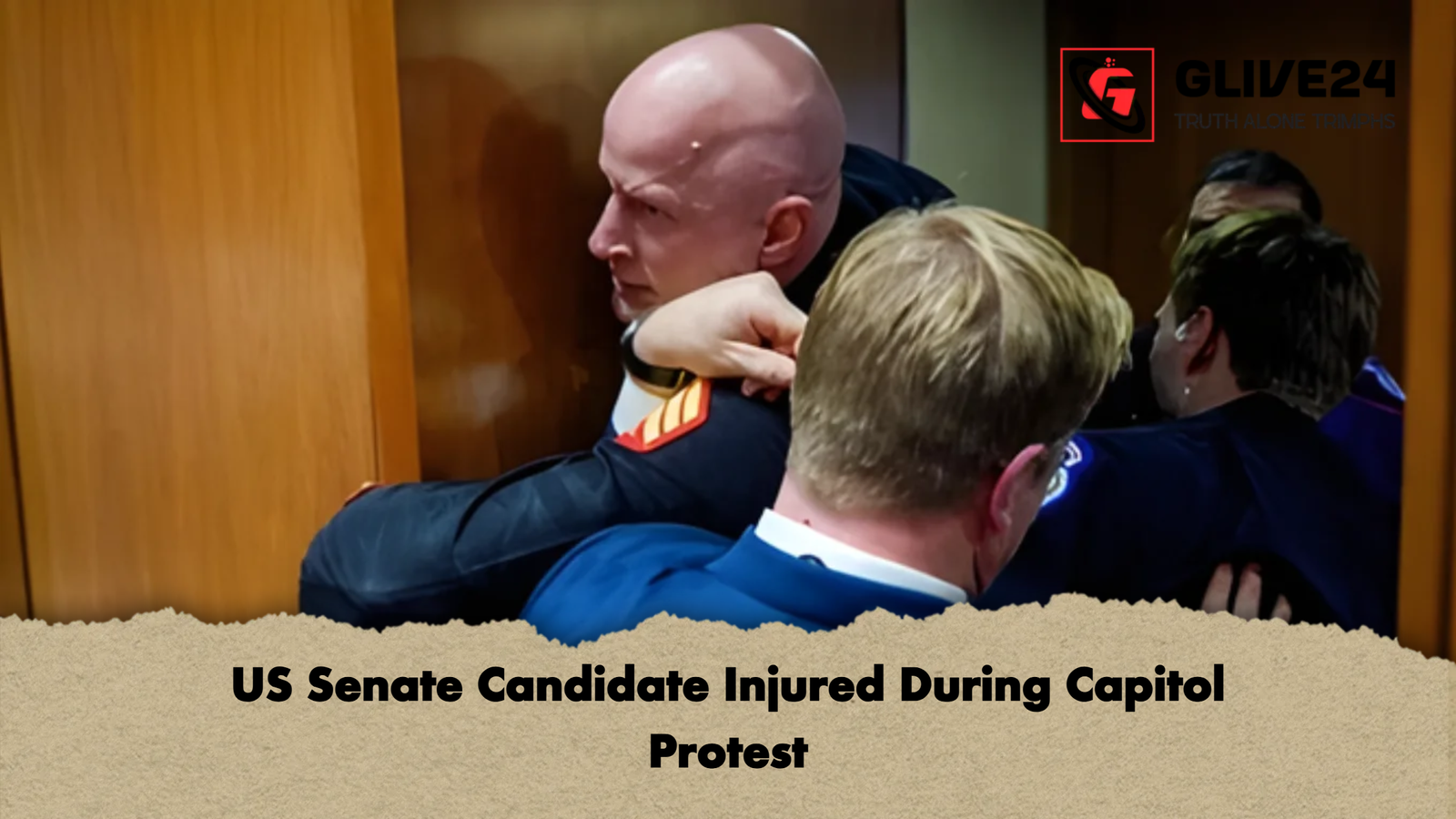
Washington D.C., United States – A tense and dramatic confrontation at the United States Capitol left Brian McGinnis, a Green Party candidate for the North Carolina Senate and former U.S. Marine, seriously injured after his right arm was reportedly broken during a scuffle with Capitol Police. The incident occurred on Wednesday, 4 March, during a Senate Armed Services Subcommittee hearing attended by senior military officials.
Table of Contents
Incident Overview
Eyewitnesses report that McGinnis suddenly stood during the hearing and began shouting slogans in support of Iran, claiming that Israel was responsible for ongoing international conflicts. His vocal protest immediately drew the attention of Capitol Police officers present in the chamber.
Attempts to remove McGinnis from the hearing room quickly escalated into a physical confrontation. According to multiple accounts, three police officers and Republican Senator Tim Sheehy of Montana were involved in subduing the candidate as he resisted removal. Video footage captured McGinnis holding onto the door while shouting:
“Nobody wants to fight for Israel!”
During the altercation, McGinnis sustained a fractured right arm and later reported serious injuries to his left hand. Colleagues and fellow attendees reacted in alarm, with some screaming in panic as the scuffle unfolded.
McGinnis has since stated that he was exercising his right to protest, but Capitol Police and Senate officials assert that his actions obstructed official proceedings and endangered personnel.
Official Responses
Senator Tim Sheehy posted on social media that he had stepped in to de-escalate the situation, explaining that McGinnis appeared intent on creating a violent disruption within the Capitol chamber.
The Capitol Police confirmed that McGinnis resisted removal and engaged in a physical struggle with officers. He has been formally charged with assault, unlawful demonstration, and obstruction of official business.
A Capitol Police spokesperson said:
“McGinnis assaulted officers and violently impeded official proceedings. Appropriate legal action has been taken to ensure accountability and maintain the safety of all personnel present.”
Key Facts of the Incident
| Date | Location | Individual | Event Description | Injuries Sustained |
|---|---|---|---|---|
| 4 March 2026 | U.S. Capitol, Senate Hearing | Brian McGinnis | Protesting in support of Iran; resisted removal by police | Right arm broken; serious left-hand injury |
| 4 March 2026 | U.S. Capitol, Senate Hearing | Capitol Police Officers | Physically engaged to remove protester | Minor bruises reported |
| 4 March 2026 | U.S. Capitol, Senate Hearing | Senator Tim Sheehy | Intervened to de-escalate confrontation | None |
Political and Security Implications
The incident has raised serious questions regarding security protocols during high-profile congressional hearings, particularly when politically charged protests occur. Analysts note that this case highlights the challenge of balancing free speech with the safety and continuity of official proceedings.
Experts emphasise that while peaceful protest is a protected right under U.S. law, interfering with legislative proceedings or threatening the safety of elected officials and staff constitutes a serious criminal offence. The scuffle involving McGinnis marks a rare escalation within the historically secure environment of the Capitol, underscoring vulnerabilities that may require review.
Broader Context
The altercation also reflects heightened political tensions in Washington D.C., particularly surrounding contentious debates over foreign policy and Middle Eastern conflicts. Lawmakers have suggested reviewing chamber security procedures to prevent similar incidents in the future, balancing protection for officials with constitutional rights to protest.
McGinnis is expected to face legal proceedings in the coming weeks. Meanwhile, Capitol authorities are reviewing potential reforms to enhance security during congressional hearings and to prevent further disruptions in legislative chambers.
The incident serves as a stark reminder of the risks posed by politically motivated protests in secure government spaces and raises broader questions about how legislative institutions manage safety without compromising democratic freedoms.