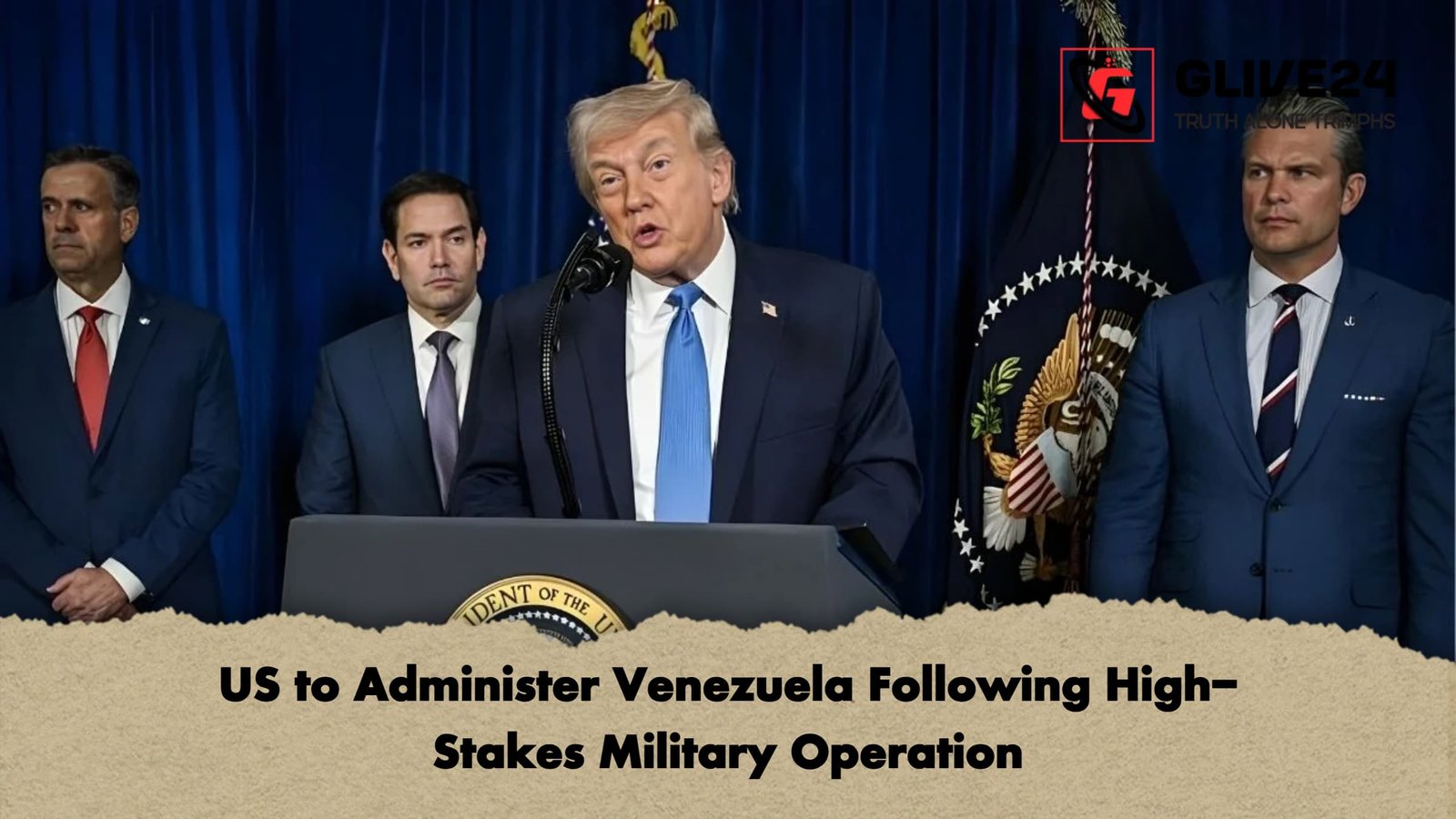
In a dramatic shift in global geopolitics, President Donald Trump has announced that the United States will effectively govern Venezuela on a temporary basis following a lightning military raid that resulted in the capture of President Nicolás Maduro.1 Speaking to reporters at his Mar-a-Lago estate on Saturday, 3 January 2026, the President asserted that American oversight is necessary to ensure a “peaceful and proper” transition of power.2 He made it clear that US involvement would be total, stating, “We are going to run the country” until such a time as a new administration can be established.3
The operation, codenamed Operation Absolute Resolve, involved elite units from the 1st Delta Special Operations Detachment.4 Under the cover of darkness, US forces disabled Venezuelan air defences before launching a series of strikes across the capital, Caracas.5 President Maduro and his wife, Cilia Flores, were reportedly extracted from their residence and are currently being transported by a US warship to New York.6 There, they face a litany of federal charges, including narco-terrorism and cocaine importation conspiracies, dating back to indictments first issued in 2020.7
Key Logistics of the Venezuela Intervention
| Feature | Operational and Strategic Details |
| Operational Codename | Operation Absolute Resolve |
| Primary Execution Force | US Delta Force (supported by over 150 aircraft) |
| Capture Date | Saturday, 3 January 2026 (approx. 2:00 am local time) |
| Legal Status of Targets | Indicted in the Southern District of New York |
| Immediate Economic Goal | Reconstruction of oil infrastructure by US firms |
| US Casualty Status | Zero fatalities reported; minor injuries only |
The President’s vision for a post-Maduro Venezuela is heavily centred on its vast natural resources.8 Trump revealed that American oil giants—which he described as the “greatest in the world”—would soon enter the country to repair and operate its severely dilapidated oil infrastructure.9 He argued that the revenue generated from these operations would serve as “reimbursement” for the damages he claims the Maduro government caused to the United States.10 He also warned that the US military remains poised for a “second and much larger attack” should any elements of the former regime attempt to resist the transition.11
While the operation was hailed as a triumph by many Republican leaders in Washington, it has sparked a firestorm of international condemnation.12 The United Nations and several Latin American nations, including Brazil and Mexico, have described the raid as a blatant violation of international law and a dangerous precedent for state sovereignty.13 Conversely, some of Trump’s regional allies, such as Argentine President Javier Milei, celebrated the move as a victory for liberty.14
Domestically, the intervention has drawn sharp criticism from Democratic lawmakers, who accused the President of overstepping his constitutional authority by launching a war without Congressional approval.15 Despite the legal and diplomatic outcry, Trump remains undeterred.16 He dismissed the procedural concerns of his critics, comparing the success of the Caracas raid to the perceived failures of past administrations and declaring that the United States is “not a laughingstock anymore.”