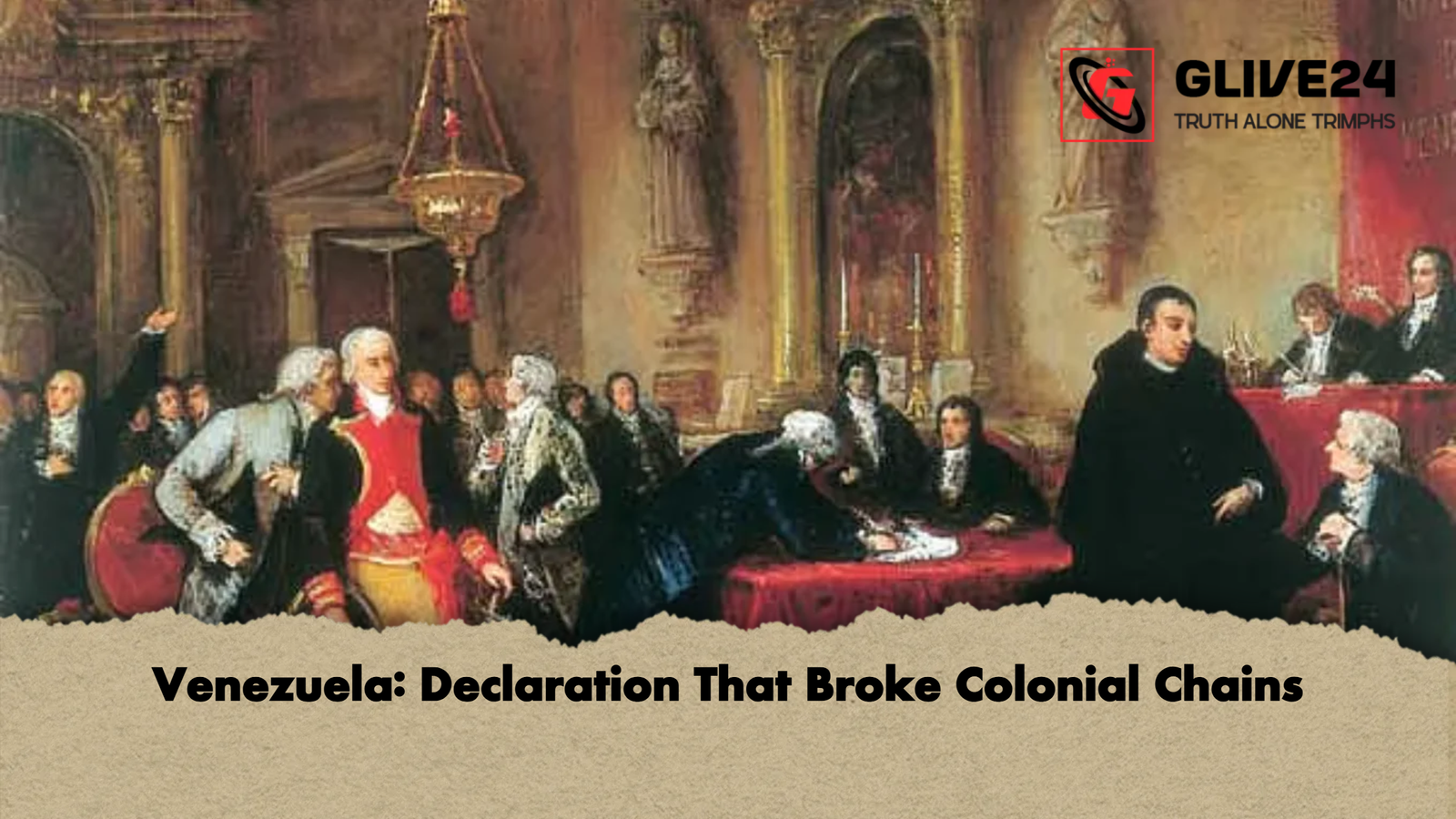
Venezuela’s declaration of independence on 5 July 1811 stands as a landmark political document in Latin American history. It marked a courageous stride towards modern statehood, breaking the shackles of Spanish colonial rule. While the declaration did not immediately trigger armed revolt, it reflected a far-reaching political vision, anticipating shifts in the Atlantic world’s turbulent geopolitics and the instability of European monarchies. This seminal act would later pave the way for broader independence movements across Latin America.
Table of Contents
Historical Context
The backdrop to Venezuela’s struggle for independence was Napoleon Bonaparte’s 1808 invasion of Spain. When Napoleon deposed King Ferdinand VII and placed his brother Joseph Bonaparte on the Spanish throne, the legitimacy of the Spanish Empire was thrown into crisis. News of this power vacuum reached Spain’s American colonies, creating political uncertainty and prompting elite factions in Caracas to reconsider their loyalties.
Initially, the Creoles—Venezuelans of Spanish descent born in the Americas—remained loyal to the monarchy. However, the formation of a local “Junta” in Caracas on 19 April 1810 signalled the rise of revolutionary thought. The elite realised that continued allegiance to a distant European crown jeopardised their political and social survival, highlighting the necessity of an independent, sovereign state.
Philosophical Foundations
The Declaration drew heavily on eighteenth-century European Enlightenment thought. Echoing the American Declaration of Independence and the French Revolution, it enshrined principles such as Popular Sovereignty, Social Contract, and Natural Rights. Philosophers like Jean-Jacques Rousseau, John Locke, and Montesquieu influenced the Venezuelan intellectual elite, emphasising that legitimate power stems from the people rather than divine sanction. This philosophy underpinned the creation of a new, democratic republic challenging the authoritarian Spanish monarchy.
Justification for Independence
The document highlighted the inequities and impracticalities of Spanish rule, citing geographic distance and demographic imbalance as fundamental obstacles.
| Aspect | Detail |
|---|---|
| Declaration Date | 5 July 1811 |
| Governing Body | Caracas Junta |
| Key Principles | Popular sovereignty, social contract, natural rights |
| Immediate Aim | End Spanish monarchy allegiance |
| Strategic Significance | Laid foundation for Latin American independence |
It argued that governing a vast American territory from a small European peninsula was both unnatural and detrimental to the welfare of its people. Venezuelan leaders condemned economic exploitation, blockades of ports, and the branding of peaceful citizens as rebels, presenting a reasoned administrative argument for self-rule.
Nation-Building and Sovereignty
Beyond ending Spanish control, the declaration fostered a new Venezuelan identity, enabling citizens to see themselves as members of a sovereign nation with a distinct language, culture, and political aspiration. The declaration asserted full rights to wage war, establish peace, form alliances, and engage in international trade—a recognition of modern political sovereignty under international law.
Struggle and Recognition
Practical independence proved arduous. Leaders such as Simón Bolívar and Francisco de Miranda faced prolonged, bloody conflict against Royalist forces. After a decade of warfare, Venezuela achieved full independence, illustrating that freedom is not a gift but the fruit of sustained struggle. International recognition, including from Britain and the United States, was slow, as powers sought to maintain relations with Spain.
The declaration concluded with a solemn pledge by Venezuelan representatives to defend the nation’s sovereignty, property, and honour—a legal and moral charter of statehood.
Venezuela’s independence remains a testament to the power of political vision, legal legitimacy, and unwavering resolve. Its struggle inspired liberation movements across Latin America and continues to resonate with freedom-seekers worldwide.