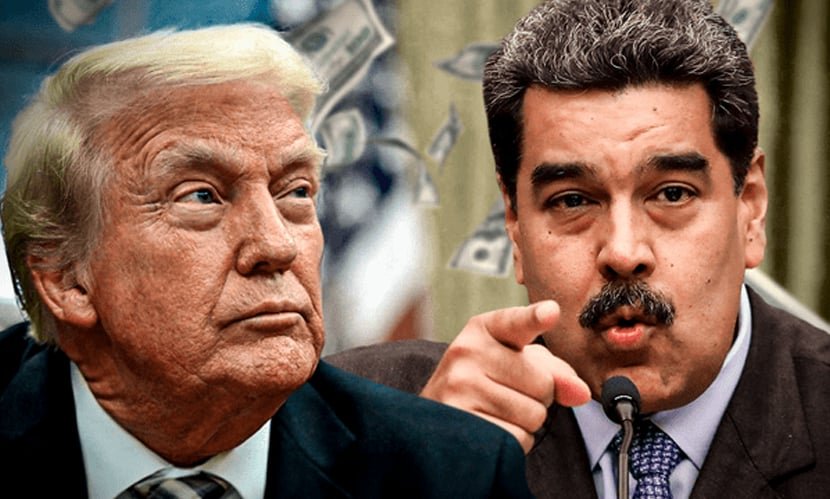
Over the past two months, U.S. forces have been massing around Venezuela’s coastal waters, launching successive deadly attacks on civilian boats. These strikes are framed by President Donald Trump’s administration as part of a “war on drug-related terrorism.” Any person suspected of involvement in drug trafficking along Latin America’s coasts has effectively been deemed a valid target. Already, more than 80 civilians have reportedly died. At the same time, hawks within the administration are pushing for broader military interventions to forcibly remove Venezuelan President Nicolás Maduro.
This troubling pattern reflects long-standing critiques of counterterrorism strategy. Geographer Stuart Elden, in his book Terror and Territory, notes that focusing exclusively on non-state actors obscures the role of the state itself in generating terror. States routinely engage in practices that instil fear, and historically, state actions have caused far more deaths than the terror committed by non-state groups.
Empirical research confirms these observations. The Costs of War project at Brown University estimates that from 2001 to 2023, U.S.-led counterterrorism operations resulted in over 400,000 direct civilian deaths. Indirect fatalities—including deaths caused by the destruction of medical and water infrastructure—push this figure to roughly 3.5 million. Economic sanctions imposed concurrently have also proven deadly; recent studies suggest that from 2010 to 2021, sanctions contributed to roughly 500,000 additional deaths per year.
Trump’s administration is now attempting to extend these methods into Venezuela, consolidating unprecedented presidential authority over military action. By circumventing judicial oversight and weakening accountability, the White House claims the sole power to define “terrorists” and determine when lethal force may be applied. This strategy mirrors Trump’s domestic policies, such as attempts to deploy the military against protesters in Chicago, which were blocked by lower courts on grounds that the administration could not justify its claims of rebellion.
Even the administration’s public rationales strain credibility. Trump has asserted that destroying each suspected drug-carrying vessel saves 25,000 American lives, despite the fact that the primary drug causing overdose deaths in the U.S., fentanyl, is not produced in Venezuela. Officials have provided no evidence that these attacks reduce drug-related deaths.
In essence, Venezuela is being drawn into a new phase of the global “war on terror,” one in which civilians face lethal danger and the checks on presidential power are being systematically dismantled. The situation is not a theoretical geopolitical exercise—it is a human crisis, demanding scrutiny and accountability.