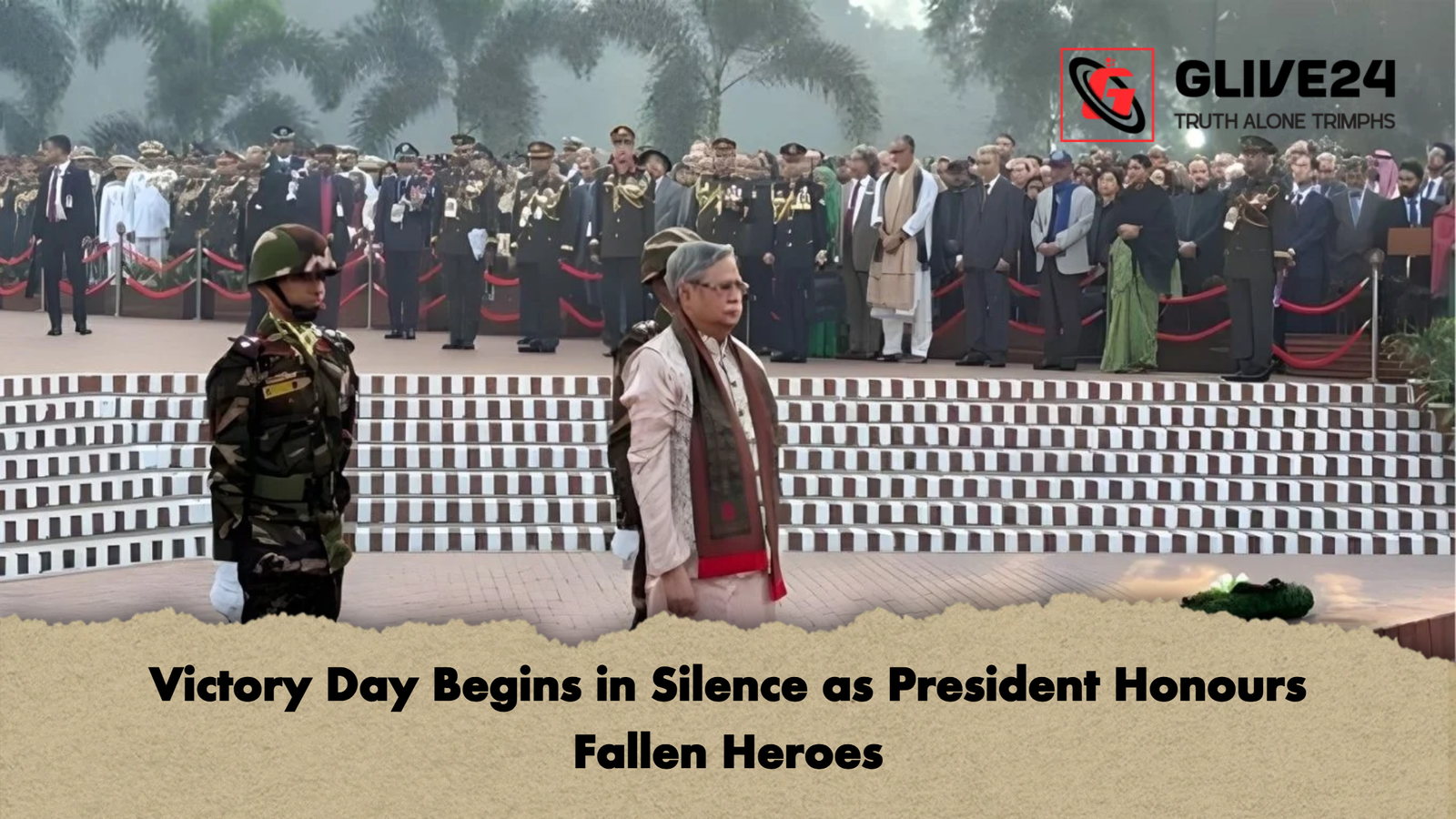
Victory Day in Bangladesh began not with celebration, but with reverence. In the calm and misty hours of the early morning, President Mohammed Shahabuddin stood before the National Martyrs’ Memorial in Savar, paying heartfelt tribute to the heroes of the 1971 Liberation War.
At 6:33am, as the country slowly awakened, the President placed a wreath at the memorial altar. This symbolic first tribute of the day set a reflective tone for Victory Day observances nationwide. The act was not merely ceremonial; it was a reminder of the immense human cost behind Bangladesh’s independence.
After laying the wreath, the President remained motionless in silence, honouring the memory of those who never returned from the battlefield. The disciplined precision of the armed forces followed, as a combined guard of honour from the Army, Navy and Air Force presented a state salute. The haunting melody of the bugle filled the air, stirring emotions among the assembled guests.
Victory Day is often marked by parades, cultural events and patriotic fervour. Yet the early-morning ceremony at Savar remains the emotional heart of the day — a moment when the nation pauses to remember rather than rejoice.
Among those present were advisers from the interim government, valiant freedom fighters, and family members of the martyrs, many of whom carried personal grief alongside national pride. Diplomats and representatives of development partner organisations joined senior officials, reflecting international recognition of Bangladesh’s historic journey.
The presence of multiple generations was particularly striking. Elderly freedom fighters stood shoulder to shoulder with young officials and officers, symbolising the transmission of history from those who lived it to those entrusted with preserving it.
Shortly before 7am, Chief Adviser Professor Muhammad Yunus arrived to offer his own tribute, reinforcing the collective nature of the remembrance. His wreath-laying underscored the continuity of respect across leadership and institutions.
Across the country, citizens marked Victory Day in their own ways — some attending local memorials, others participating in discussions, cultural programmes or simply sharing stories of 1971 with younger family members.
This year’s observance carried renewed emotional weight, reminding Bangladeshis that freedom is not a static achievement but a responsibility inherited from the sacrifices of the past.
The President’s quiet tribute at dawn captured the essence of Victory Day — honour before celebration, remembrance before pride, and unity above all else.