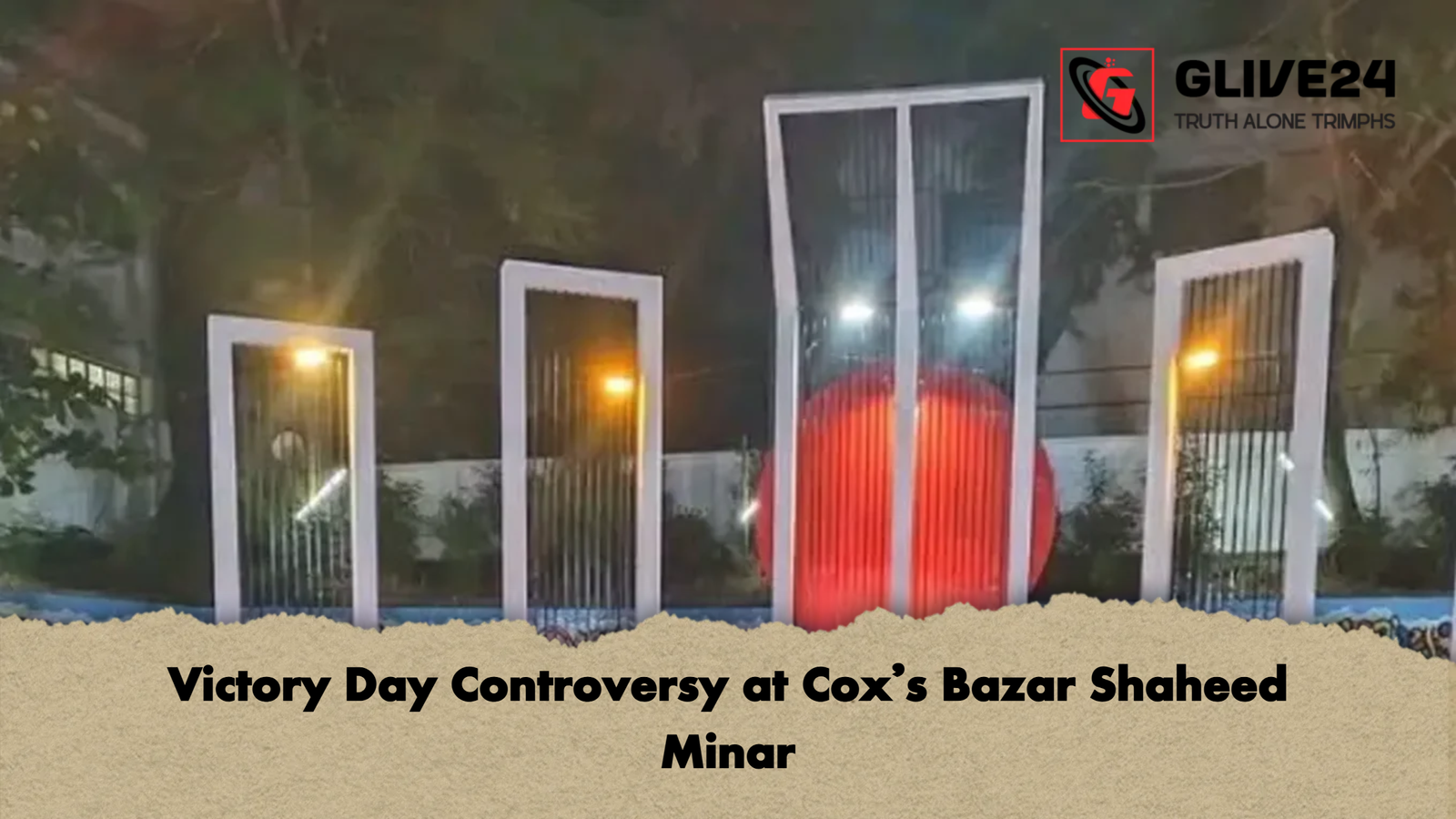
A wave of controversy has swept through Cox’s Bazar following an unexpected decision by the district administration to alter the appearance of the central Shaheed Minar on the eve of Victory Day, one of Bangladesh’s most sacred national commemorations. Instead of highlighting the historic legacy of the Liberation War of 1971, the monument was adorned with colourful alpana motifs, more commonly associated with weddings or Pahela Baishakh celebrations. The move sparked immediate backlash from cultural activists, students, and members of the public.
On 16 December, as the nation marked Victory Day with solemn respect, visitors to the Cox’s Bazar Shaheed Minar noticed that the walls bearing Liberation War–themed graffiti and historical inscriptions had been removed. In their place, decorative alpana designs were painted across the structure. While alpana is a cherished folk art form in Bengali culture, critics argued that its use in this context was misplaced and insensitive, diluting the symbolic gravity of the memorial.
Public discontent grew rapidly after images and videos circulated on social media. Many observers remarked that the new designs resembled the festive decorations seen at wedding ceremonies or New Year celebrations, rather than artwork befitting a national monument dedicated to martyrs who laid down their lives for independence.
The issue gained wider attention on Monday (15 December) when local journalist and cultural activist Abdur Rashid Manik shared a 1-minute-and-20-second video on his Facebook page. In the video, he lamented the absence of Liberation War symbolism, stating that the Shaheed Minar had previously showcased powerful messages and imagery reflecting the sacrifices of 1971. He described the change as deeply regrettable and contrary to the spirit of Victory Day.
The comment section of the video quickly filled with reactions. Roksana Akhtar Roxy wrote that the artwork looked like wedding or Baishakh decorations, while another user, Kabya Sourav, remarked sarcastically that the monument had turned into an “alpana minar”.
Adding to the criticism, Jinia Sharmin Ria, former coordinator of the Anti-Discrimination Student Movement, said that there was no justification for such decorative choices on a day of national remembrance. She emphasised that the Liberation War remains a source of pride and identity for the nation, and that the Shaheed Minar should reflect that legacy.
Similarly, Mainuddin Habib, a student of Cox’s Bazar Government College, said the failure to prioritise historical relevance had turned the memorial’s appearance into something visually jarring and culturally inappropriate.
Amid mounting criticism, Cox’s Bazar Deputy Commissioner Abdul Mannan visited the site at around 7:00 pm and instructed officials to remove the alpana immediately. Speaking to the media, he confirmed that the artwork would be erased. By 9:00 pm, the administration had covered the walls with red-and-white cloth and repainted the surface, effectively removing the disputed designs.
Key Facts at a Glance :
| Aspect | Details |
| Location | Cox’s Bazar Central Shaheed Minar |
| Occasion | Victory Day (16 December) |
| Controversy | Liberation War graffiti replaced with alpana |
| Public Reaction | Strong criticism on social media |
| Viral Video | 1 minute 20 seconds |
| Administrative Action | Alpana ordered removed |
| Time of Removal | Completed by 9:00 pm |