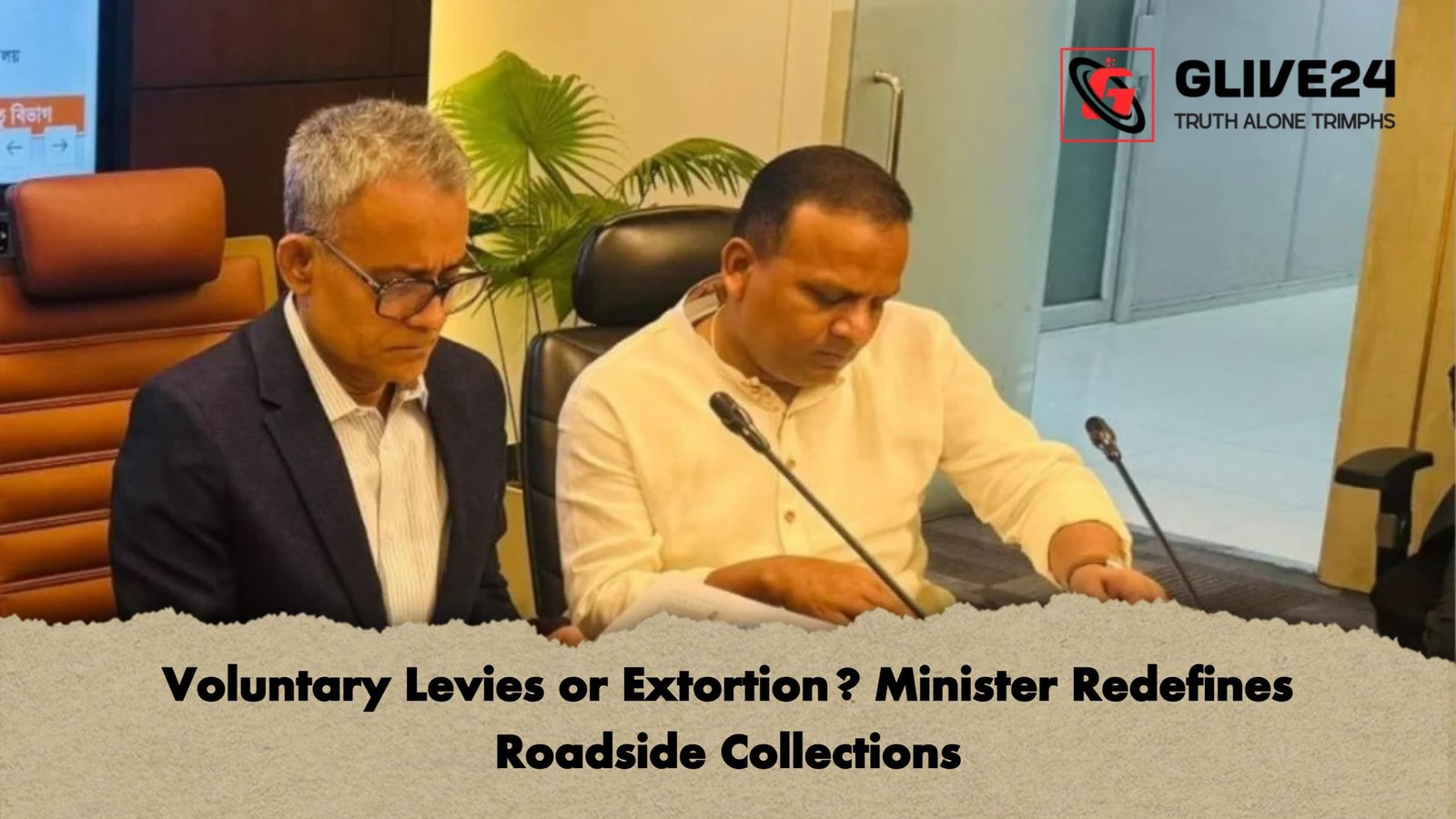
The long-standing debate over the legality of monetary collections on Bangladesh’s highways took a provocative turn this Thursday. Sheikh Robiul Alam, the Minister for Road Transport and Bridges, offered a nuanced—and arguably controversial—distinction between systemic extortion and what he termed “consensual contributions.”
Speaking to the press at the Secretariat, the Minister addressed the ubiquitous practice of money being collected from transport vehicles. According to Minister Alam, if funds are gathered through a mutual understanding between parties, the practice does not constitute “extortion” (chada).
The “Consensual” Framework
The Minister posited that collections by various owners’ associations and labour unions are often misunderstood by the public. He suggested these payments function as an unwritten code, primarily intended for the welfare of the industry’s stakeholders.
“I do not view the money collected on the roads as extortion in the traditional sense,” the Minister remarked. “Owner and worker associations exist to serve their members. It becomes extortion only when someone is coerced or forced to pay against their will.”
While acknowledging the debate regarding how effectively these funds are actually utilised for welfare, the Minister emphasised that because these payments are made under “consensual agreements,” the Ministry does not categorise them as illegal levies. He did, however, admit that political influence often dictates who controls these collections, noting that the labour wing of whichever party is in power typically maintains dominance over the process.
Governance and Holiday Congestion
Minister Alam assured the public that while the Ministry would not interfere in private agreements between associations, they would remain vigilant against external pressure or the misappropriation of funds.
Turning his attention to the logistical nightmare of the upcoming holiday season, the Minister addressed two critical bottlenecks: roadside markets and the duration of public holidays.
Highway Obstructions: The Minister identified informal markets sprawling onto highways as a primary cause of congestion and vowed to bring these areas under stricter regulation.
Holiday Pressure: Reflecting on previous successes, he noted that longer holiday periods significantly ease the pressure on transport infrastructure.
Comparative Overview: Extortion vs. Consensual Levies
| Category | Minister’s Definition of “Extortion” | Minister’s Definition of “Consensual Levy” |
| Primary Driver | Coercion and physical or mental pressure. | Mutual agreement and unwritten industry codes. |
| Recipient | Often external “strongmen” or third parties. | Registered Owner Associations or Labour Unions. |
| Stated Purpose | Personal gain of the collector. | Member welfare and administrative costs. |
| Legality | Strictly illegal and subject to prosecution. | Viewed as an internal industry matter. |
The Minister concluded by stating that a detailed plan for the holiday rush would be unveiled within the next ten days, promising that the government is committed to ensuring a safe and seamless journey for citizens returning to their ancestral homes.