Following the conclusion of Bangladesh’s thirteenth parliamentary election, Washington has moved swiftly to recalibrate its engagement with the new government, signalling a renewed and more structured phase in Dhaka–Washington relations. Diplomatic sources indicate that the United States is seeking to sharpen its strategic priorities, policy tools and long-term approach towards Bangladesh in light of the post-election political landscape and evolving regional dynamics.
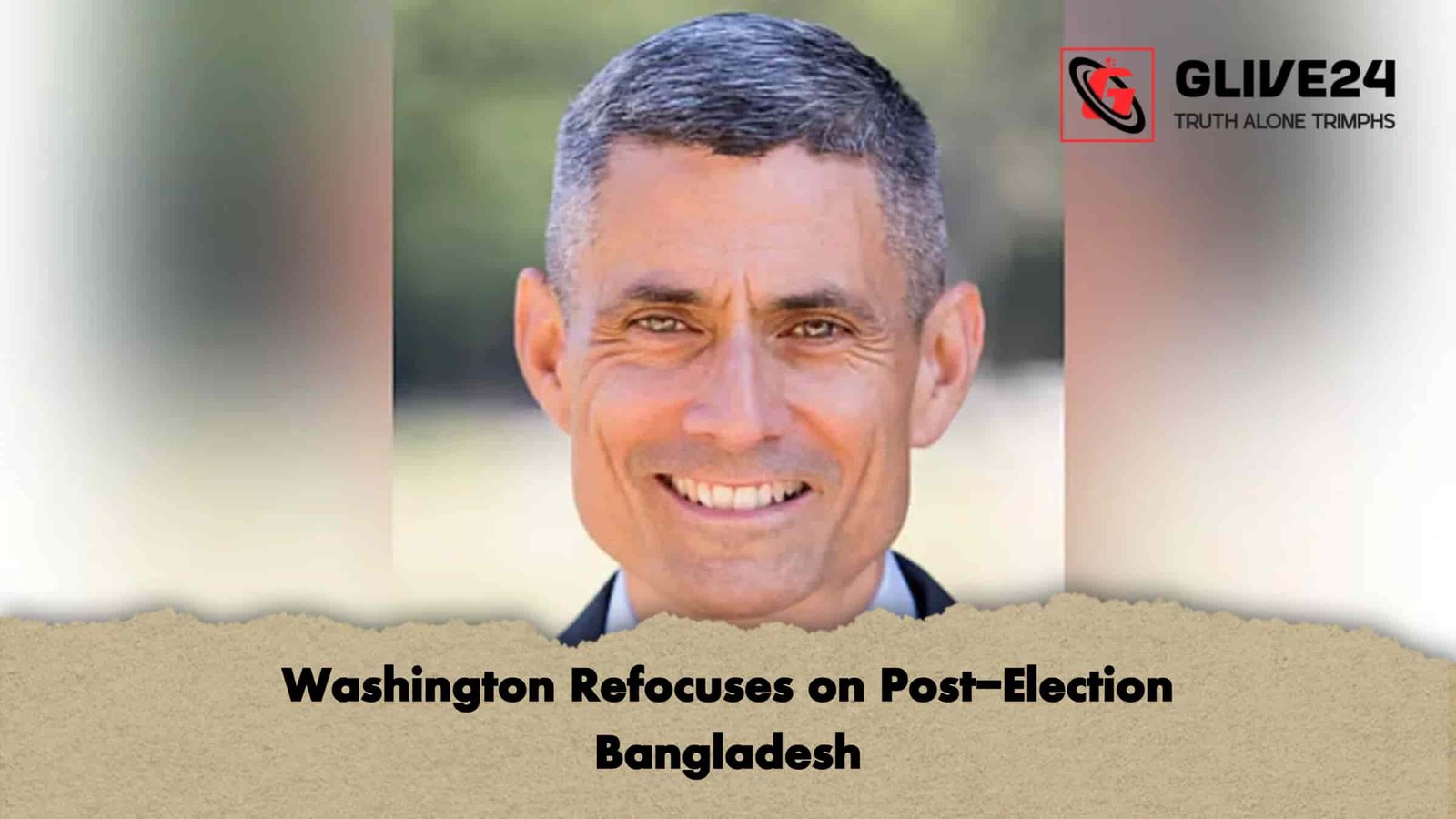
As part of this effort, a potential visit to Dhaka by S. Paul Kapur, the US Assistant Secretary of State for South and Central Asian Affairs, is under active consideration for the first week of March. If confirmed, the visit—tentatively expected between 6 and 9 March—would represent one of Washington’s earliest high-level, in-person engagements with Bangladesh since the formation of the new government. Observers view this as a clear indication of sustained US interest in shaping the next phase of bilateral relations rather than adopting a wait-and-see posture.
According to diplomatic circles, US Ambassador Brent Christensen has recently raised the prospect of Kapur’s visit during meetings with Foreign Affairs Adviser Md Touhid Hossain and Foreign Secretary Asad Alam Siam. The discussions reportedly focused not only on scheduling but also on the broader agenda, including economic cooperation, regional stability and strategic alignment in a rapidly changing Indo-Pacific environment.
Kapur was nominated to his current role in February last year under the Donald Trump administration and formally assumed office in October after securing approval from the US Senate Foreign Relations Committee. Since taking office, he has been actively involved in redefining Washington’s South Asia strategy, with particular emphasis on balancing economic engagement, security partnerships and intensifying global geopolitical competition.
During his Senate confirmation hearing, Kapur described Bangladesh as an emerging economic power in South Asia, noting that it is among the region’s largest economies after India. He highlighted Bangladesh’s growing relevance to US interests in trade expansion, regional security and strategic cooperation. Notably, he identified managing China’s expanding footprint in the region, strengthening maritime and regional security, and deepening bilateral trade ties as key priorities.
This assessment closely mirrors recent statements by Ambassador Christensen, who has repeatedly framed Bangladesh as a significant arena within the broader US–China strategic competition. Analysts suggest that recent US legislation and updates to national security strategy documents have further hardened Washington’s outlook, making it likely that China-related concerns will feature prominently in Kapur’s discussions with the new Bangladeshi leadership.
Kapur’s background as a long-time scholar of South Asian politics and security adds weight to his diplomatic role. Experts argue that his combined academic and policy experience equips him to navigate the region’s complex political realities with a nuanced understanding that extends beyond conventional diplomacy.
Profile: S. Paul Kapur
| Category | Details |
|---|---|
| Current position | US Assistant Secretary of State for South and Central Asian Affairs |
| Assumed office | October (last year) |
| Academic focus | South Asian politics and international relations |
| Previous role | US State Department policy official (2020–21) |
| Education | BA, Amherst College; PhD, University of Chicago |
Taken together, Kapur’s prospective visit to Dhaka is widely seen as more than a routine diplomatic engagement. It may serve as a defining moment in setting the tone, priorities and expectations of Bangladesh–US relations in the post-election period, particularly in the areas of trade, security cooperation and regional geopolitics over the coming years.