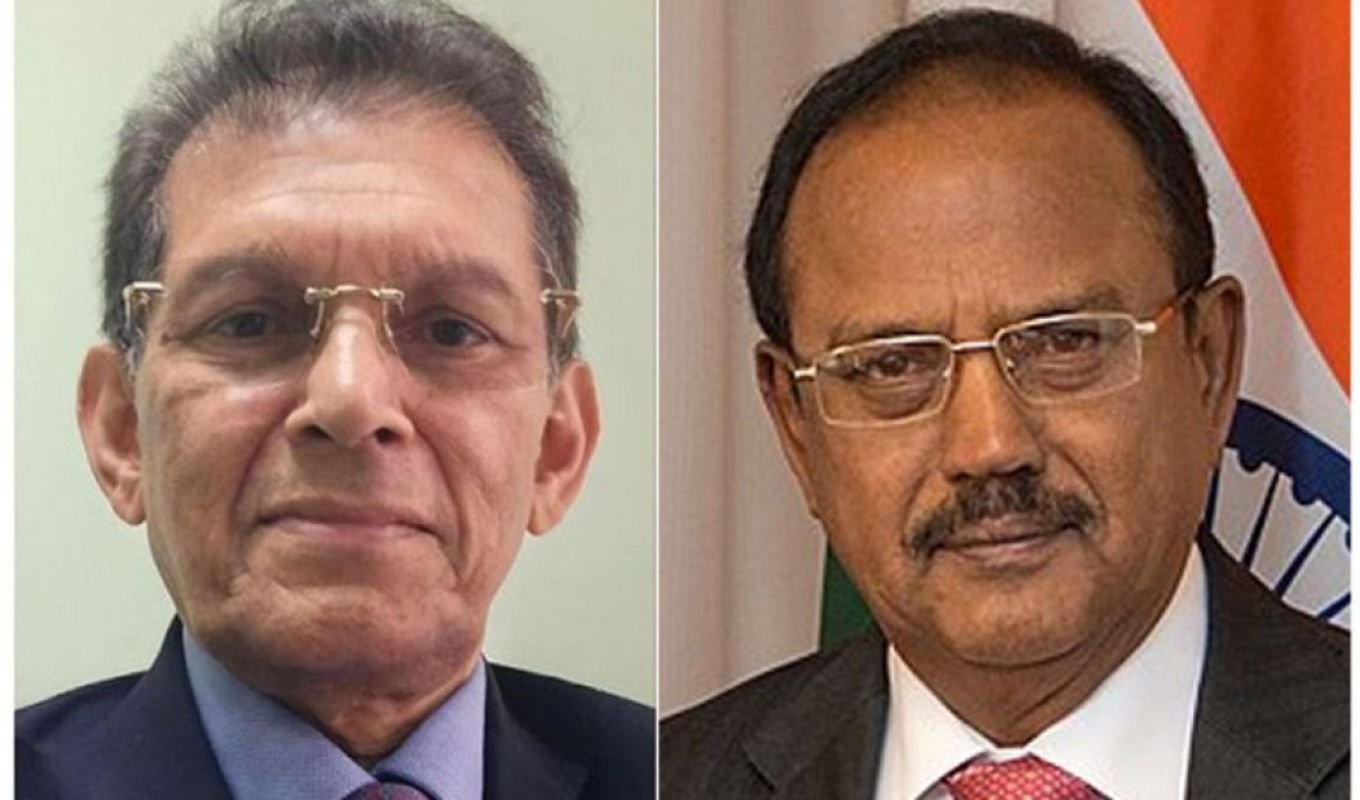
India and Bangladesh held a significant two-day security dialogue in Delhi on Wednesday and Thursday (19 and 20 November), involving India’s National Security Adviser Ajit Doval and Bangladesh’s National Security Adviser Dr Khalilur Rahman. On the first day, the two advisers engaged in a closed-door bilateral meeting, followed on the second day by their joint participation in the Colombo Security Conclave (CSC), hosted by India. The meetings marked an important development in the recent trajectory of bilateral relations.
This was the first formal bilateral discussion between the two countries in Delhi in over a year. Since 5 August last year, no senior representative of the Bangladeshi government had visited India. During the same period, New Delhi had also decided not to enter into political-level engagement with Bangladesh’s interim government, leading to a prolonged diplomatic lull.
In recent weeks, however, circumstances have shifted. India believes that certain political and security-related developments in Bangladesh could have implications for its own national security. At the same time, the approaching national election has emerged as a major challenge for Bangladesh’s interim administration. Differences in perspective between the two countries regarding the election have also been evident. Additionally, the presence of former Prime Minister Sheikh Hasina in India has added another sensitive dimension to the relationship.
Against this backdrop, India invited Bangladesh to participate in the Colombo Security Conclave, recognising the need for direct dialogue. Bangladesh accepted the invitation, acknowledging the importance of engagement at this juncture. According to diplomatic sources, both the atmosphere and the outcome of the meetings were highly positive. A senior Indian official noted that while it would be unrealistic to expect a complete resolution of all contentious issues in the first round of talks, the diplomatic “ice-breaking” process had been effectively achieved.
India reiterated that its comprehensive engagement is possible only with an elected democratic government, a position Ajit Doval clearly conveyed to Dr Khalilur Rahman. From Bangladesh’s side, the significance of India’s regional role and the dignity of the Bangladeshi government and people were emphasised. Indian concerns regarding anti-India activities and security issues were also raised, with Bangladesh assuring that it would not act against India’s interests.
The election issue featured prominently in the discussions. Bangladesh stated that it was confident of holding the national election successfully in February as scheduled. India expressed its preference for an inclusive election, implying participation by the Awami League, while Bangladesh explained why this was not feasible under the current political realities. India indicated that if the election was largely free and fair, it would be ready to engage with the newly elected government.
The matter of Sheikh Hasina’s trial and the possibility of capital punishment was also discussed, revealing divergent positions. Nevertheless, both sides agreed to continue addressing unresolved bilateral issues gradually through dialogue. Officials from both countries later described the talks as a constructive and positive step towards rebuilding engagement.
GLIVE/TSN