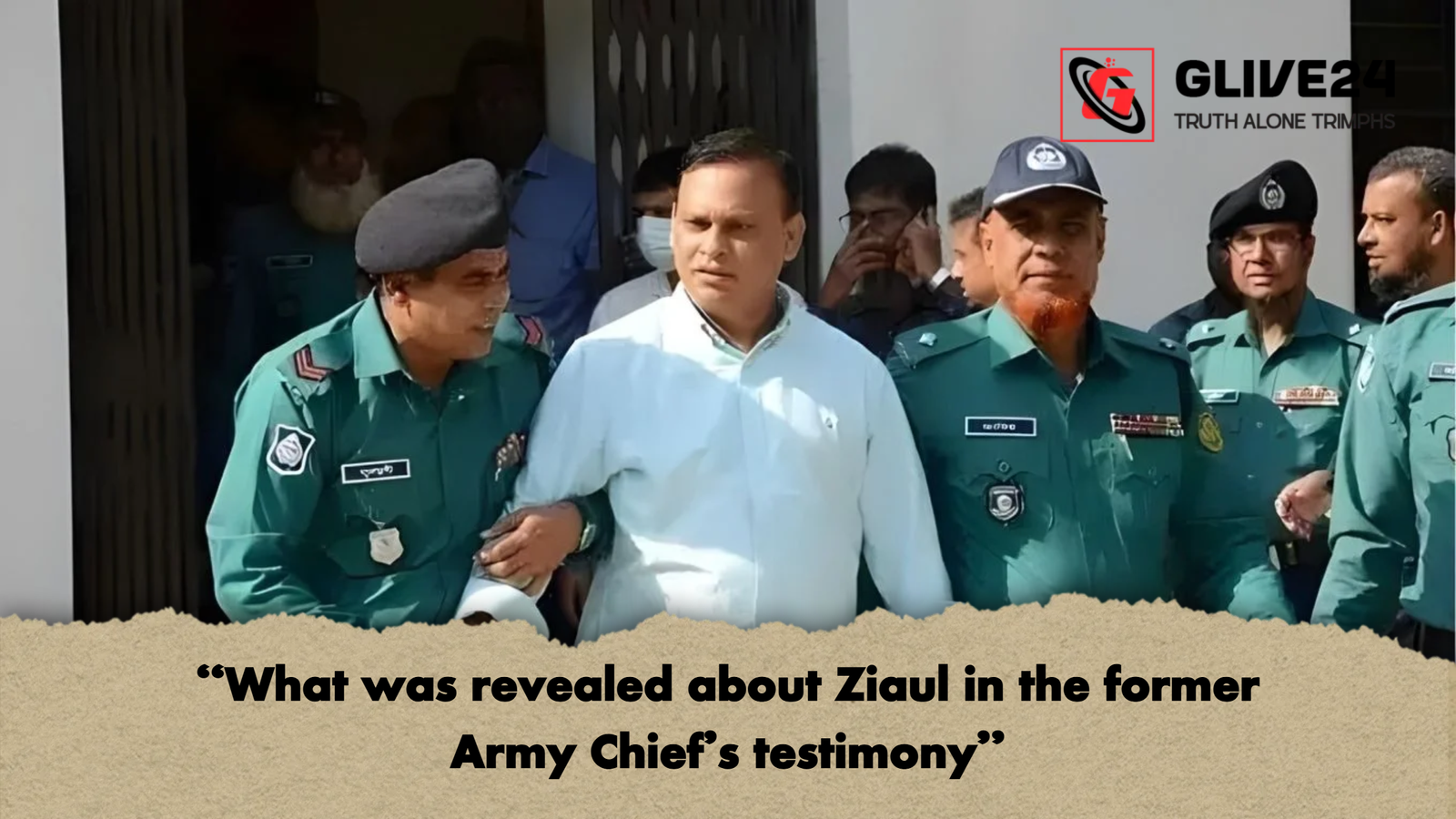
In a significant disclosure to the International Crimes Tribunal’s investigative body, former Chief of Army Staff, General (Retd.) Iqbal Karim Bhuiya, has submitted his testimony regarding a series of enforced disappearances and extrajudicial killings that took place during the tenure of the previous Awami League government. His statement sheds new light on the involvement of former army officer Major J. (Retd.) Ziaul Ahsan in these unlawful acts.
General Bhuiya’s testimony not only details the alleged crimes committed by Ziaul but also addresses the broader influence of political directives on the military and security apparatus over the past one and a half decades, including decisions made under the leadership of former Prime Minister Sheikh Hasina.
According to General Bhuiya, Ziaul Ahsan’s conduct became increasingly unrestrained upon assuming the role of Additional Director General (ADG) of the Rapid Action Battalion (RAB). During his tenure, the number of extrajudicial killings reportedly escalated markedly.
“Following RAB Director General Benazir’s appointment, Zia took up the ADG position. Intelligence from the Army Security Unit indicated that Colonel Zia was systematically increasing targeted killings. He maintained armed guards at his residential tower, installed weapons and CCTV cameras, and ignored direct orders to curb his actions,” General Bhuiya explained.
He further revealed that discussions with Brigadier General Fazal indicated that Ziaul could not be persuaded to moderate his behaviour. Consequently, Colonel Zia was formally declared Persona Non Grata on the western side of the railway line.
General Bhuiya emphasised that, to avoid a repeat of the mistakes witnessed between 1996 and 2001, former Prime Minister Sheikh Hasina pursued deliberate measures to consolidate the Awami League’s power as the country’s sole governing force. These steps included pursuing justice for war crimes, abolishing the caretaker government system, enforcing constitutional provisions on punishment for illegal actions, and reassigning officers within the army to replace untrustworthy or incompetent personnel.
Among the Prime Minister’s key security appointments was Major General Tarek Ahmed Siddiqui as Security Adviser, through whom she gradually asserted control over the DGFI, NSI, AFD, BGB, Ansar, NTMC, DGDP, and RAB. According to General Bhuiya, these interventions coincided with an increase in abductions, killings, land grabs, and extortion activities within these agencies.
Currently, over 100 cases have been filed against Major J. (Retd.) Ziaul Ahsan in relation to enforced disappearances and extrajudicial killings. After hearings from both sides, International Crimes Tribunal-1 is scheduled to issue its verdict on 14 January, during which General Bhuiya will provide testimony.
Summary of Key Points
| Aspect | Details |
|---|---|
| Witness | General (Retd.) Iqbal Karim Bhuiya |
| Accused | Major J. (Retd.) Ziaul Ahsan |
| Position of Accused | Former Additional Director General, RAB |
| Nature of Allegations | Extrajudicial killings, enforced disappearances |
| Key Period | 1996–2001 (referenced for context), subsequent 15 years under Awami League |
| Security Appointments | Major General Tarek Ahmed Siddiqui as Security Adviser; influence over DGFI, NSI, AFD, BGB, Ansar, NTMC, DGDP, RAB |
| Tribunal | International Crimes Tribunal-1 |
| Next Hearing | 14 January |
| Outcome Expected | Testimony of former army chief to inform verdict |