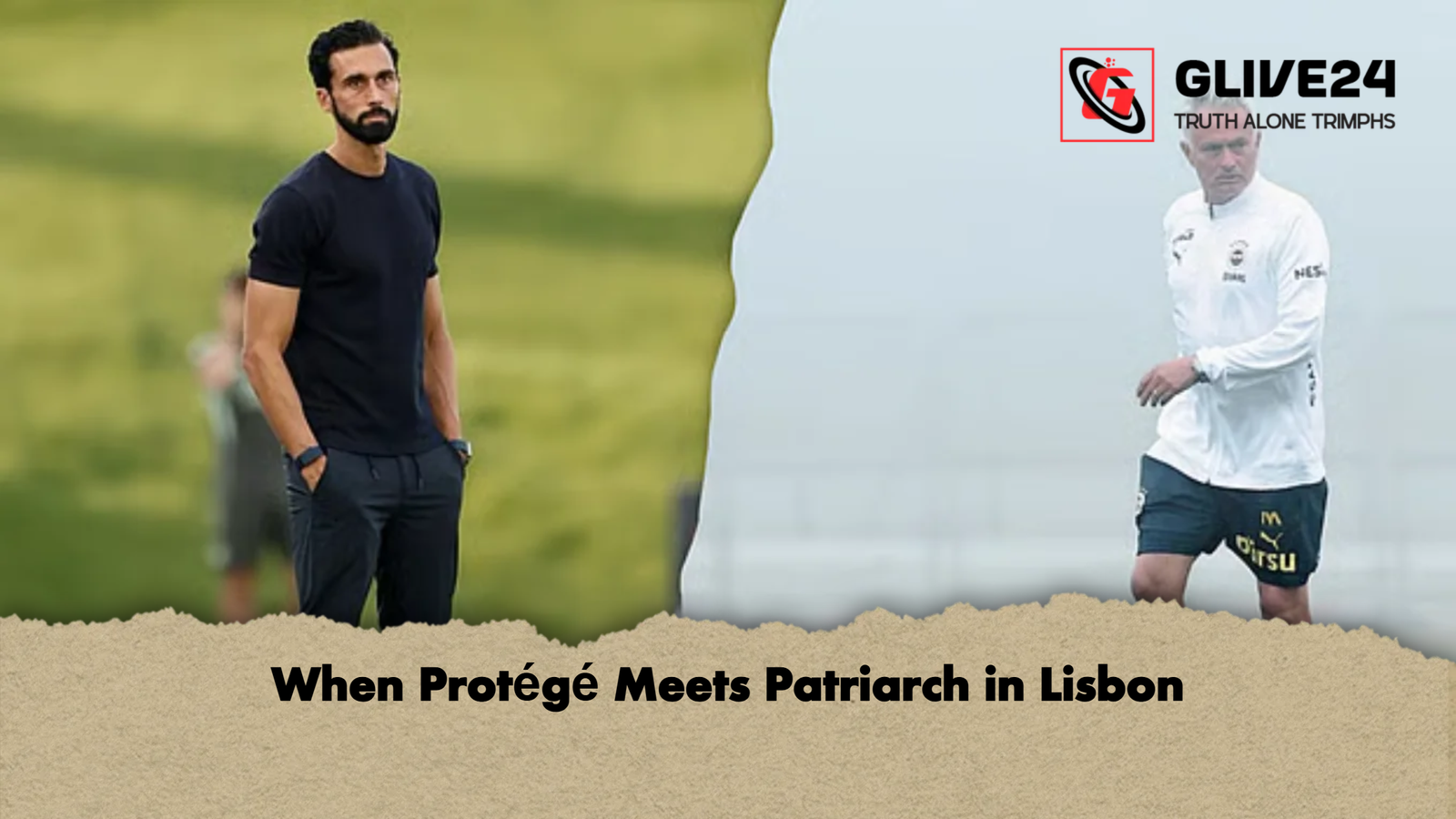
On a Champions League evening charged with narrative as much as jeopardy, Benfica versus Real Madrid offers more than a contest between two European heavyweights. In Lisbon, the spotlight will linger not only on the pitch but also on the touchlines, where an unusually intimate managerial duel unfolds. On one side stands José Mourinho, the seasoned provocateur and master tactician; on the other, Álvaro Arbeloa, his former lieutenant, now entrusted with steering Real Madrid’s present and future. Their relationship is not merely professional—it is filial in tone, forged during one of the most turbulent and defining eras in modern Madrid history.
Between 2010 and 2013, Mourinho’s reign at the Santiago Bernabéu was a heady blend of ambition, confrontation and silverware. His mandate was clear: dismantle Pep Guardiola’s Barcelona, then arguably the finest club side the game had seen. The task demanded not only tactical innovation but also emotional fortitude. While many stars buckled under Mourinho’s confrontational methods, Arbeloa—never the most glamorous name on the team sheet—emerged as one of his most steadfast allies.
In a 2017 television interview, Arbeloa was asked to define “Mourinhismo”, the philosophy associated with the Portuguese coach. His response was revealing: it was about confronting everything head-on, refusing to apologise for one’s identity, and embracing conflict when necessary. “I want to be as much of a ‘Mourinhista’ as possible,” he said at the time. The comment encapsulated not just admiration, but a worldview.
Mourinho’s regard for Arbeloa has always been explicit. In a public letter penned during his Manchester United tenure, he described the former defender as far more than a player—calling him a friend, a model professional, and one of the most important individuals he had coached across a 16-year managerial career. Arbeloa, he noted, gave everything to Real Madrid, “even what he did not have”.
Mourinho’s Real Madrid Era at a Glance
| Season | Major Achievement | Context |
|---|---|---|
| 2010–11 | Copa del Rey winner | Defeated Barcelona in El Clásico final |
| 2011–12 | La Liga champion | Record 100 points, 121 goals |
| 2012–13 | Trophyless | Dressing-room tensions peaked |
Yet Mourinho’s methods came at a cost. His relentless pursuit of competitive advantage deepened divisions within the squad. Senior figures such as Iker Casillas and Sergio Ramos found themselves increasingly at odds with the manager, while incidents like the infamous eye-poke of Barcelona assistant Tito Vilanova during the Spanish Super Cup cemented his reputation as football’s most polarising figure. Through it all, Arbeloa remained loyal, publicly defending Mourinho even after his departure, and questioning whether others had truly prioritised the club over personal standing.
After retiring in 2017, Arbeloa transitioned smoothly into media and coaching roles, eventually returning to Real Madrid as an academy coach. His rise culminated this month with his appointment as first-team manager, succeeding Xabi Alonso. While the influence of Mourinho is unmistakable—particularly in his combative defence of the club against perceived external hostility—Arbeloa has shown a more conciliatory touch with players, choosing solidarity over public rebuke after defeats.
Ahead of tonight’s match, Arbeloa acknowledged Mourinho’s impact but stressed his own identity. Mourinho, for his part, was characteristically candid: Arbeloa, like Cristian Chivu, remains “one of my football sons”. Not the greatest player in Real Madrid’s history, perhaps—but, in his eyes, among the finest men he ever coached.
As Benfica chase victory and Real Madrid calculate sufficiency, sentiment must yield to strategy. Still, when their eyes meet across the technical area, history will flicker briefly between them. In that moment, Lisbon will witness not just a football match, but a generational handover—one shaped by conflict, loyalty, and the enduring legacy of a demanding mentor.