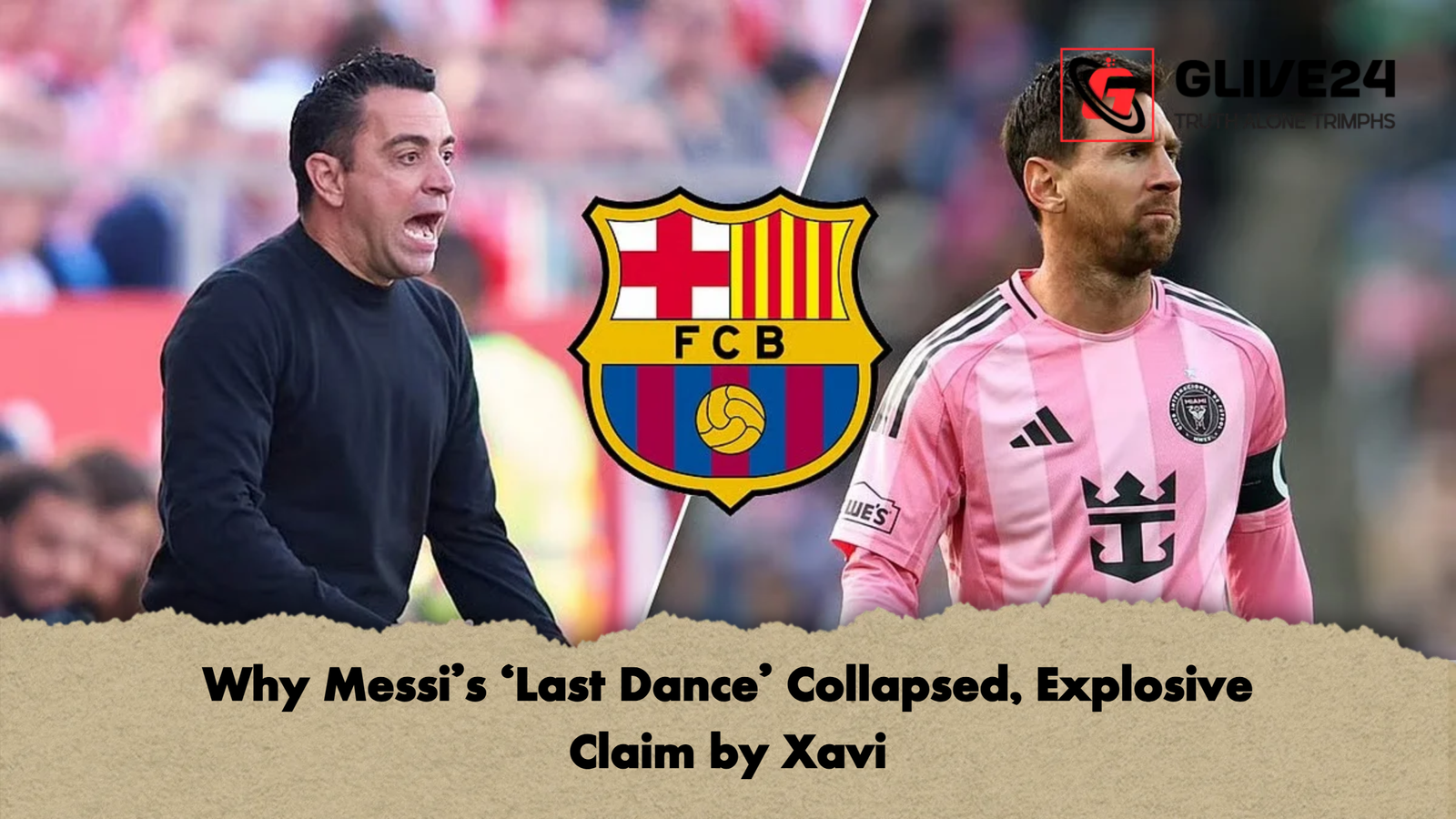
For many supporters of FC Barcelona, one question has lingered painfully since 2023: why did Lionel Messi never return to the club where he became a global icon?
According to former teammate and ex-Barcelona manager Xavi Hernández, the answer is surprisingly simple—and deeply political. In a revealing interview, Xavi has claimed that Messi’s much-anticipated return to Camp Nou collapsed not because of financial barriers or a lack of desire from the player, but due to internal power struggles within the club’s leadership.
Table of Contents
Messi’s Desire to Return
Messi’s departure from Barcelona in 2021 marked the end of one of the most remarkable partnerships in football history. After spending more than two decades at the club—from the famed La Masia academy to becoming the first-team captain—he was forced to leave due to the club’s severe financial crisis and salary cap restrictions imposed by La Liga.
The Argentine superstar subsequently joined Paris Saint-Germain before eventually moving to the United States to play for Inter Miami CF in 2023.
However, Xavi now insists that Miami was not Messi’s first choice. Following Argentina’s triumph at the 2022 FIFA World Cup, the seven-time Ballon d’Or winner reportedly expressed a strong desire to return to Barcelona.
Speaking to the Spanish daily La Vanguardia, Xavi said the discussions had progressed significantly. “After the World Cup in January 2023, we spoke. Leo told me he wanted to come back. We had already discussed the sporting project and even received a green signal from La Liga,” he explained.
The ‘Last Dance’ That Never Came
Barcelona had reportedly planned what Xavi described as a “last dance” for Messi at Camp Nou—a farewell chapter that would allow the club’s greatest player to finish his career where it began. The idea drew comparisons with the iconic farewell of basketball legend Michael Jordan.
Yet the plan collapsed at the final stage. Xavi claims that club president Joan Laporta ultimately blocked the move.
According to the former coach, Laporta feared that Messi’s return could trigger political tensions within the club’s hierarchy. Xavi alleged that the president told him Messi’s comeback might lead to a “war” against his leadership, something he was unwilling to risk.
Shortly afterwards, communication with Messi reportedly ceased. “He stopped answering my calls,” Xavi recalled, suggesting that the Argentine had been informed internally that his return would no longer be possible.
Laporta’s Strong Rebuttal
Laporta has firmly rejected Xavi’s claims. Although he recently stepped down as president, he is currently campaigning for re-election and has dismissed the allegations as “disappointing”.
The Barcelona chief argued that Xavi’s criticism stems from bitterness following his dismissal as head coach. He also pointed out that the team’s performance improved under new manager Hansi Flick despite using largely the same group of players.
Laporta offered a completely different account regarding Messi’s potential return. According to him, Messi’s father and agent Jorge Messi had personally indicated that the player preferred not to return because of the immense pressure he would face at Barcelona.
Messi’s Extraordinary Barcelona Legacy
Regardless of the conflicting narratives, Messi’s legacy at Barcelona remains unmatched in the club’s history.
| Category | Statistic |
|---|---|
| Years at Barcelona | 2004–2021 |
| Total Appearances | 778 |
| Goals Scored | 672 |
| Major Trophies Won | 34 |
| La Liga Titles | 10 |
| UEFA Champions League Titles | 4 |
Messi is widely regarded as the greatest player ever to wear the Barcelona shirt, having led the club through one of the most successful eras in European football.
An Unfinished Story
For supporters, the dream of seeing Messi return to Camp Nou—even briefly—represented the perfect closing chapter to a historic career. Instead, the story ended elsewhere, leaving lingering doubts about what might have been.
Whether the truth lies with Xavi’s claims of internal politics or Laporta’s insistence that Messi chose a different path, the “last dance” many Barcelona fans hoped for never materialised.
And in the world of football, that unanswered question may remain one of the club’s most enduring mysteries.