
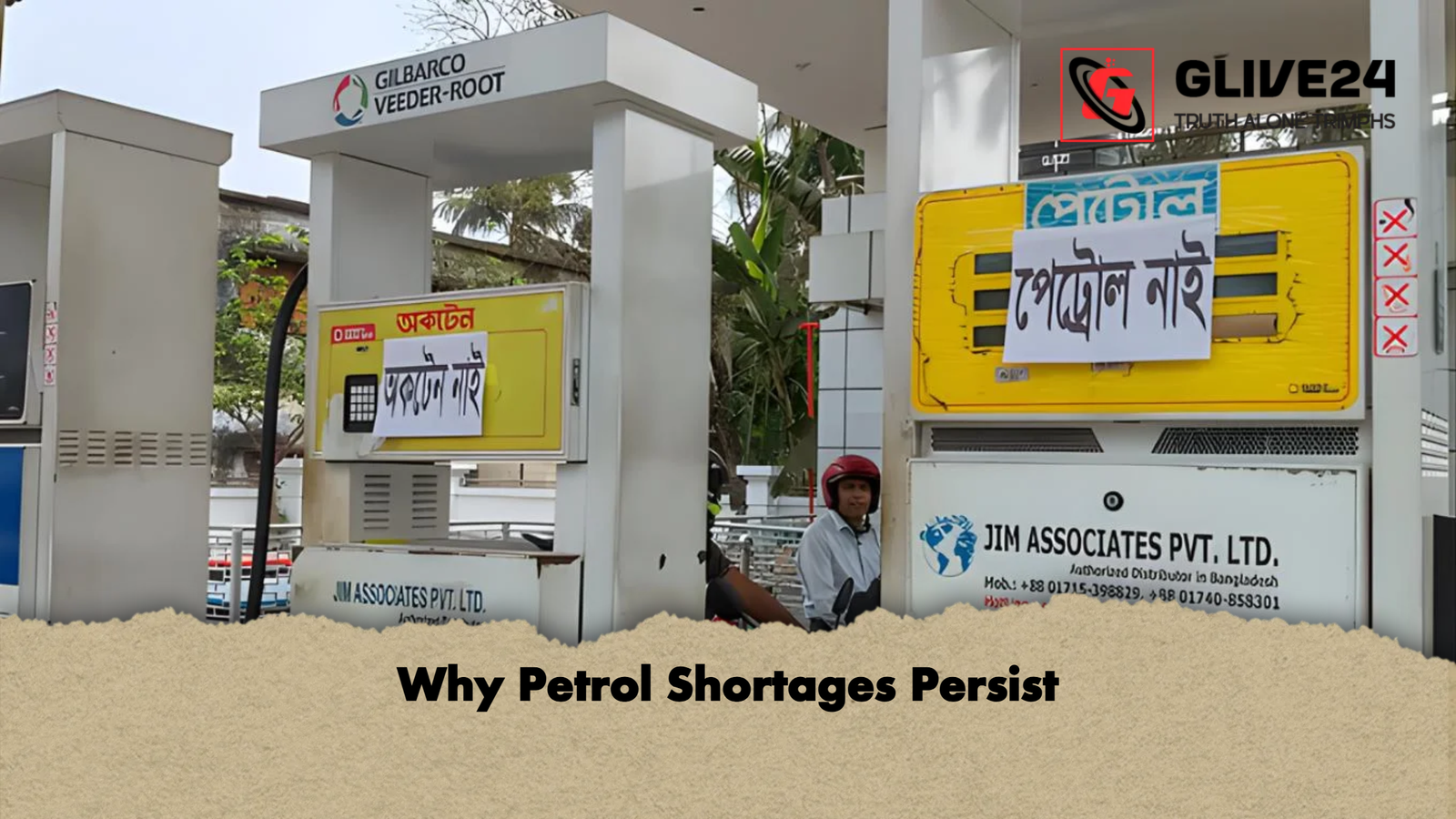
A recent wave of fuel scarcity at filling stations has left many motorists across Bangladesh facing long queues and, in some cases, “no petrol” signs over the past month. The situation has prompted public confusion, particularly because the country largely meets its petrol demand through domestic production. Despite this, shortages of petrol, diesel, and octane have been reported intermittently.
Table of Contents
What petrol is and how it is produced
Petrol is a refined liquid fuel derived primarily from crude oil and condensate, a by-product extracted from gas fields. These raw materials are processed in refineries to produce various petroleum products, including petrol, diesel, kerosene, and furnace oil.
In Bangladesh, petrol is mainly used to power motorcycles, older petrol-engine vehicles, auto-rickshaws, and small utility machines such as grass cutters. A portion of vehicles—particularly older models designed for petrol engines—also depend exclusively on it.
Petrol vs octane
Although commonly treated as different fuels in everyday language, petrol and octane are chemically similar. The distinction is essentially qualitative. Octane refers to higher-grade motor gasoline with a higher octane rating, which indicates better resistance to engine knocking.
Typically:
- Lower-grade motor gasoline (octane rating around 80–87) is referred to as petrol
- Higher-grade fuel (octane rating around 92–95) is referred to as octane
Demand and supply situation
According to data from the Bangladesh Petroleum Corporation (BPC), demand for fuel remains substantial, with diesel dominating overall consumption.
| Fuel Type | Annual Demand (2024–25) | Annual Sales |
|---|---|---|
| Diesel | 4.35 million tonnes | Highest share |
| Petrol | — | 0.462 million tonnes |
| Octane | — | 0.415 million tonnes |
Domestic supply of petrol is largely met through local refining. Around 16% is produced by the state-owned Eastern Refinery Limited (ERL), while the remaining 84% comes from private refineries. These private units process condensate from local gas fields and imported feedstock.
Import dependency and refinery pressure
ERL imports around 1.5 million tonnes of crude oil annually, mainly from Middle Eastern suppliers. This crude is refined into multiple petroleum products. However, geopolitical tensions, including disruptions linked to conflicts in the Middle East, have affected crude supply chains.
Recent delays in crude shipments have raised concerns about ERL’s production capacity. Officials indicate that crude oil reserves are running low, and without a fresh shipment of around 100,000 tonnes from Saudi Arabia, production could be temporarily halted.
Private refineries, including major operators in Chattogram, Narsingdi, and Bagerhat, continue to supply most of the country’s petrol and octane demand.
Stock levels and market pressure
As of early April, national petrol stock stood at approximately 12,756 tonnes—enough for roughly nine days of consumption under normal conditions. However, demand spikes have reduced effective coverage.
| Indicator | Figure |
|---|---|
| National petrol stock | 12,756 tonnes |
| Daily average demand | ~1,270–1,500 tonnes |
| April projected demand | 44,000 tonnes |
| Estimated coverage | ~9 days |
Despite adequate supply on paper, panic buying triggered by global uncertainty has significantly distorted demand patterns. Following geopolitical tensions in late February, fuel purchases surged sharply, prompting temporary rationing measures at filling stations in early March.
Panic buying and distribution strain
Although official supply levels remain broadly stable, market behaviour has played a critical role in the shortage perception. Between 1 and 4 March, petrol sales rose by around 45% compared with the same period a year earlier.
Industry representatives suggest that fuel is being supplied in sufficient quantities, but demand surges at retail points have created artificial queues and stock imbalances. Reports have also emerged of hoarding and enforcement drives recovering stored petrol in several areas.
In summary, Bangladesh’s petrol shortage is less a result of production failure and more a combination of import uncertainty, refinery constraints, and sudden spikes in consumer demand driven by global geopolitical fears.