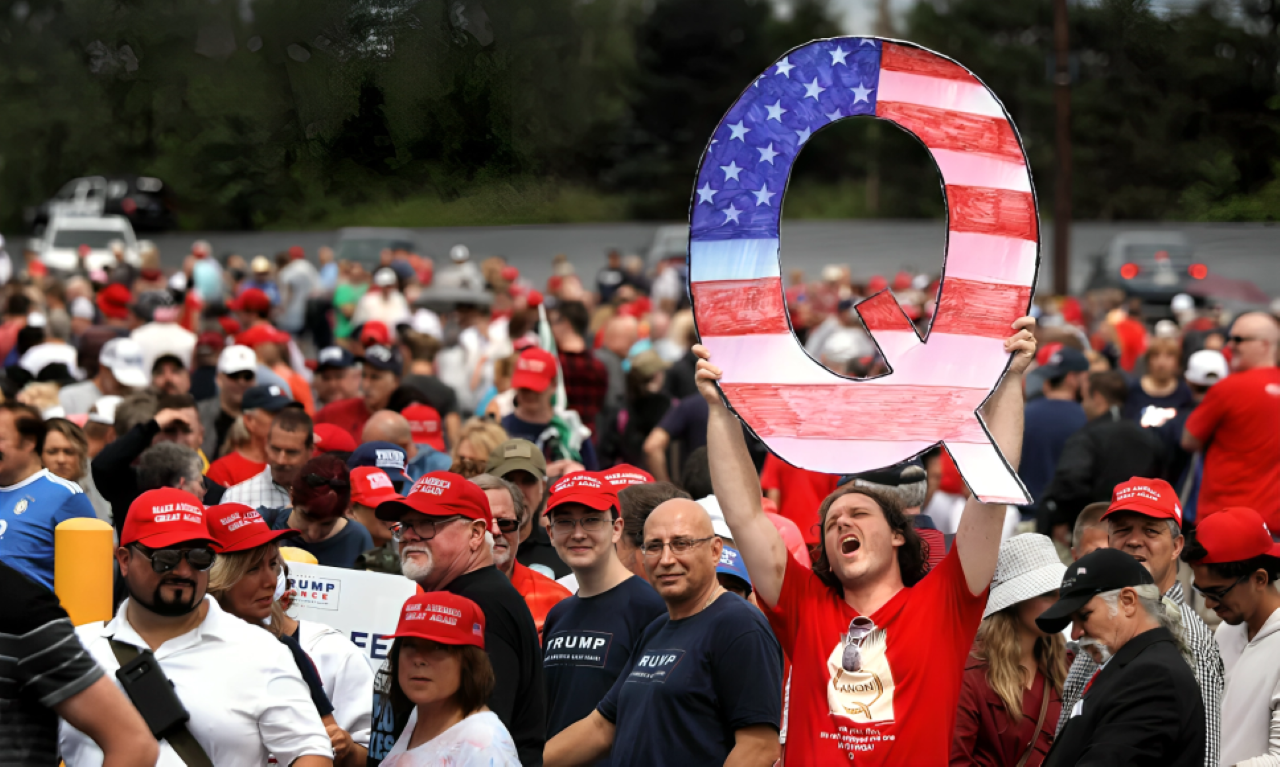
Over the past several years, the QAnon conspiracy theory has moved from the darkest corners of the internet into mainstream political discourse in the United States. What began as a series of anonymous online posts has evolved into a sprawling belief system involving secret codes, hidden messages, and an epic struggle between good and evil—one in which former President Donald Trump is cast as the central heroic figure. Despite repeated debunking by journalists, academics, and fact-checkers, QAnon continues to attract a loyal following, particularly among Trump supporters. Understanding why requires looking beyond the theory’s factual inaccuracies and examining its emotional, cultural, and political appeal.
According to The New York Times, QAnon is an umbrella term for a collection of conspiracy theories that falsely claim the world is controlled by a secret cabal of Satan-worshipping paedophiles. Believers allege that this group includes leading Democratic politicians such as President Joe Biden, Hillary Clinton, Barack Obama, and George Soros, alongside celebrities like Oprah Winfrey and Tom Hanks, and even religious figures such as Pope Francis and the Dalai Lama. Some adherents go further, claiming that members of this imagined cabal murder children to harvest a life-extending chemical known as adrenochrome—a claim with no basis in science or reality.
Table of Contents
What Is QAnon?
QAnon is widely classified as a far-right conspiracy theory that first emerged in October 2017. Its central claim is that a hidden global elite runs a child sex trafficking network, and that Donald Trump was secretly working to dismantle it from within the US government. Although the theory has been comprehensively discredited, its narrative structure—good versus evil, secrecy versus revelation—has proven compelling to many.
The movement has had real-world consequences. In 2019, the US Federal Bureau of Investigation identified QAnon as a potential domestic terrorism threat. Several violent incidents and threats have since been linked to QAnon-inspired beliefs, while public figures who openly endorsed the theory, including Congresswoman Marjorie Taylor Greene, faced intense criticism and calls for accountability.
The Origins of “Q”
QAnon traces its roots to an anonymous post on the message board 4chan. The poster, calling themselves “Q”, claimed to possess high-level US security clearance and began sharing cryptic messages—often referred to as “drops”—about supposed secret operations within the Trump administration. These vague statements invited followers to interpret, decode, and connect them to real-world events, turning political engagement into a kind of interactive puzzle.
As interest grew, Q’s posts migrated to other platforms such as 8kun, Reddit, and Telegram, where entire communities formed around interpreting the messages. Websites, YouTube channels, and social media accounts dedicated to “decoding Q” flourished, creating an ecosystem that reinforced belief through constant repetition.
Core Beliefs Associated with QAnon
| Claim | Reality |
|---|---|
| A global paedophile cabal controls governments | No evidence; repeatedly debunked |
| Trump is secretly fighting the “deep state” | Unsupported and false |
| Celebrities harvest adrenochrome | Scientifically baseless |
| Q has insider government clearance | Identity unverified |
Who Supports QAnon—and Why?
QAnon has found particular traction among Trump supporters who feel alienated from mainstream institutions, including traditional media, academia, and government. For many, the movement offers a sense of belonging and purpose, framing political disagreements as moral battles rather than policy debates. It also validates distrust of elites and reinforces existing partisan narratives about corruption within the Democratic Party.
Psychologically, QAnon appeals to people seeking certainty during periods of social upheaval. In times of economic instability, cultural change, and political polarisation, conspiracy theories can provide simple explanations for complex problems. QAnon also thrives on participatory engagement: followers are not just passive consumers but active “researchers”, uncovering what they believe to be hidden truths.
Ultimately, QAnon’s popularity among Trump supporters cannot be explained by misinformation alone. It reflects deeper issues of mistrust, identity politics, and the human desire for meaning in uncertain times—factors that ensure such conspiracy theories remain resilient, even in the face of overwhelming evidence against them.