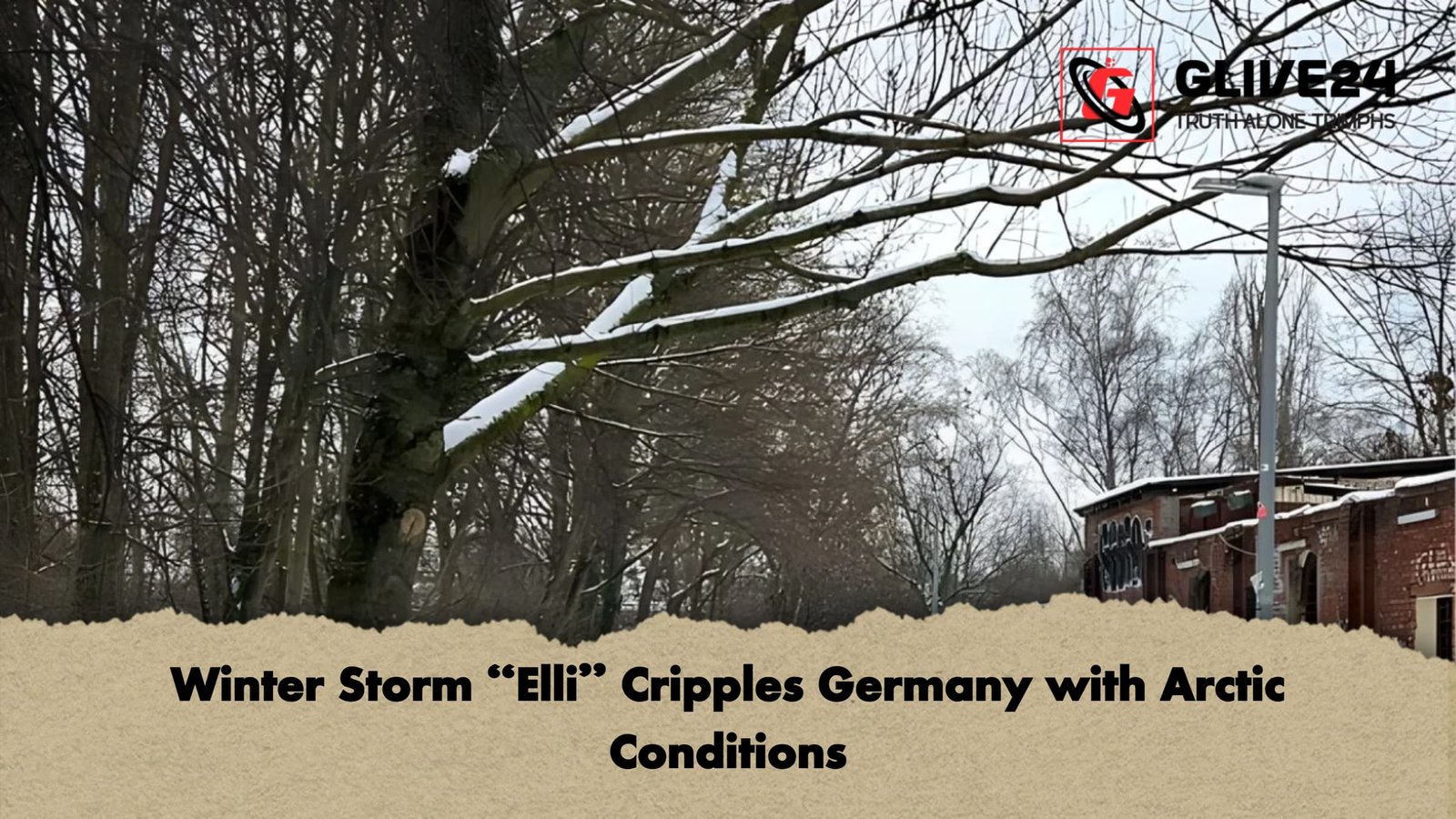
Vast swathes of Germany remain entombed under a thick blanket of snow and ice as Storm Elli sweeps across Central Europe, bringing daily life to a virtual standstill. Meteorological experts have warned that the situation is set to deteriorate further as we approach the weekend, with a powerful low-pressure system funneling arctic air and heavy precipitation directly into the heart of the country.
A Meteorological Onslaught
According to Adrian Leyser of the German Weather Service (DWD), Storm Elli represents a significant threat to public safety. The storm’s primary impact is concentrated in the northern territories, from the North Sea coast to the eastern federal states. Forecasters predict fresh snowfall accumulations of between 10 cm and 20 cm, compounded by gale-force winds that threaten to create impassable snowdrifts on major transport arteries.
While the southern and western regions may encounter slightly milder air masses, the risk is no less severe. The transition from snow to rain in these areas is expected to cause “freezing rain,” resulting in the immediate formation of black ice—a phenomenon that turns motorways into lethal skating rinks within minutes.
Table: Storm Elli Impact Summary (Jan 2026)
| Sector | Nature of Disruption | Severity Level | Official Advice |
| Healthcare | Spike in emergency admissions (fractures/trauma). | Critical | Elderly to remain indoors. |
| Transport | High-speed rail delays; road closures. | Severe | Essential travel only. |
| Public Services | Closure of cemeteries and parks (tree fall risk). | High | Stay clear of wooded areas. |
| Education | Shift to remote/digital learning platforms. | Moderate | Check local school portals. |
| Infrastructure | Risk of power outages and branch breakage. | High | Stockpile 3 days of supplies. |
Hospitals at Breaking Point
The winter emergency has placed immense strain on Germany’s medical infrastructure. Gerald Gaß, President of the German Hospital Association (DKG), has reported a sharp increase in emergency room visits. The treacherous underfoot conditions have led to a “fracture epidemic,” with citizens admitted for broken wrists, hips, and shoulders, alongside serious head injuries sustained from falls on ice-slicked pavements.
Cancellations and Safety Closures
The storm’s reach has extended into the most somber aspects of civic life. In Hamburg, authorities have taken the extraordinary step of cancelling all funerals and memorial services for Friday and Saturday. The weight of the snow on aged trees has created a high risk of “branch snapping,” leading to the total closure of all city cemeteries until Monday morning.
Furthermore, residents in coastal areas, particularly on the island of Fehmarn, have been urged to stockpile food and medicine for at least three days. The Berlin City Mission has also issued an appeal for citizens to look out for the homeless population, whose lives are at immediate risk in the sub-zero temperatures.
Conditions are expected to remain volatile until Sunday, when the low-pressure system is projected to move south-east, allowing for a gradual stabilisation of the weather.