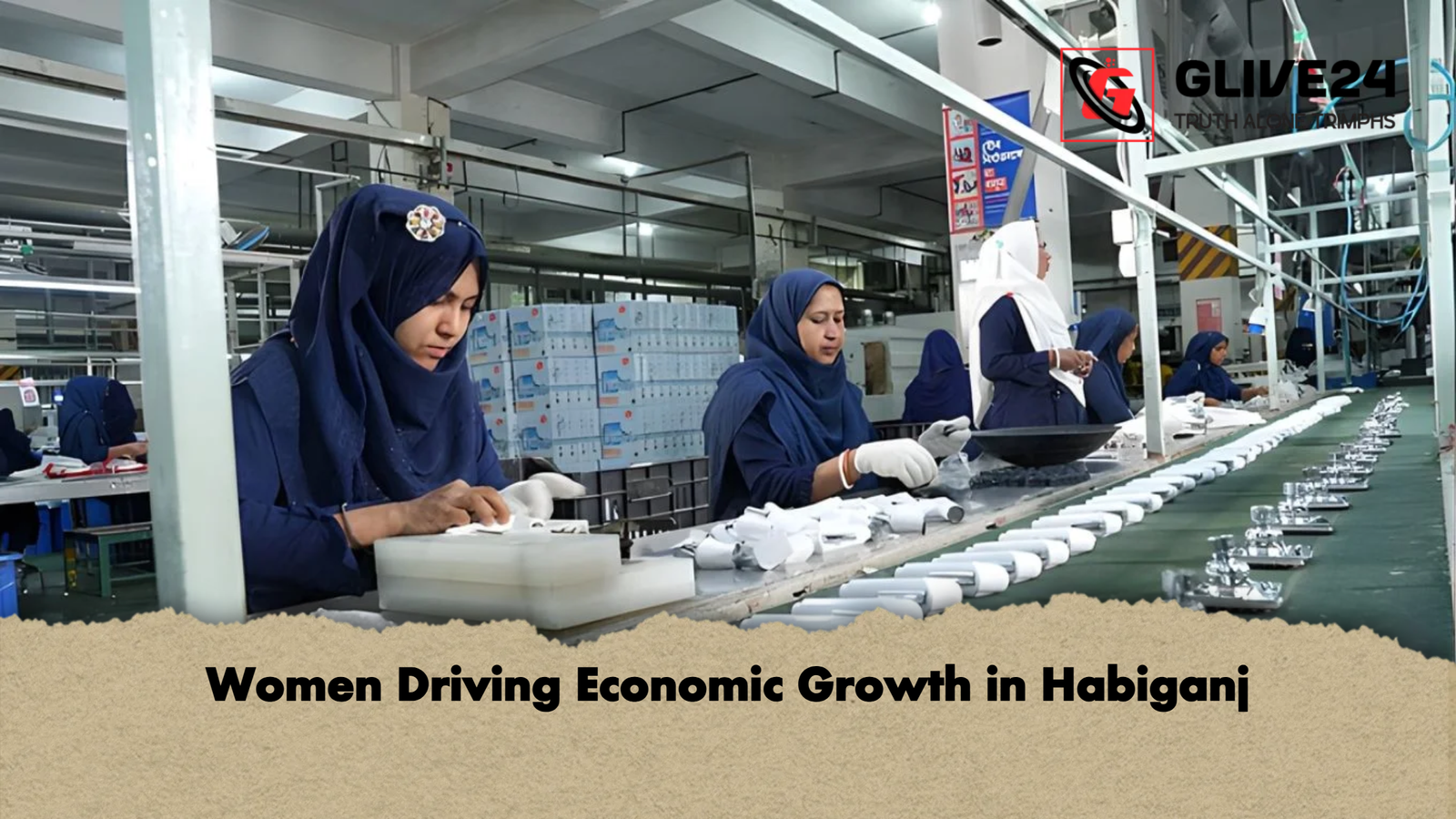
In the remote and rural areas of Habiganj, women are increasingly balancing household responsibilities with active participation in small businesses, online ventures, agriculture, and cluster-based initiatives. Their growing economic engagement not only sustains their own livelihoods but also exerts a positive influence on the district’s broader economy. Women are now involved across a variety of sectors—including business, formal employment, remittances, SMEs, agriculture, and the service industry.
According to the 2022 national census, Habiganj has a population of 2,358,886, of which 1,214,429 are women, representing just over half of the total population. Approximately 42 per cent of women are active participants in the labour market, reflecting a significant contribution to the district’s workforce.
Women’s Vital Role in Tea Gardens
Habiganj is one of Bangladesh’s largest tea-producing regions, accounting for 22 per cent of the nation’s total output from 23 tea estates. Women constitute 60–70 per cent of the workforce in tea production.
Mita Rani Tripura, 45, of the Nalua Tea Garden, has become a symbol of inspiration among her colleagues over the past decade. Once producing 20–22 kg of tea leaves per day, she now averages 40–45 kg daily. Her earnings support her children’s education and enable her husband to launch a small business.
Success in Agriculture
Nearly 26 per cent of women in Habiganj engage in agricultural activities. Their contributions span rice cultivation, vegetables, flowers, horticultural crops, seedling production, and rice processing—playing a crucial role in national food security.
Minnu Akter of Richi village in Sadar Upazila exemplifies this success. Employing a homestead farming system, she cultivates vegetables, rears poultry and fish, and provides training to local women, enhancing both family income and community knowledge.
Industrial Sector Achievements
At the Habiganj Industrial Park, managed by PRAN-RFL Group in Shayestaganj, approximately 12,000 women are employed. Many are widows, family dependents, or the sole earners in their households, and some have been promoted to positions such as line operator, line in-charge, or supervisor.
Moni Munda, 28, from Chunarughat, supports her ailing father and finances her sisters’ university education, becoming an inspiration for local women.
Overseas Employment and Remittances
Around 300 women from Dudhpati village work in the Middle East, sending regular remittances that have transformed local households, funded land and home purchases, and enhanced educational opportunities. Runa Khatun, for instance, used her overseas earnings to acquire land, build a house, and assist her husband financially.
Female Entrepreneurship
Supported by NGO initiatives and SME loans, Parvin Akter began a sewing business with a single machine. Today, her enterprise is valued at 2 million BDT and employs 15–20 women.
Women’s Economic Participation in Habiganj
| Sector | Women’s Participation | Notable Example |
|---|---|---|
| Tea Garden Workers | 60–70% | Mita Rani Tripura |
| Agriculture | 26% | Minnu Akter |
| Industrial/Factory Workers | 12,000 | Moni Munda |
| Overseas Workers | ~300 | Runa Khatun |
| Small Entrepreneurs | 15–20 employees | Parvin Akter |
Through active engagement across diverse sectors, women in Habiganj are reshaping their personal livelihoods, supporting their families, and contributing significantly to the local economy. Experts emphasise that enhancing women’s economic empowerment can drive substantial development in emerging economies.