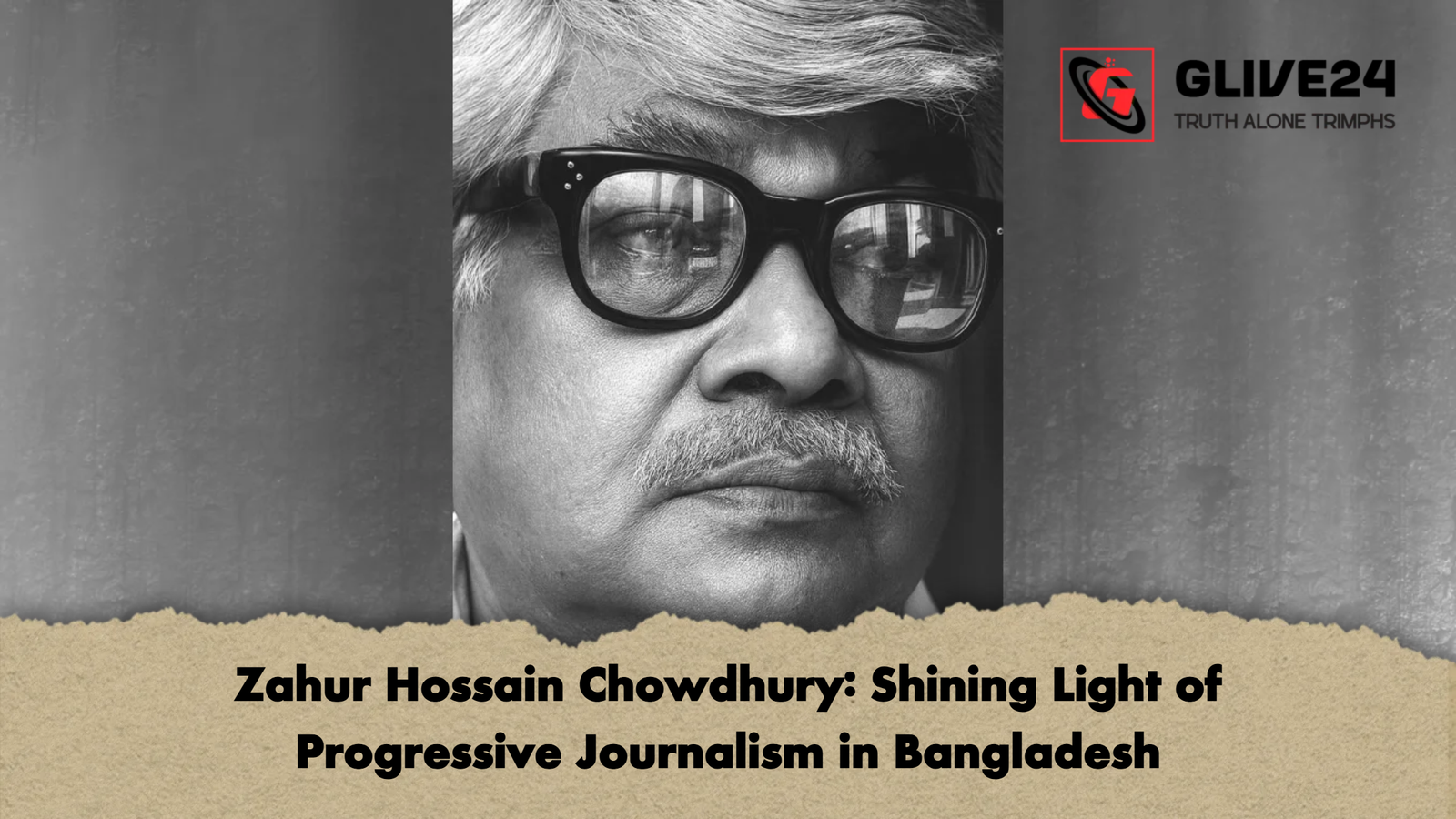
Zahur Hossain Chowdhury remains a luminous figure in the history of Bangladeshi journalism and progressive thought. Driven by a profound sense of responsibility towards the nation, society, and humanity, he took up the pen, which became an unflinching voice for truth. His writings, blending humanistic insight, objective analysis, and political awareness, have earned the enduring trust and admiration of readers across generations.
Born on 27 June 1922 in Chittagong, Zahur Hossain Chowdhury pursued higher education in Kolkata, graduating in 1942 with an honours degree in History from Presidency College. Even during his student years, he actively engaged with progressive politics and literary activities, laying the foundation for a lifelong commitment to social and political issues.
His early passion for journalism led him to work at the renowned Kolkata newspaper The Statesman. He later contributed to the daily Azad and the English weekly Comrade. Following the partition of the country, he returned to Dhaka and joined the English daily Pakistan Observer. However, it was at the daily Sangbad where he wrote the most significant and celebrated chapters of his journalistic career.
From 1954 to 1971, he served as the editor of the daily Sangbad. During this time, his incisive writing consistently exposed the manipulations of the Pakistani state apparatus, political deceit, and social inequality. His analytical acumen, fearless stance, and human-centered approach established him as a distinguished editor. His editorials became lasting records of courage, truth, and justice.
After independence, his regular column ‘Darbare Zahur’ in Sangbad earned him widespread popularity. Through sharp wit, insightful analysis, and skilful presentation, he revealed the dark realities of contemporary society and politics, solidifying his reputation as a masterful commentator.
Zahur Hossain Chowdhury was also a founding member of the East Pakistan Renaissance Society, the East Pakistan Journalists’ Union, and the Dhaka Press Club. Throughout his career, he remained actively engaged with progressive and democratic organisations, advocating for justice and freedom.
In recognition of his extraordinary contributions to journalism, he was awarded the Jebunnessa–Mahbubullah Gold Medal in 1981 and the posthumous Ekushey Padak in 1982.
He passed away on 11 December 1980, yet his writings, courage, thought, and humanism continue to inspire journalists and readers today. Zahur Hossain Chowdhury was not merely an editor; he was a voice against injustice, a representative of the people, and a relentless fighter for truth. Remembering him is a celebration of the legacy of progressive thought and intellectual freedom in Bangladesh.