
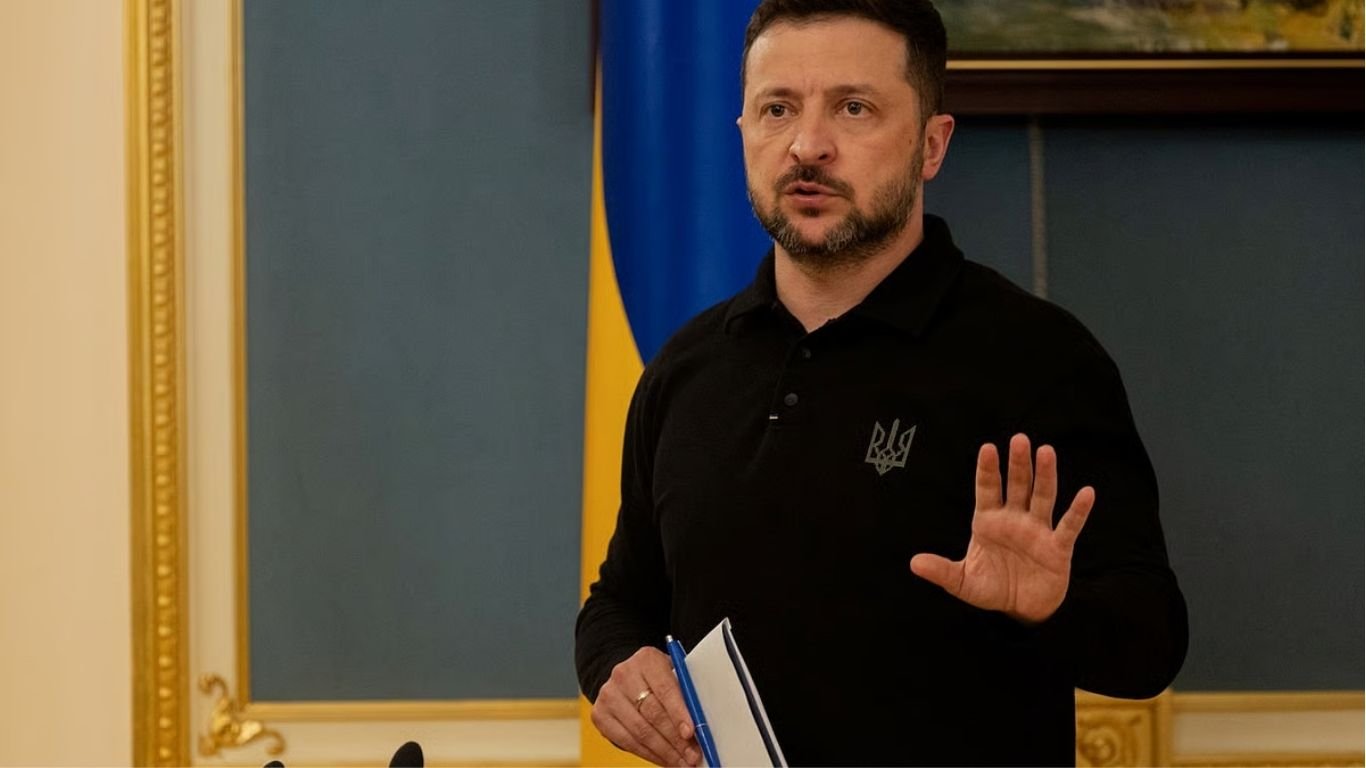
President Volodymyr Zelensky of Ukraine has taken decisive action against high-level corruption in the country’s energy sector by dismissing Justice Minister Herman Halushchenko and Energy Minister Vitalina Grynychuk. The ministers are accused of involvement in a sophisticated bribery network, with allegations suggesting that the scheme involved at least $100 million in illicit payments.
Beyond the ministers, Zelensky has also imposed personal sanctions on Tymur Mindich, a former business partner and close friend, who is alleged to have orchestrated the entire bribery operation. Mindich, a co-founder of Zelensky’s media company, reportedly fled to Israel before investigators could search his Kyiv apartment. Sources indicate that although Mindich was once a close confidant, tensions arose between him and Zelensky following Russia’s invasion of Ukraine.
Speaking publicly about the allegations, Zelensky acknowledged the public anger and stated, “Absolute transparency must underpin all activities in the energy sector. I fully back every investigation by law enforcement and anti-corruption authorities.” He further emphasised that holding wrongdoers accountable is critical, particularly at a time when Ukrainians are grappling with power outages, ongoing attacks from Russia, and widespread destruction. “In the midst of these severe challenges, corruption in the energy sector is intolerable,” he said.
Political analysts describe the move as a significant test of Zelensky’s leadership, highlighting the difficulty of taking action against close allies. Anti-corruption campaigners, opposition politicians, and former military officers had urged the president to make a strong stand, even at considerable personal and political cost.
Investigations were conducted over 15 months by Ukraine’s state-run nuclear energy agency, Energotom, with the assistance of the National Anti-Corruption Bureau (NABU). Both ministers have publicly denied any misconduct. Nevertheless, Zelensky’s decisive action is being interpreted as a clear message that corruption, even among high-ranking officials and former associates, will not be tolerated in Ukraine. The case underscores the challenges faced by Ukrainian leaders in balancing political loyalty with the urgent need for transparency and accountability in governance.