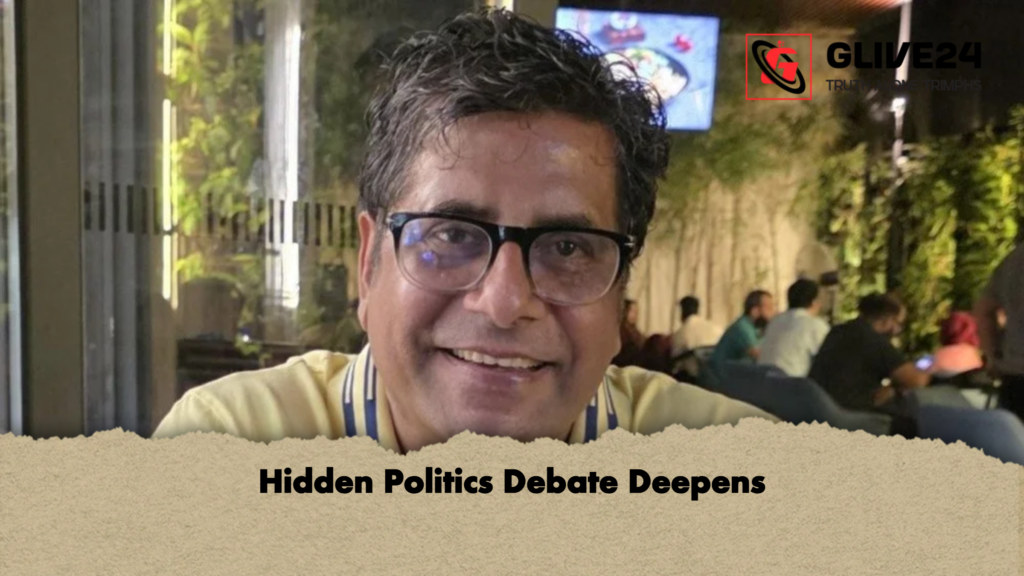
Senior journalist Anis Alamgir has suggested that if the Bangladesh Jamaat-e-Islami were to become further strengthened in the country’s political landscape, it would become easier to identify who the so-called “hidden” or covert political actors truly are. In his view, before labelling others as clandestine forces, the Bangladesh Nationalist Party (BNP) must first undertake the difficult but necessary task of cleaning its own political house.
He made these remarks in a detailed opinion post published on his verified social media account on Wednesday, where he reflected on recent political developments and escalating tensions within student politics.
Alamgir referred to a recent clash between the student wings of the BNP and Jamaat-e-Islami at Chattogram City College, an incident that subsequently spread unrest to Chattogram University. The confrontation has reignited national debate over the presence and influence of “hidden politics” within student organisations.
According to him, BNP-aligned political circles have long accused Jamaat-e-Islami and its student wing of operating in a covert manner. He acknowledged that such perceptions are partly rooted in historical political realities, particularly during earlier administrations when individuals allegedly affiliated with different groups operated discreetly under the shadow of dominant political forces.
However, he also raised a counter-question: whether BNP and its affiliated student organisations have genuinely succeeded in identifying and addressing similar concealed political operatives within their own ranks. He argued that, over time, individuals with unclear or previously hidden affiliations have suddenly emerged in visible political roles, raising concerns about internal transparency.
Alamgir further stated that political reality often dictates that when a party gains organisational strength and influence, its associated networks—both visible and hidden—become more apparent. In such contexts, internal structures are gradually exposed, revealing the true nature of political alignment and influence.
He emphasised that the BNP faces a significant challenge: moving beyond a culture of blaming others and instead focusing on introspection and organisational reform. He warned that undisclosed influential groups may still exist within various professional and student bodies, and failure to identify them could undermine political transparency.
He also stressed the importance of ideological clarity and transparent leadership structures within political organisations as a prerequisite for strengthening democratic practice.
Summary of Key Points
| Topic | Incident/Statement | Interpretation |
|---|---|---|
| Chattogram clash | Conflict between BNP and Jamaat student wings at City College | Rising student political tensions and division |
| Jamaat comment | Stronger Jamaat could expose “hidden” actors | Debate on political transparency intensifies |
| BNP reflection | Need to identify internal covert actors | Call for organisational self-assessment |
| Overall view | Self-criticism more important than blame | Demand for reform in political culture |
Overall, Alamgir’s remarks have sparked renewed debate in political circles over organisational transparency, internal reform, and the enduring controversy surrounding “hidden politics” in Bangladesh’s student and mainstream political arenas.