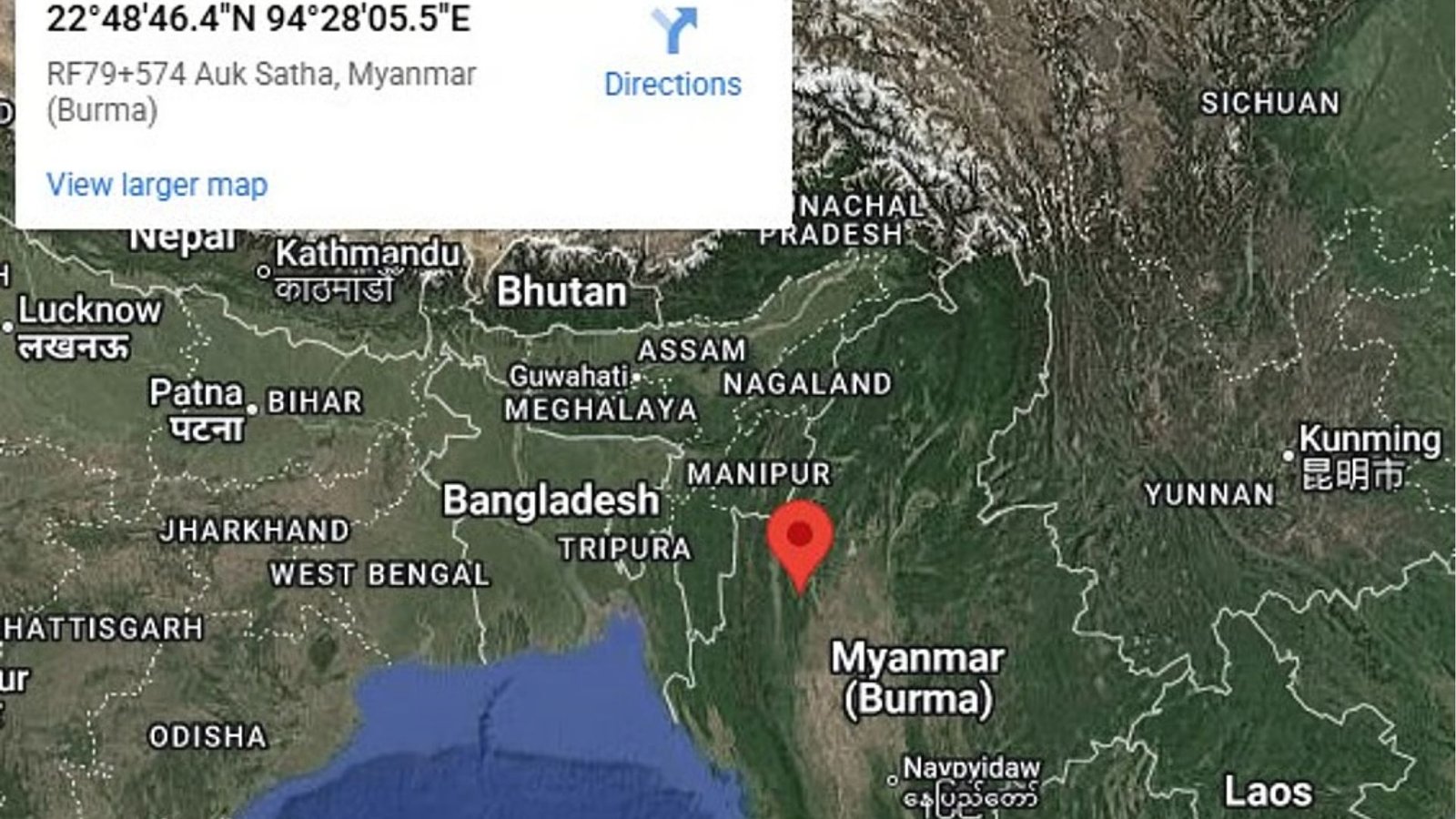
A moderate earthquake measuring 4.9 on the Richter scale struck north-western Myanmar on Monday, centred approximately 81 kilometres east of the town of Falam. According to the United States Geological Survey (USGS), the quake occurred at 12:55 a.m. local time, with a focal depth of 106.8 kilometres. The Bangladesh Meteorological Department confirmed the report, noting that the epicentre was located some 431 kilometres from Dhaka.
Myanmar is recognised as one of the most seismically active countries in South-East Asia. The nation sits at the junction of the Indian and Eurasian tectonic plates, making it particularly vulnerable to earthquakes. The plate boundary in the region, known as the Sagaing Fault, runs almost 1,200 kilometres from north to south, traversing major urban centres such as Mandalay and Yangon. Geologists have warned that this extensive fault line places millions of inhabitants at potential risk, with even moderate tremors capable of causing significant concern.
This recent earthquake follows a far stronger seismic event earlier this year. On 28 March, a 7.7-magnitude earthquake struck Myanmar, producing tremors felt across neighbouring countries including Thailand, Bangladesh, India, Cambodia, and China. Experts have noted that the magnitude of that quake was unprecedented in the last two decades, underscoring the ongoing seismic vulnerability of the region.
While Monday’s 4.9-magnitude earthquake is considered moderate, it nonetheless serves as a reminder of the persistent threat posed by Myanmar’s geological positioning. Seismologists have emphasised the importance of maintaining vigilance, especially in towns and cities situated close to the Sagaing Fault. Even moderate earthquakes can trigger secondary hazards, including landslides in hilly areas and structural damage in older buildings.
Authorities have advised residents to ensure that emergency supplies are readily available and to familiarise themselves with safety protocols, including evacuation routes and designated shelters. Urban planners and construction authorities are also urged to enforce earthquake-resistant building standards to minimise potential casualties and property damage in future events.
The Sagaing Fault’s extensive reach, running from the north to the south of the country, highlights the scale of Myanmar’s seismic risk. Experts have warned that continued monitoring, scientific research, and community preparedness remain critical to reducing the potential impact of future earthquakes. Monday’s tremor, though relatively minor, reinforces the need for sustained attention to earthquake safety measures and public awareness campaigns across the country.
This latest event serves as a stark reminder of Myanmar’s vulnerability to natural disasters, highlighting the necessity for continued vigilance and proactive measures to safeguard communities along the Sagaing Fault.