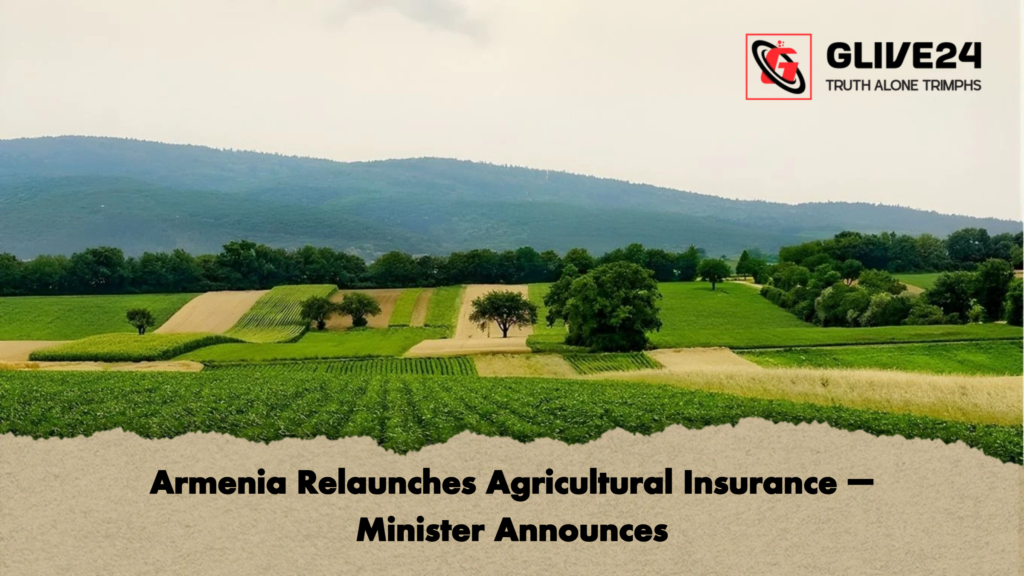
The Republic of Armenia has announced the reinstatement of its agricultural insurance programme, a key support mechanism for farmers, with operations set to resume on 15 February 2026, according to comments by Minister of Economy Gevorg Papoyan.
The announcement, made during a live update on the minister’s official Facebook page, signals the continuation of a government effort to shield agricultural producers from increasingly frequent climate‑related hazards. Over recent years, Armenian policymakers have sought to strengthen risk‑management tools for the agricultural sector, recognising its vulnerability to extreme weather events such as hail, drought and spring frosts.
Insured Crops and Covered Risks
For the 2026 agricultural season, a broad array of crops will qualify for coverage under the revived scheme. These include both fruit and field crops:
| Crop Category | Crops Insured in 2026 |
|---|---|
| Fruits | Apricots, grapes, apples, peaches, plums, cherries, sweet cherries |
| Vegetables & Melons | Melons, watermelons, potatoes |
| Grains | Wheat, barley, oats |
The insurance is designed to protect growers against three principal climate hazards identified by the ministry: hail, spring frosts and drought, all of which have historically caused significant yield losses in Armenia’s diverse agricultural regions.
Government Subsidies and Support
To encourage participation and reduce the financial burden on farmers, the Armenian government will subsidise a substantial portion of the insurance premiums. The support structure differentiates between key staple products and other eligible crops:
-
40 % government subsidy on premiums for apricot, wheat, barley and oat crops.
-
60 % subsidy on premiums for all other covered crops.
This tiered subsidy model aims to balance strategic food production priorities with broader crop diversification objectives — reflecting the government’s dual focus on food security and rural economic stability.
Background and Context
Armenia’s agricultural insurance initiative has been evolving over several years. In previous seasons, pilot and state support programmes subsidised farmers’ insurance premiums and encouraged insurers to enter the market, in partnership with international financial institutions such as Germany’s KfW.
Despite challenges, including the temporary withdrawal of reinsurance support and the strains of climate volatility, the government has maintained efforts to refine the programme. For 2025, state support for premiums was reportedly increased, with coverage extended to multiple crop types and climate risks.
Implications for Farmers
The relaunch of this insurance scheme is expected to be welcomed by producers across Armenia’s agrarian heartlands. By mitigating the financial impact of weather‑related crop losses, the programme not only contributes to individual farm resilience but also promotes broader stability in rural economies. It aligns with ongoing policy goals to modernise Armenia’s agricultural sector and to ensure sustainable growth amid environmental uncertainties.
Overall, the 2026 agricultural insurance season marks a significant step in bolstering the risk management framework for Armenian farming communities.