Bangladesh’s political landscape enters a new chapter as the newly elected government, led by Tarique Rahman, officially assumes office on Tuesday, 17 February. This marks the conclusion of the 18-month interim administration that followed the historic student-led mass uprising, signalling a return to democratic governance.
The formal swearing-in ceremony of the new cabinet will take place at 4:00 pm at the South Plaza of the National Parliament House, where President Md. Sahabuddin will administer the oath. Earlier in the morning, the newly elected members of parliament will pledge their allegiance before Chief Election Commissioner A M M Nasir Uddin, marking the formal restoration of parliamentary democracy.
Sources indicate that the cabinet, comprising a blend of youthful leaders, seasoned politicians, and technocrats, is likely to number between 35 and 40 members, with 26 to 27 full ministers. The administration aims to leverage multi-generational political experience and technological expertise to tackle the nation’s pressing challenges.
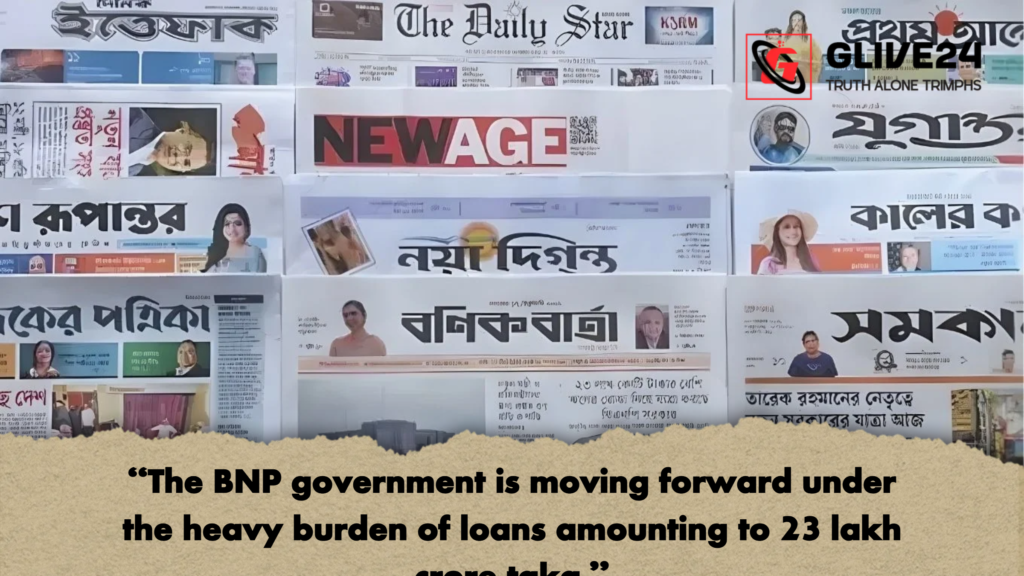
Despite the ceremonial optimism, the new government inherits a formidable economic burden. According to the latest reports from Bonik Barta, the total public debt currently exceeds Tk 23.25 lakh crore, up from Tk 22.50 lakh crore at the close of FY 2024–25, due to domestic and foreign borrowing during the first half of the current fiscal year.
| Fiscal Year | Government Borrowing (Tk crore) | Notes |
|---|---|---|
| 2024–25 | 22,50,904 | Total domestic & foreign debt at year-end |
| H1 2025–26 | 74,251 | Increase through banking and foreign loans |
| Dec 2025 | 23,25,155 | Current total public debt |
In addition to economic pressures, the administration faces logistical and administrative challenges. Recent reports indicate that nearly fifty cargo ships loaded with essential goods remain stranded at Chittagong Port, delaying the timely release of staple commodities ahead of Ramadan, potentially affecting both wholesale and retail markets.
Preparations for the swearing-in have also drawn international attention. Distinguished foreign dignitaries are arriving in Dhaka, including India’s Lok Sabha Speaker Om Birla, accompanied by Foreign Secretary Vikram Misri; Bhutanese Prime Minister Shering Tobgay; Maldives President Dr. Mohamed Muizzu; along with senior ministers from Pakistan, Nepal, and Sri Lanka.
On the administrative front, significant reshuffles have already occurred. Three days prior to the handover, Sheikh Abdur Rashid and Chief Adviser’s Principal Secretary M Siraj Uddin Mia voluntarily stepped down, with Nasimul Gani appointed as the new Cabinet Secretary. Analysts anticipate further changes among district commissioners and senior secretaries.
From a socio-economic perspective, Professor Muhammad Yunus delivered a farewell address urging the nation to continue building a just, humane, and democratic Bangladesh, noting that citizens have begun reclaiming freedom of speech and accountability under the interim administration.
Meanwhile, Transparency International Bangladesh reports that nearly 60% of the new parliament members are businesspersons, including 13 billionaires among 236 affluent representatives, maintaining the trend of commercial influence in governance.
As Bangladesh embarks on this new era, the BNP government steps forward with ambitious promises, a diverse cabinet, and a towering fiscal challenge of over Tk 23 lakh crore.