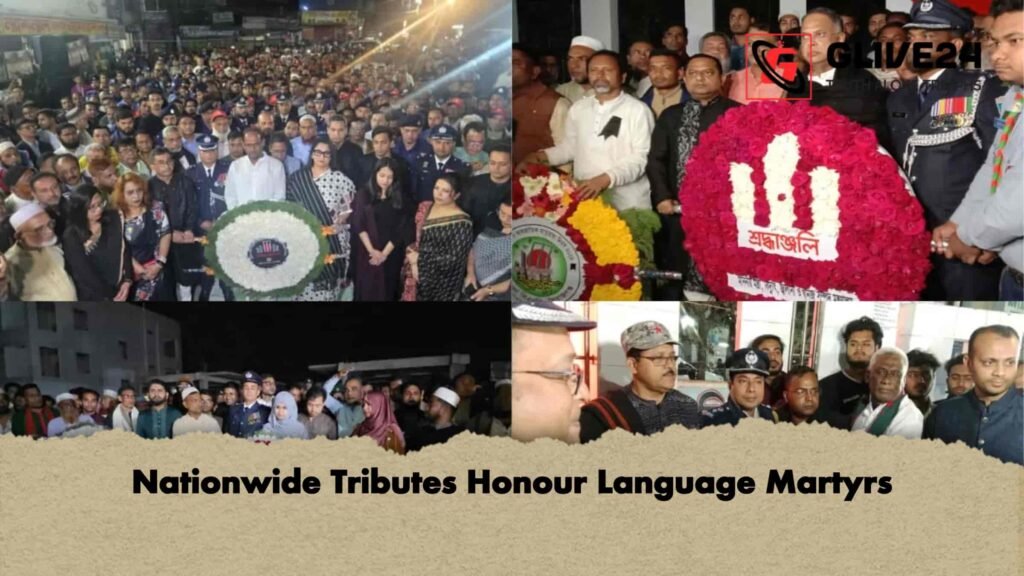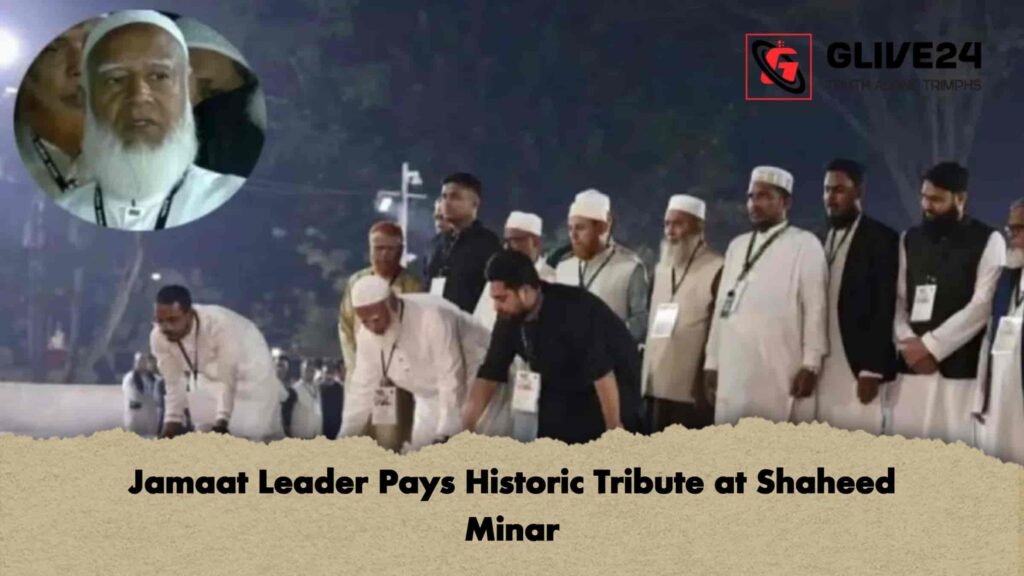
In a landmark moment in the history of Jamaat-e-Islami Bangladesh, the party’s Amir and Leader of the Opposition in the National Parliament, Dr Shafiqur Rahman, paid tribute at the Central Shaheed Minar in the early hours of International Mother Language Day on 21 February. This marked the first occasion that the Jamaat Amir personally laid a floral wreath at the monument, a gesture that has generated considerable attention in political and cultural circles.
Dr Shafiqur Rahman arrived at the Shaheed Minar at approximately 6:30 am, shortly after the President and Prime Minister had offered flowers in memory of the martyrs of the language movement. Accompanying him were prominent figures from the National Citizens’ Party, including Nahid Islam, Akhtar Hossain, and Hasnat Abdullah, as well as senior leaders representing an 11-party coalition.
Following the wreath-laying ceremony, Dr Rahman led a solemn prayer. In a brief interaction with journalists, he described his participation as both a duty and a moral responsibility. “As a state-recognised observance, paying homage is my responsibility,” he said. “As the Leader of the Opposition, it is imperative to be present alongside my party leaders to honour the sacrifices of our martyrs.”
He further emphasised the inclusive nature of remembrance, noting, “On such a sacred day, certain questions are inappropriate. We remember not only the language martyrs of 1952 but also those who sacrificed their lives in 1947, the 1971 Liberation War, and the popular uprising of 1990. We especially honour those who fell under fifteen years of fascist rule. Similarly, we commemorate all who, as July fighters, gave their lives to uphold the rights of the nation.”
Dr Rahman stressed that paying homage to the language martyrs is not merely a political act but a moral obligation towards the nation. He stated, “Our struggle for a free, anti-fascist, terrorism-free, corruption-free, and humane society continues, and we will make no compromise in these efforts.”
Later in the day, Dr Rahman visited the Azimpur graveyard to offer prayers at the graves of the language martyrs, seeking eternal peace for their souls.
The table below summarises key figures present during the historic tribute:
| Name | Position/Relationship | Purpose of Attendance |
|---|---|---|
| Dr Shafiqur Rahman | Jamaat Amir, Leader of the Opposition | Wreath-laying and leading prayers |
| Nahid Islam | National Citizens’ Party Leader | Representing the party |
| Akhtar Hossain | Political Leader | Representing the party |
| Hasnat Abdullah | Political Leader | Representing the party |
| Other senior leaders of 11-party coalition | Various parties | Collective tribute to the martyrs |
This unprecedented act by the Jamaat Amir is being viewed as a historic gesture, reflecting the party’s acknowledgement of the sacrifices made during the language movement. Observers have noted that it reinforces national respect for the legacy of the 1952 martyrs while signalling an effort to bridge political and cultural divides.