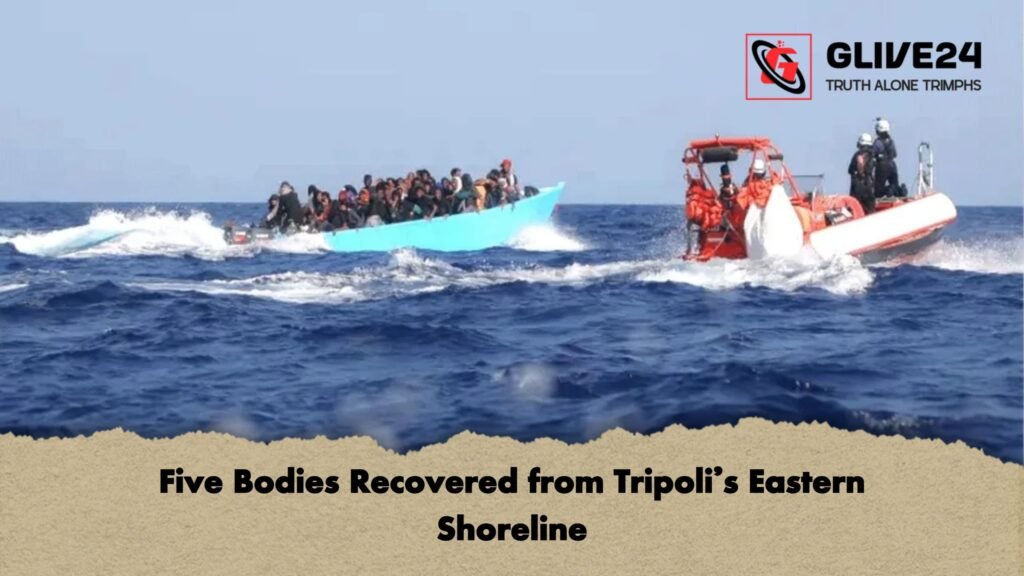
In a harrowing reminder of the perils facing migrants in the Mediterranean, the bodies of at least five individuals have washed ashore on the eastern outskirts of Tripoli, Libya’s capital. The discovery was made on Saturday near the coastal town of Qasr al-Akhyar, where local residents alerted authorities after finding the remains strewn across the beach following a period of turbulent sea conditions.
A Grim Discovery on the Coast
According to Hassan al-Ghaweel, the head of the Al-Akhyar police station, the recovered victims appear to be of sub-Saharan African origin. Among the five confirmed dead are two women. Eyewitnesses further reported the tragic sight of a young child’s body being swept back into the depths by powerful waves before it could be retrieved.
Emergency services have formally requested the assistance of the Libyan Coast Guard to locate the missing child and conduct a wider sweep of the shoreline. While the five bodies recovered so far remain intact—suggesting the deaths occurred recently—officials fear that more casualties may be trapped at sea or buried beneath the sand as the tides recede.
A Lethal Transit Route
The incident follows a devastating report from the International Organization for Migration (IOM) earlier this month. The IOM documented a shipwreck off the coast of Zuwara, west of Tripoli, where a vessel carrying 55 people foundered. That tragedy left at least 53 migrants, including two children, dead or missing.
| Incident Timeline | Location | Casualties | Status |
| Early Feb 2026 | Zuwara (West Tripoli) | 53 Dead/Missing | Confirmed Shipwreck |
| 21 Feb 2026 | Qasr al-Akhyar (East) | 5 Confirmed | Bodies Recovered |
| Ongoing | Mediterranean Basin | Thousands Annually | Search Operations |
The Humanitarian Context
The resurgence of these tragedies highlights the dire situation for migrants in Libya. A recent United Nations report underscored the “extreme human rights risks” faced by those in transit, including systemic murder, torture, and forced labour.
Since the NATO-backed ousting of Muammar Gaddafi in 2011, Libya has been fractured by political instability. Effectively split between eastern and western administrations since 2014, the power vacuum has allowed human trafficking networks to flourish. For thousands fleeing conflict and poverty, the Libyan coast remains the primary, yet often fatal, gateway to Europe.
The Libyan Red Crescent has been summoned to manage the transfer of the remains and provide forensic support. As the search continues, the international community faces renewed pressure to address the root causes of this migrant crisis and provide safer alternatives to the “death boats” of the Mediterranean.