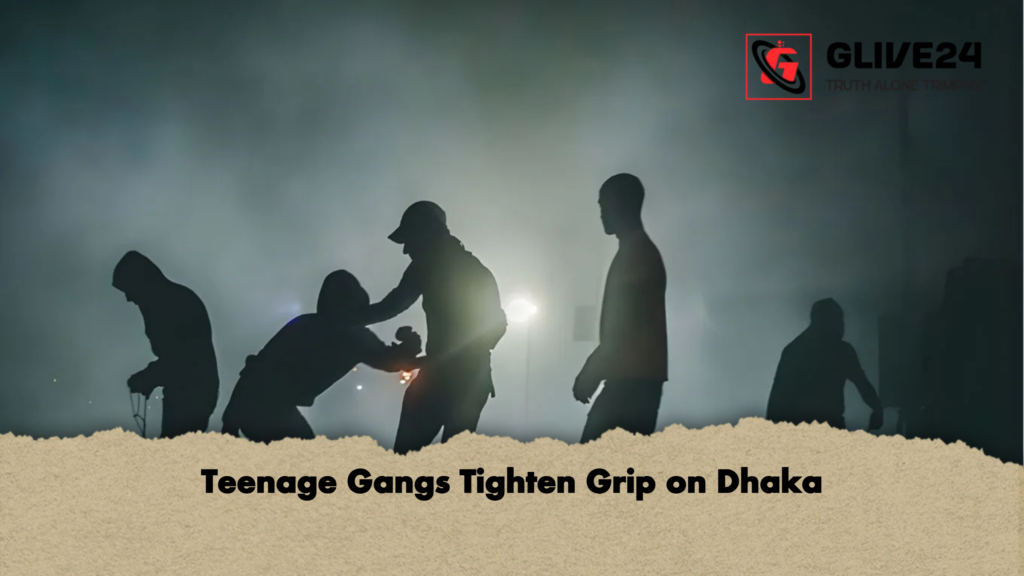
Teenage gang activity in Dhaka has reached an alarming level, prompting renewed concern among residents and law enforcement agencies. According to data from Dhaka Metropolitan Police (DMP), at least 127 juvenile gangs are currently active across various police station jurisdictions in the capital. These groups are allegedly involved in a wide spectrum of serious crimes, including murder, extortion, mugging, drug trafficking and even rape.
Police sources indicate that over the past four years, several thousand complaints linked to teenage gang activities have been recorded in Dhaka. During this period, more than 5,000 gang members have been detained or arrested. S M Nazrul Islam, Additional Commissioner (Crime and Operations) of the DMP, described teenage gangs as a long-standing social malaise. However, he acknowledged a recent surge in their activities and confirmed that special operations have been relaunched. All police stations have been instructed to intensify surveillance and conduct regular drives against known offenders.
In a recent virtual meeting organised by Police Headquarters, Inspector General of Police Baharul Alam directed field-level officers to adopt stringent measures against extortion, mugging and drug-related crimes. He emphasised that maintaining normal law and order in the capital is a non-negotiable priority.
Table of Contents
Expansion of Teenage Gangs
Official and institutional data suggest a rising trend nationwide, with Dhaka emerging as a major hotspot:
| Year | Active Gangs Nationwide | Active Gangs in Dhaka |
|---|---|---|
| 2022 | 173 | Not specified |
| 2024 | 237 | 127 |
Law enforcement analysis reveals that nearly every police station area in Dhaka now hosts multiple teenage gangs, often operating in smaller splinter groups. In many instances, these gangs function under the patronage of locally influential political figures, operating under the guise of “big brother” protection. Their activities reportedly include eve-teasing, theft, robbery, extortion, narcotics distribution and homicide.
Extortion Attack in Adabor
A recent incident in Adabor underscores the gravity of the situation. A group of 10 to 12 armed youths allegedly led by a gang leader known as “Kala Russell” stormed an embroidery factory after failing to secure extortion payments. Workers were reportedly assaulted with sharp weapons, leaving several injured. In protest, around 150 factory workers and owners laid siege to the local police station. Police have since detained five suspects, including the alleged ringleader, and confirmed that the factory had been under prior surveillance by the gang. Authorities have also identified at least seven other active gangs in the area.
Student Murder in Jatrabari
On 15 February, a 15-year-old madrasa student was fatally stabbed in Jatrabari, allegedly by members of a local teenage gang. Preliminary investigations suggest the involvement of a neighbourhood group, and police operations to apprehend the remaining suspects are ongoing.
Social Drivers and Preventive Measures
Research indicates that approximately 69 per cent of juvenile offenders are driven into crime by poverty. Other contributing factors include family neglect, social instability, drug addiction, exposure to pornography and political patronage networks. Experts argue that enforcement alone cannot resolve the crisis; coordinated preventive efforts involving families, educational institutions and community leaders are essential.
To enhance monitoring, authorities have initiated the installation of 550 CCTV cameras in Mohammadpur and Adabor. Officials hope that technology-driven surveillance, combined with stricter law enforcement, will curb the spread of teenage gangs. Nevertheless, analysts stress that long-term solutions must prioritise social awareness campaigns and rehabilitation programmes to prevent vulnerable youths from slipping further into organised criminal networks.