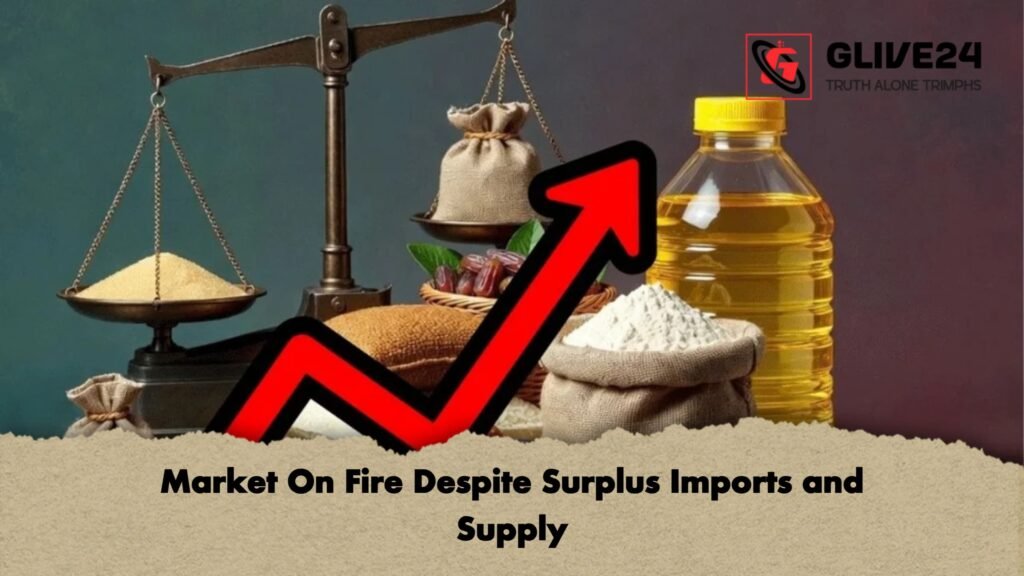
As the holy month of Ramadan begins, a perplexing and painful paradox has gripped the Bangladeshi kitchen market. Despite record-breaking import figures and warehouses in wholesale hubs like Khatunganj and Chaktai being stocked to the rafters, retail prices have “caught fire.” The common fasting citizen, already weary from inflation, now finds essential commodities drifting further out of reach.
Table of Contents
The Mystery of the “Supply Shortage”
Data from Chittagong Custom House paints a picture of abundance. In a post-fascist economic landscape where the previous “Awami League syndicates” were reportedly dismantled to allow more importers into the fray, the volume of essential goods has actually surged compared to previous years.
For instance, sugar imports have reached 473,000 tonnes, a staggering 39% increase over last year. Chickpea imports have exceeded the national demand by over 28%. Lentils, dates, onions, and edible oils have similarly seen multi-fold increases in import volumes.
Comparative Import Data for Ramadan 2026
| Commodity | Import Volume | Change vs Previous Year | Status |
| Sugar | 473,000 Tonnes | +39% | Surplus |
| Lentils | 229,000 Tonnes | Significant Increase | Surplus |
| Chickpeas | 128.29% of Demand | +28.29% | Surplus |
| Dates/Onions | Multiple Fold Increase | Varies | Abundant |
The “Withholding Supply” Strategy
If the warehouses are full, why are the prices rising? Economists point to a sophisticated “Withholding Supply Strategy.” By intentionally delaying the unloading of goods at ports or leaving cargo in ships and bonded warehouses, a psychological sense of scarcity is manufactured. This artificial crisis triggers panic buying, allowing traders to offload stock at inflated retail prices.
In developed economies, such “cartel” behaviour is a criminal offence. The Federal Trade Commission (USA) and the European Commission take draconic measures against such market manipulation. In Bangladesh, however, the process of investigation is often sluggish and ineffective, allowing an invisible power structure to dictate the cost of living.
Transaction Cost Distortion and Extortion
Beyond the boardrooms of importers lies the “street-level” reality of extortion. Every truck transporting goods from the port to the capital must navigate a gauntlet of informal “tolls.” These costs, known in economics as Transaction Cost Distortion, add zero value to the product but are ultimately passed down to the consumer.
Breaking the Silence: A Path Forward
The silence of the business community regarding these hikes is telling. It suggests either complicity or a fear of the influential groups that still pull the strings of the market. To douse the flames of inflation, the following structural changes are imperative:
-
Digital Inventory Tracking: Real-time public disclosure of import and warehouse stock to prevent artificial hoarding.
-
Port Efficiency: Strict penalties for intentional delays in clearing essential goods.
-
Active Market Monitoring: Moving beyond occasional “drives” to a permanent, data-driven surveillance of retail chains.
-
Zero Tolerance for Extortion: Eliminating the informal costs added during transport.
Market dynamics should be based on fair profit, not opportunistic exploitation. When the “market fire” is fed by internal greed rather than global supply chains, it becomes a moral crisis that the state must address with an iron hand.