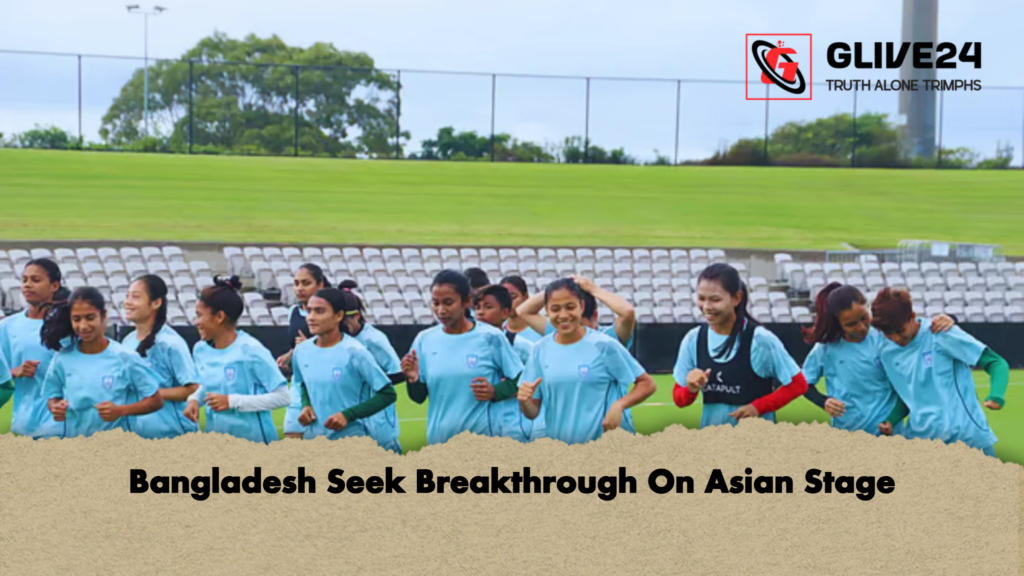
Under the gentle morning sunshine at Jubilee Stadium in Sydney, the Bangladesh women’s football team trained with visible intensity and purpose. The atmosphere within the squad reflected determination rather than apprehension, despite the formidable challenge that lies ahead: a clash with nine-time Asian champions China women’s national football team.
Bangladesh will begin their Asian Cup campaign next Tuesday at Western Sydney Stadium, marking a significant moment in the nation’s footballing journey. According to goalkeeping coach Masud Ahmed, a strong performance on this stage could open doors to global opportunities for the players.
Speaking after a training session, Ahmed emphasised the team’s positive mindset. He noted that the players are not burdened by pressure; instead, they are energised by the opportunity to prove themselves. In his view, success in Asia could elevate the team’s standing and expose them to higher levels of international competition.
Realistically, Bangladesh enter the tournament as underdogs. In terms of strength, experience, and historical success, they trail behind both China and North Korea women’s national football team. Even securing a draw against such opposition would be considered a remarkable achievement. Nevertheless, the coaching staff remain composed and focused on preparation rather than reputation.
Ahmed stressed that at this level, distinctions between “big” and “small” teams become less relevant. Instead, technical discipline and minimising errors are crucial. He highlighted that the team has worked consistently over the past year on core fundamentals, aiming to reduce mistakes that could lead to conceding goals.
Preparation has been meticulous. Since qualifying for the tournament, Bangladesh’s staff have analysed matches involving China, North Korea, and Uzbekistan women’s national football team. Detailed assessments of attacking patterns, positional play, and defensive vulnerabilities have informed training sessions. Players have been assigned clearly defined roles to ensure tactical cohesion.
A major concern will be handling China’s attacking prowess. Goalkeeper Rupna Chakma is expected to play a pivotal role, particularly in dealing with long-range efforts. According to Ahmed, the team has invested significant time in practising defensive responses to shots from various angles, and he expressed confidence in their readiness.
Below is a comparative overview of Bangladesh’s group opponents:
| Team | Key Strengths | Experience Level | Challenge for Bangladesh |
|---|---|---|---|
| China | Clinical attack, tactical depth | Very high | Sustained defensive pressure |
| North Korea | Physicality, discipline | High | Midfield control battles |
| Uzbekistan | Organised structure | Moderate | Breaking defensive lines |
Bangladesh have previously achieved regional success, winning the South Asian championship twice. However, this tournament represents a far greater test. Ahmed remarked that predicting this group of players is difficult, as they are capable of unexpected performances and possess a fearless mentality.
Ultimately, the match against China is not merely a daunting fixture but also a valuable opportunity. The coaching staff view exposure to such high-level competition as essential for long-term development. Whether Bangladesh can rise to the occasion in Sydney now remains the central question.