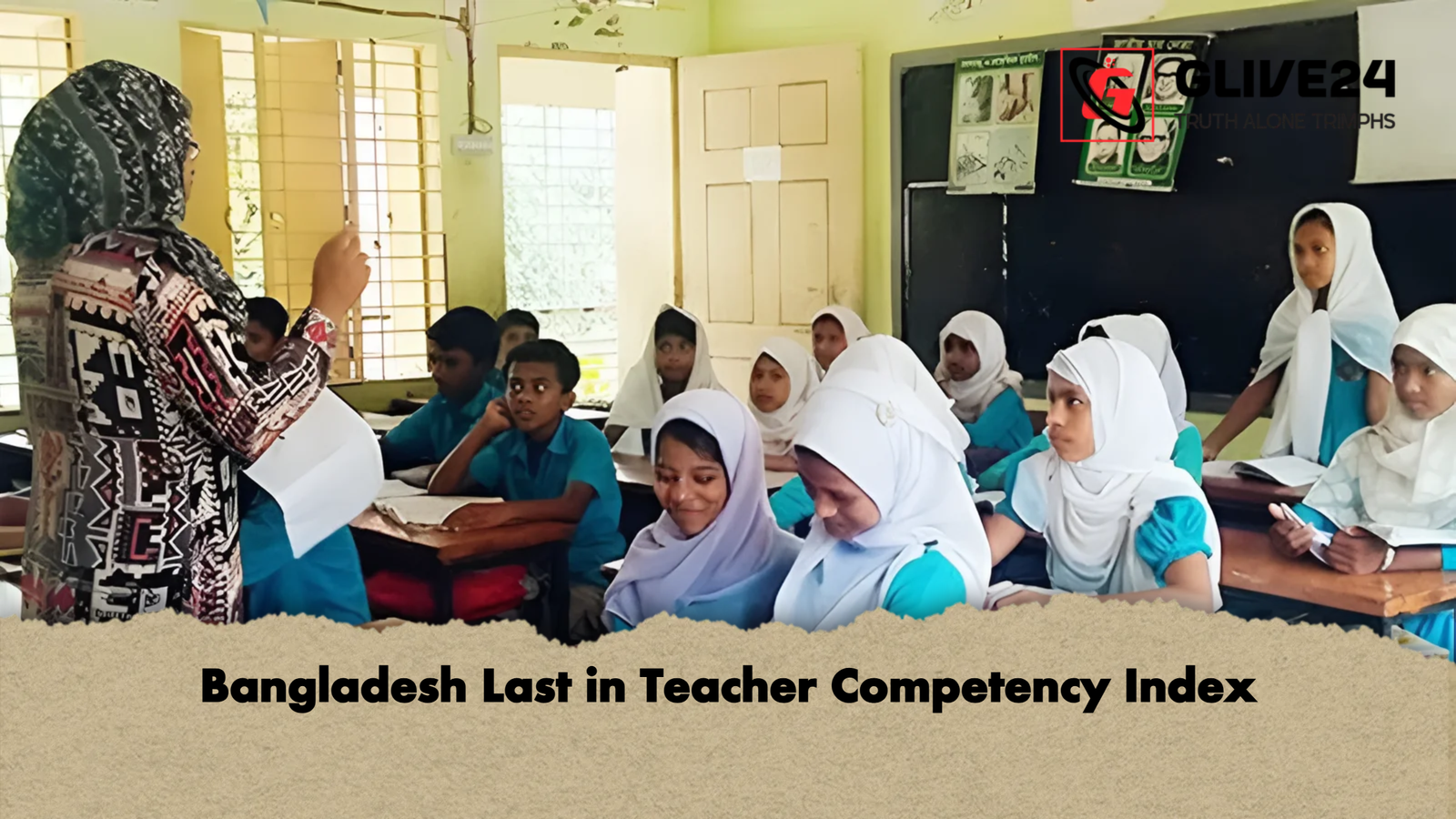
Bangladesh has been ranked the lowest among South Asian countries in terms of the proportion of teachers meeting minimum competency standards, according to the latest global education statistics published by UNESCO. The findings present a comparative assessment of teacher quality across the region, highlighting significant disparities in professional preparedness.
The UNESCO report evaluates teacher competency based on two core criteria: whether teachers possess the required training for the level they are teaching, and whether their formal academic qualifications are appropriate for that level of instruction. Using this framework, Bangladesh records a comparatively low overall performance in secondary education.
At the secondary level, only around 55 per cent of teachers in Bangladesh meet the minimum competency threshold. More specifically, the rate stands at 54.7 per cent in the lower secondary stage and 55.2 per cent in the upper secondary stage, indicating minimal variation between the two tiers.
The report places Bangladesh at the bottom of South Asia in this indicator. Maldives leads the region with a 98.5 per cent rate of teachers meeting minimum competency standards. Other countries in the region—including Bhutan, Nepal, India, Sri Lanka, and Pakistan—rank above Bangladesh, although the report does not provide a detailed breakdown of their respective percentages.
| Country | Share of Teachers Meeting Minimum Competency |
|---|---|
| Maldives | 98.5% |
| Bhutan | Higher than Bangladesh (exact figure not stated) |
| Nepal | Higher than Bangladesh (exact figure not stated) |
| India | Higher than Bangladesh (exact figure not stated) |
| Sri Lanka | Higher than Bangladesh (exact figure not stated) |
| Pakistan | Higher than Bangladesh (exact figure not stated) |
| Bangladesh | ~55% (Lowest in South Asia) |
Additional data from the Bangladesh Bureau of Educational Information and Statistics (BANBEIS) for 2024 provides further insight into subject-level qualification gaps at the secondary stage. The figures indicate that only 16.99 per cent of English teachers hold a Bachelor’s or Master’s degree in English. In mathematics, the proportion is even lower, at 14.66 per cent.
These statistics suggest a notable mismatch between subject specialisation and teaching assignments, particularly in core academic areas such as English and mathematics. The data also points to broader structural challenges in ensuring that teachers possess both adequate academic qualifications and subject-specific training aligned with curriculum requirements.
The competency framework used in the UNESCO assessment focuses on formal qualifications and training suitability rather than classroom performance metrics or student outcomes. It therefore provides a structural indicator of teacher preparedness across education systems, particularly in secondary education where subject specialisation becomes more critical.
Overall, the findings position Bangladesh significantly behind its regional counterparts in South Asia in terms of minimum teacher competency levels, while also highlighting specific subject-level qualification deficiencies within the national education system.
> Thiago Silva Returns to Fluminense Until 2026
> Messi Sets Four Guinness Records in One Match
> Poultry Farmers Suspend Egg Sales Indefinitely in Sirajganj over Losses
> Portugal Emerges as Key Employment Destination for Bangladeshi Workers
> Argentine Ambassador Captivated by World Cup Fever at Dhaka University
> Bangladesh Set to Join China’s Global Initiatives
> Eighteen Years of Economic and Structural Neglect in Bogra
> Over 100,000 Yaba Tablets Seized at Border
> Bangladesh Could Earn $1 Billion Yearly Selling Carbon Credits
> Iran launches new strikes against Kurdish groups in Iraq
> Sanjoy Joins World Cup Album
> Armed Drug Dealer Apprehended in Banani Police Raid
> Oxford Authorities Contradict Claims by Hasnat, Sadik
> Anupam Roy Live Concert Announced Dhaka
> Club Goal Rankings in World Cup History
> Two Arrested With Tapentadol
> De Paul Tops AI Beauty Ranking
> Global Commemoration of International Father’s Day
> Secret Oath-Taking by Ousted Party Activists in Lakshmipur

সম্পাদক ও প্রকাশক: এ বি এম জাকিরুল হক টিটন
যোগাযোগের ঠিকানাঃ পশ্চিম কাফরুল, বেগম রোকেয়া সরণি, ঢাকা
© Copyright 2026 Khaborwala। All Rights Reserved
Comments