
Khabor Wala Desk
Published: 2nd March 2026, 7:30 AM
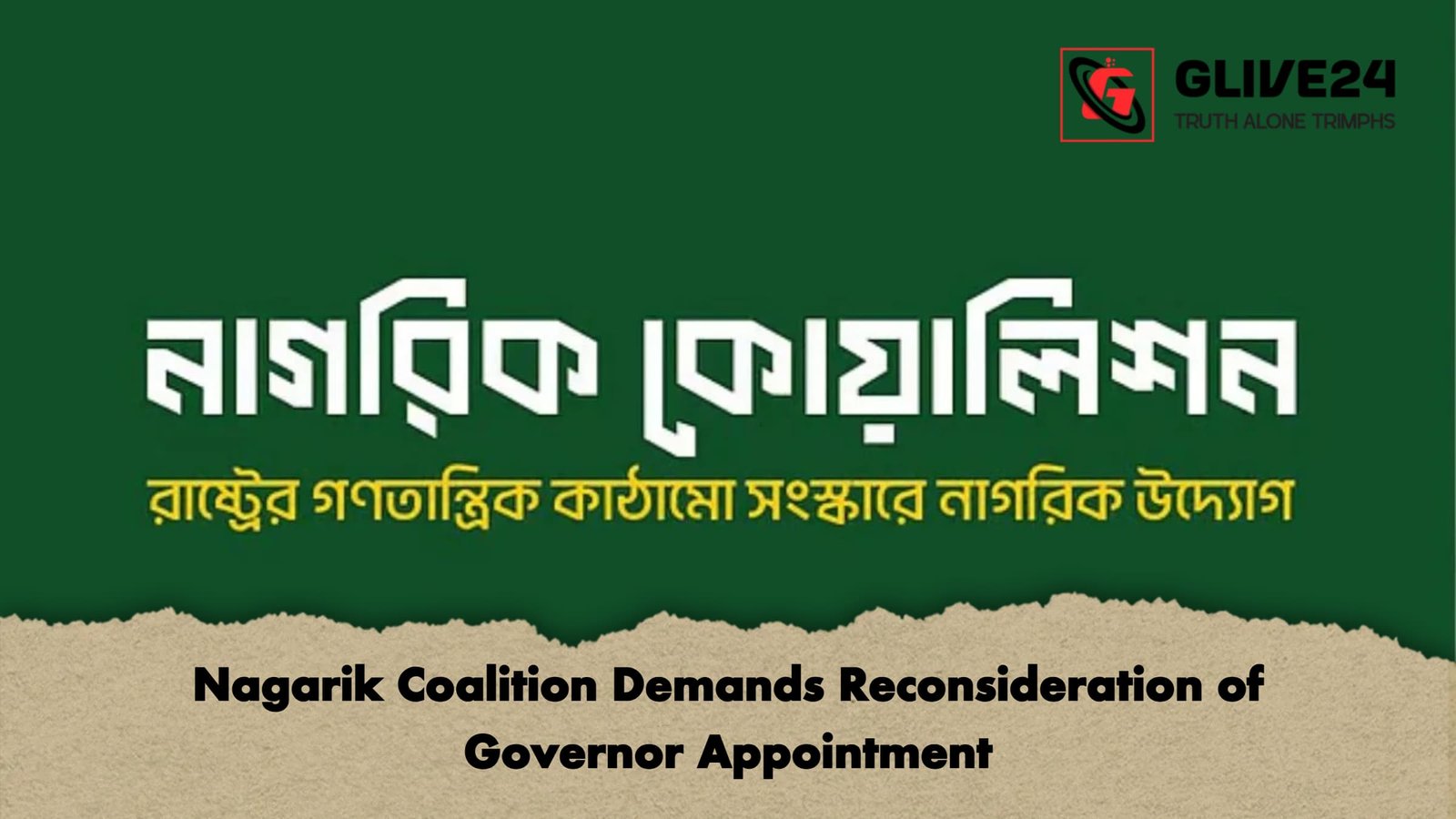
The Nagarik Coalition, a prominent platform representing diverse professional and civil society groups in Bangladesh, has expressed profound apprehension regarding the government’s recent appointment of a high-profile businessman and active politician as the Governor of Bangladesh Bank. In a formal statement released on Sunday, signed by co-coordinator Fahim Mashroor, the coalition categorised the appointment as a severe conflict of interest and urged the administration to reconsider the decision immediately.
The crux of the coalition’s grievance lies in the appointment made on 25 February. They contend that the newly designated Governor lacks the specialised expertise in macroeconomics or financial sector management traditionally required for such a sensitive role. Historically, the central bank has been helmed by career bureaucrats or seasoned economists; this marks the first instance in Bangladesh’s history where a direct representative of the commercial sector has been installed as the chief regulator.
The Nagarik Coalition highlighted that the appointee has previously held leadership roles in influential trade bodies, specifically within the Readymade Garment (RMG) and real estate sectors. This background, they argue, creates an inherent risk that central bank policies will be skewed to favour industrial lobbies over the broader national interest.
The statement brought to light specific financial dealings that the coalition deems “morally questionable,” despite their legal standing. It was noted that the appointee previously rescheduled loans exceeding 800 million BDT for his own business enterprises under special considerations.
Table: Comparison of Governance Standards (Proposed vs. Current)
| Feature | Current Appointment Process | Nagarik Coalition Proposal |
| Selection Method | Direct Government Executive Order | Independent Search Committee of Experts |
| Vetting | Internal Political Clearance | Public Hearing via Parliamentary Committee |
| Background | Active Business & Political Ties | Academic or Regulatory Specialisation |
| Primary Risk | Policy Capture by Business Lobbies | Ensuring Monetary Independence |
| Transparency | Low (Opaque Appointment) | High (Institutionalised Oversight) |
The coalition further pointed out the irony of the current political climate. Referencing reports from Transparency International Bangladesh (TIB), the statement noted that a significant portion of the current parliament consists of business-owners, many of whom are heavily indebted to the banking system.
The Nagarik Coalition argued that appointing an active member of the ruling party’s election steering committee undermines the autonomy of the central bank. They asserted that this move contradicts the BNP’s manifesto commitments to restore transparency and good governance in the financial sector. Without a neutral figure at the helm, there is a legitimate fear that Bangladesh Bank will once again become a tool for “crony capitalism,” reminiscent of previous authoritarian eras.
The coalition concluded by calling for a transparent recruitment process involving a Search Committee and mandatory parliamentary hearings to ensure that the next Governor possesses both the technical merit and the ethical distance required to safeguard the nation’s economy.


Comments