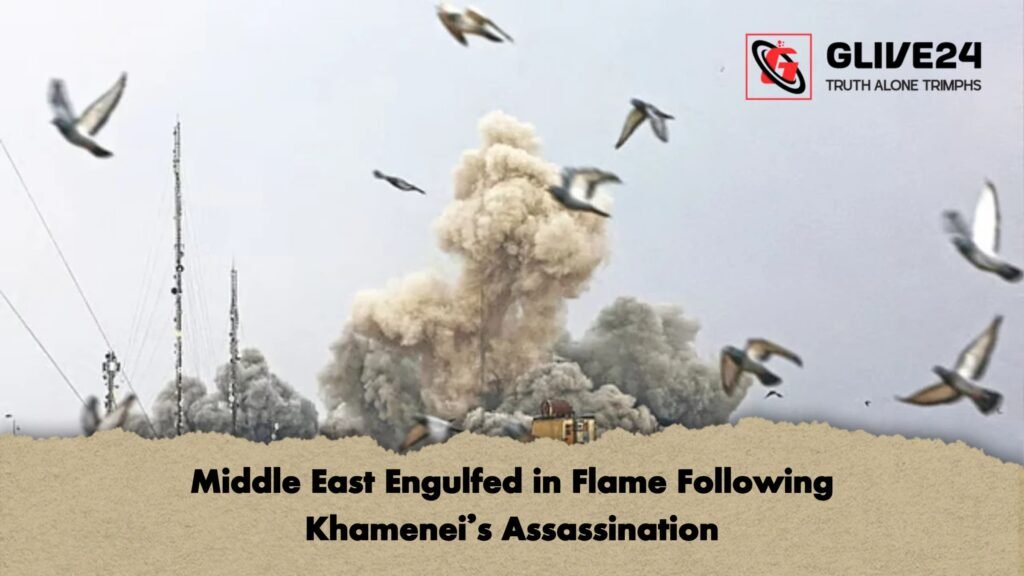
The Middle East has descended into a state of total kinetic warfare following the assassination of Iran’s Supreme Leader, Ayatollah Ali Khamenei. What began as a targeted strike has rapidly metastasised into a regional conflagration, with the United States and Israel engaged in relentless sorties against Tehran, while Iranian proxies and conventional forces launch retaliatory strikes across a dozen sovereign territories.
By Monday, the third day of the conflict, the geographical scope of the violence had expanded far beyond the borders of the two primary combatants. Reports confirm active hostilities or significant missile impacts in Lebanon, Saudi Arabia, the UAE, Qatar, Kuwait, Bahrain, Jordan, Oman, Iraq, and Cyprus.
Operation Epic Fury and the Toll on Iran
The Pentagon has dubbed its offensive “Operation Epic Fury,” while Israel has christened its campaign “Lion’s Rore.” The coalition claims to have struck 131 Iranian cities. However, the human cost has been staggering. The Iranian Red Crescent reports at least 555 fatalities within the Islamic Republic, including a catastrophic strike on a girls’ school that claimed 180 lives.
Despite US Central Command’s assertion that they are targeting military infrastructure—including the destruction of the IRGC headquarters and strikes near the Natanz and Isfahan nuclear facilities—civilian areas have not been spared. Protests at Tehran’s Revolution Square were met with bombardment, and 20 civilians were killed in a single strike on Nilofar Square.
Regional Casualties and Military Losses
The conflict has not been a one-sided affair. Iran’s Revolutionary Guard Corps (IRGC) has retaliated with its 11th wave of missile and drone launches, successfully striking a communications facility in Beersheba, Israel. Furthermore, the US has confirmed the loss of four servicemen and three F-15 Eagle fighter jets, the latter of which reportedly crashed in Kuwait due to a tragic “friendly fire” incident involving Kuwaiti air defences.
| Country | Documented Fatalities | Notable Damage/Incidents |
| Iran | 555 | Destruction of IRGC HQ; 9 hospitals hit |
| Israel | 10 | PM’s residence targeted; Beersheba comms base hit |
| Lebanon | 52 | Assassination of Hezbollah Intel Chief |
| USA | 4 | 3 F-15 Eagle jets crashed in Kuwait |
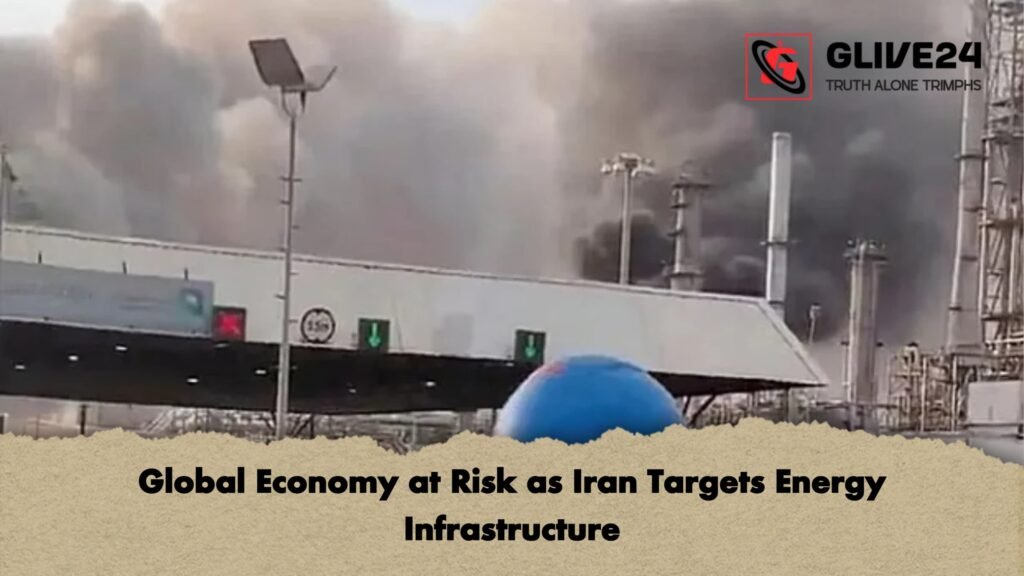
| UAE | 3 | Oil tanker struck in Abu Dhabi |
| Iraq | 2 | Strikes on pro-Iranian militia sites |
| Kuwait/Bahrain | 2 | 1 Bangladeshi national killed in each |
The Spread to Lebanon and Cyprus
The “Axis of Resistance” has mobilised in full force. Hezbollah has launched substantial drone and missile salvos into northern Israel as “holy revenge” for Khamenei. In response, Israel has massed 100,000 reserve troops on the Lebanese border, signalling an imminent ground invasion. In Beirut, Israeli airstrikes have already claimed the life of Hezbollah’s intelligence chief, Hussein Macleod, and displaced over 28,000 civilians.
Surprisingly, the conflict has even reached the European periphery. A British Royal Air Force base in Cyprus was struck by an Iranian-made Shahed drone on Sunday. While damage was minimal, the event prompted a stern response from EU chief Ursula von der Leyen and French Foreign Minister Jean-Noël Barrot, though Prime Minister Sir Keir Starmer maintains that British forces will not seek a direct combat role.
Trump’s Strategic Gamble
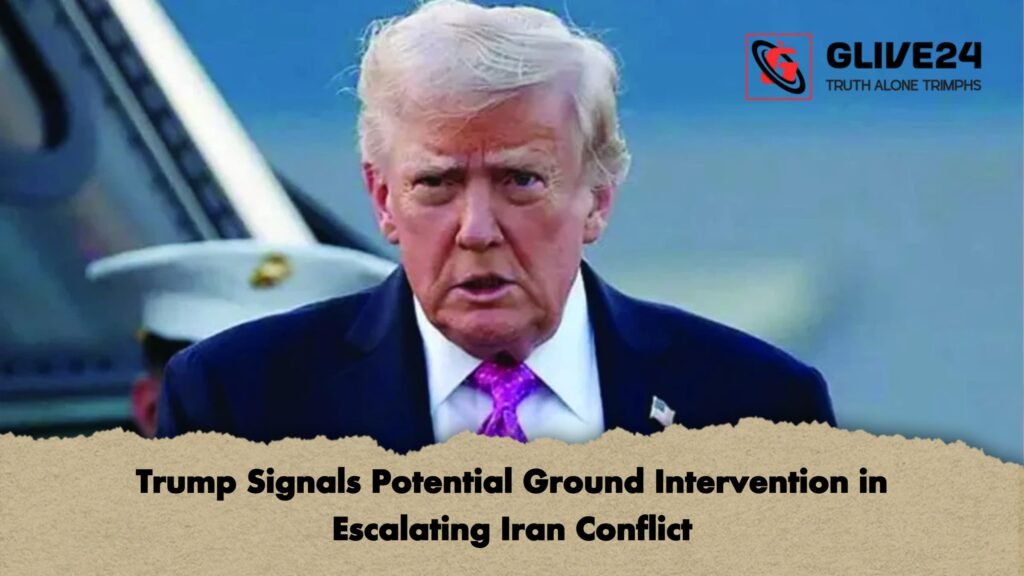
President Donald Trump, speaking from the White House, suggested the war could last between four to five weeks, though he remains open to a longer engagement if necessary. While he claims the mission is designed to prevent a nuclear-armed Iran and “liberate” its people, domestic support is waning. A Reuters-Ipsos poll indicates only one-third of Americans support the offensive—a figure that may haunt the Republican Party in the upcoming mid-term elections.
Critics, such as Trita Parsi of the Quincy Institute, argue that the Western strategy of “decapitation” has failed. “The US thought the Iranians would surrender out of fear,” Parsi noted. “They failed to realise that the Tehran government fears submission far more than it fears war. They believe they can survive a conflict; they know they cannot survive a surrender.”