Iran has called for political solidarity and moral support from the Muslim world rather than military assistance following what it describes as devastating attacks by the United States and Israel. The appeal was made by Iran’s Ambassador to Bangladesh, Jalil Rahimi Jahanabadi, during a press conference in Dhaka on Wednesday (4 March).
Speaking to journalists, the envoy refrained from directly criticising Bangladesh’s official response to the crisis. Instead, he emphasised that Tehran expects a clear condemnation of what it calls aggression against Iran. According to him, Iran is not seeking weapons, logistics, or any form of military aid from foreign governments. Rather, it hopes that Muslim-majority countries, including Bangladesh, will publicly denounce the attacks and stand in solidarity with Iran as a victim of external aggression.
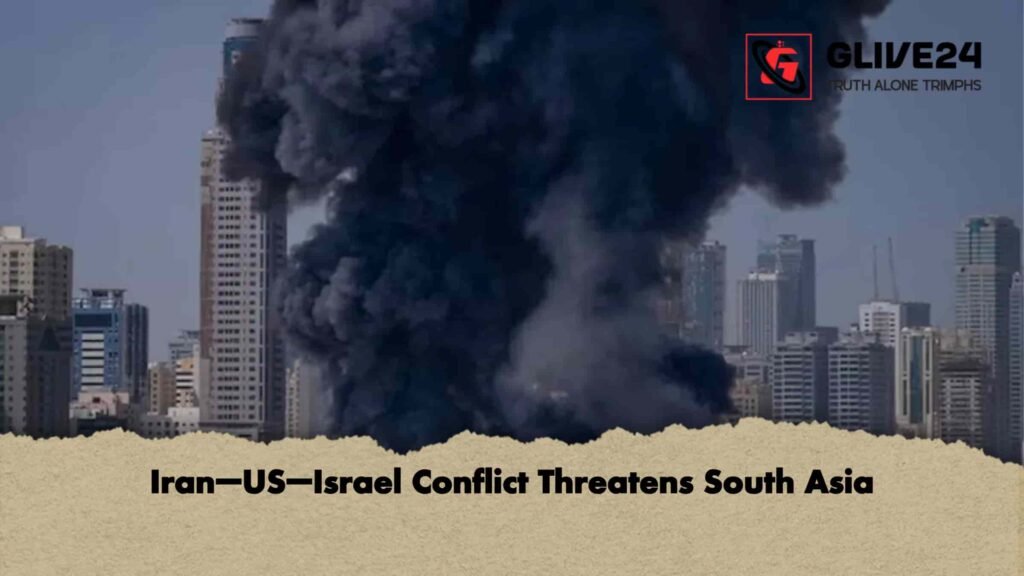
The conflict escalated dramatically on Saturday when a series of large-scale strikes reportedly took place across Iran. Iranian authorities claim that the attacks, attributed to the United States and Israel, resulted in significant casualties. Among those killed was Iran’s Supreme Leader, Ayatollah Ali Khamenei, along with several members of his family. Data released by the Iranian Red Crescent suggests that the death toll has exceeded 1,000 people, while thousands more have been injured.
In response to the attacks, Iran has reportedly launched retaliatory missile and drone strikes against what it describes as hostile targets. The situation has heightened tensions across the Middle East and raised fears of a wider regional conflict.
Bangladesh has issued two official statements regarding the unfolding crisis. However, the initial statement drew criticism from some observers because it did not specifically mention either Israel or the United States, nor did it refer to the reported death of Ayatollah Khamenei. This omission has generated considerable discussion in political and diplomatic circles.
During the briefing, Ambassador Jahanabadi noted that the United Nations had already condemned the attacks on Iran. In that context, he expressed hope that Bangladesh, as a member of both the Organisation of Islamic Cooperation (OIC) and the Non-Aligned Movement (NAM), would adopt a stronger stance in opposing the aggression.
The ambassador also revealed that, among political figures in Bangladesh, only the leader of Jamaat-e-Islami, Shafiqur Rahman, had formally contacted the Iranian embassy to convey condolences. Nevertheless, he expressed gratitude for the solidarity demonstrated by university students and young activists who organised rallies and public demonstrations in support of Iran.
When asked whether the assassination of Ayatollah Khamenei indicated an intelligence failure, Jahanabadi rejected the suggestion. He described the incident as a “cowardly attack” rather than a lapse in security. According to him, the Iranian leader had not been hiding in a fortified shelter but was working in his office as usual when the attack occurred.
The ambassador further stated that Iran would not bow to threats, even if the United States were to escalate the situation by invoking nuclear capabilities. In his words, resisting aggression and defending national sovereignty is a matter of honour for the Iranian people.
Jahanabadi also called on neighbouring countries not to allow their territories to be used as staging grounds for attacks against Iran. He warned that if external support for the aggressors continues, Iran would be compelled to sustain what it calls a defensive resistance.
Although Iran maintains military cooperation agreements with China and Russia, the ambassador clarified that these arrangements do not constitute formal wartime defence treaties. He also claimed that external pressure has largely united Iran’s political factions, bringing the population together in support of the government in the face of foreign aggression.
Key Details of the Ongoing Crisis
| Aspect | Details |
|---|---|
| Start of Major Attacks | Saturday |
| Alleged Attackers | United States and Israel |
| Reported Death Toll | Over 1,000 |
| Prominent Casualty | Ayatollah Ali Khamenei |
| Iranian Response | Missile and drone retaliation |
| Iran’s Diplomatic Appeal | Moral and political support from Muslim nations |
As tensions continue to rise, international observers warn that the crisis could have profound implications for regional stability and global diplomacy. The coming days are expected to be crucial in determining whether the conflict escalates further or moves towards diplomatic engagement.