
Khabor Wala Desk
Published: 7th March 2026, 3:40 PM
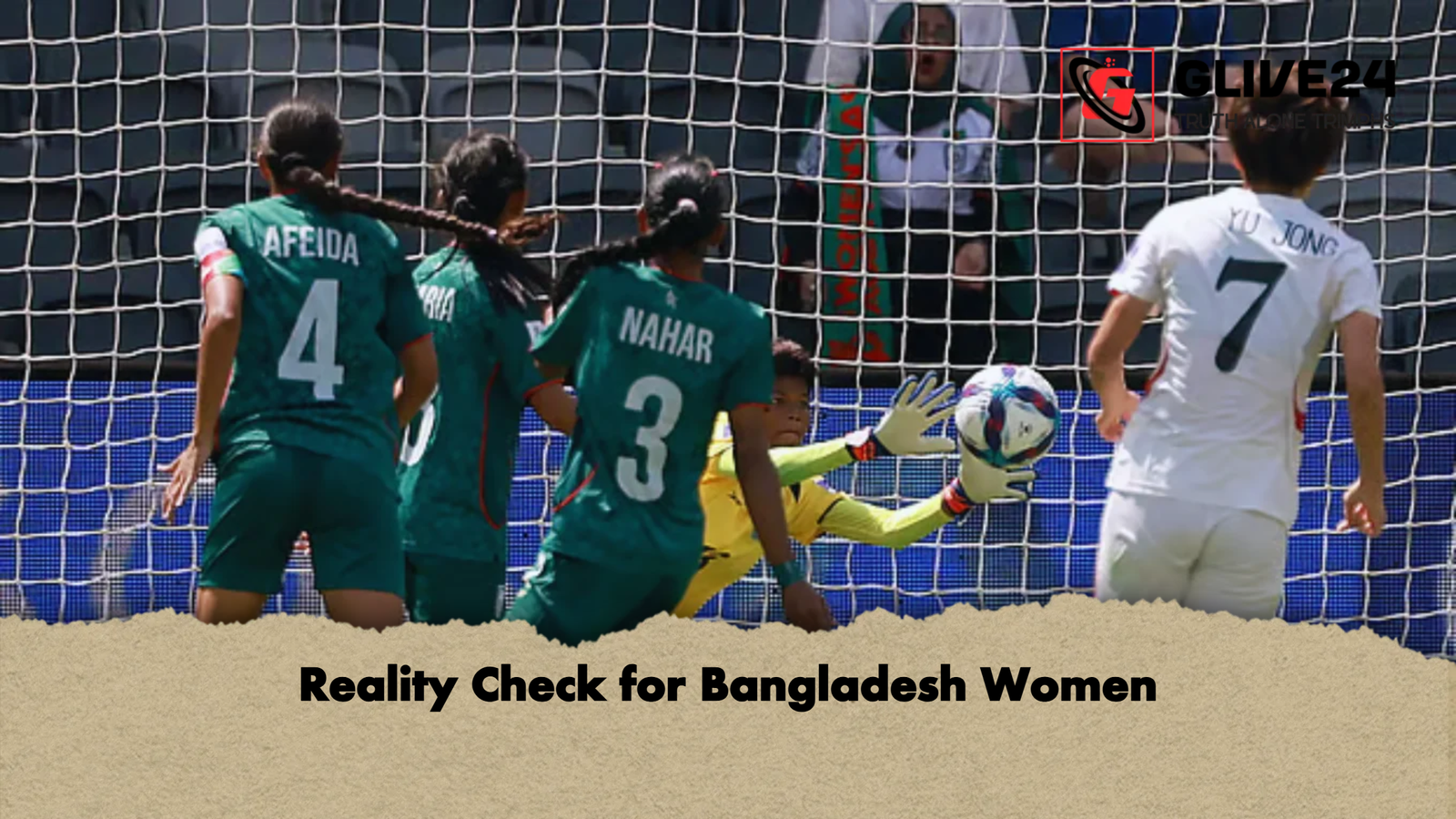
Bangladesh’s heavy defeat to North Korea in the Asian Cup served as a stark reminder of how demanding international football becomes when facing the continent’s elite. When a team arrives at a major tournament after playing a loosely structured domestic league and without sufficient preparation against higher-ranked opponents, such one-sided results can become almost inevitable.
Before confronting powerhouses such as China and North Korea, Bangladesh ideally needed a series of competitive matches against stronger international sides. Head coach Peter Butler had reportedly stressed the need for tougher preparation matches, but those plans never fully materialised. As a result, the 5–0 loss to North Korea should not be viewed merely as a defeat; it is also a significant lesson for Bangladesh’s growing women’s football programme.
Regardless of whether Bangladesh finishes the tournament without a win or manages to defeat Uzbekistan in Perth on 9 March, the experience of playing on such a stage remains invaluable. Competing beyond the South Asian circuit exposes the players to a vastly different level of pace, tactical awareness and physical intensity. These encounters highlight the preparation required to compete with Asia’s established footballing nations.
Interestingly, Bangladesh displayed two contrasting performances against their first two opponents. In the opening group match against China, the team showed resilience by resisting waves of quick counter-attacks, long passes and wide crosses. They even managed to mount occasional attacking moves of their own. Against North Korea, however, the picture changed dramatically.
North Korea neutralised Bangladesh’s attacking line completely and demonstrated how relentless pressure can dismantle a defence. In truth, the margin of victory could easily have been larger; eight or even ten goals would not have been an unrealistic outcome based on the pattern of play.
The statistical disparity illustrates the imbalance clearly:
| Match Statistics | Bangladesh | North Korea |
|---|---|---|
| Goals | 0 | 5 |
| Total Shots | 0 | 31 |
| Shots on Target | 0 | 11 |
| Possession (approx.) | Limited | Dominant |
| Corners | Few | Numerous |
Bangladesh failed to register a single shot on goal, while North Korea fired 31 attempts, 11 of them on target. Despite conceding five times, goalkeeper Mili Akter deserves considerable credit. She produced several impressive saves that prevented the scoreline from becoming even more severe.
There were also moments of resilience in defence. Before conceding twice late in the first half, Bangladesh’s backline—featuring Shamsunnahar, Nabira Khatun, Irene Khatun, Kohati Kisku and Afida Khandakar—worked tirelessly to contain the early attacking surge. The full-backs in particular dealt reasonably well with several wing attacks during the opening phase.
The pressure was so intense that midfielders Maria Manda and Monika Chakma were frequently forced to drop deep to support the defence. Although Bangladesh attempted to organise themselves better in the second half, their attacking unit remained largely ineffective. North Korea, meanwhile, continued to exploit the wings, sending crosses into the penalty area and converting long-range opportunities into goals.
The disparity between the two teams becomes even clearer when considering their global standing. North Korea are ranked 103 places above Bangladesh in the FIFA rankings. They have appeared in four Women’s World Cups and competed in the Asian Cup ten times, winning the tournament on three occasions. Remarkably, they have lost only one of their last ten matches.
Against such a formidable opponent, a 5–0 defeat is not simply a result—it is a reminder of the level Bangladesh must aspire to reach. If anything, the match offers valuable insight into what improvements are necessary in training, international exposure and competitive preparation.
For Bangladesh’s women’s team, the journey towards closing that gap has only just begun.




Comments