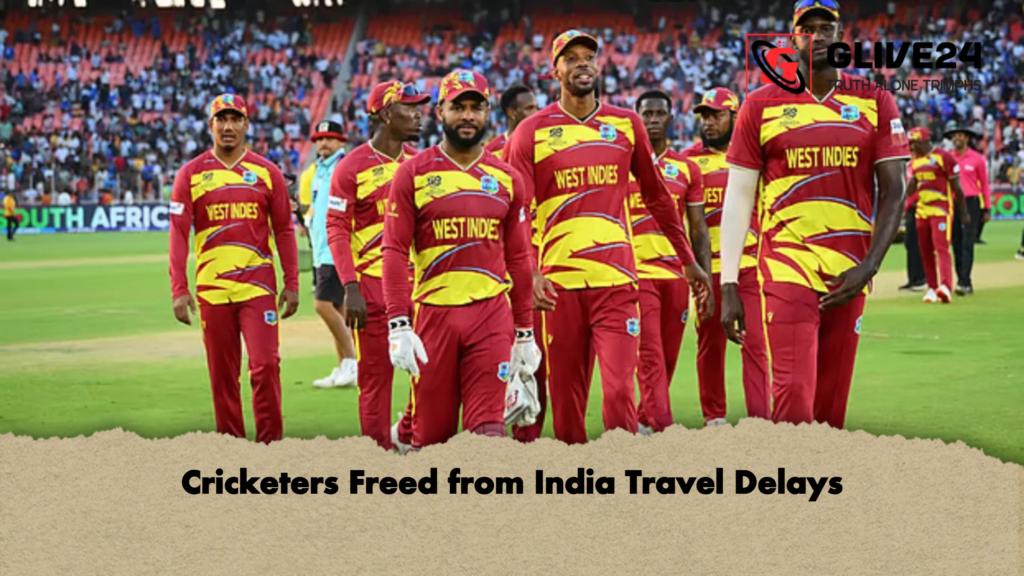
Ongoing military tensions in the Middle East have severely disrupted regular international air travel, leaving several international cricket teams effectively stranded in India. For days, players from England, South Africa, and the West Indies faced what could only be described as a ‘quarantine-like’ scenario, unable to return home. This prolonged uncertainty has now come to an end, as the International Cricket Council (ICC) arranged special chartered flights to facilitate their departure.
According to ESPNcricinfo, England, who were defeated by India in the semi-finals last Thursday, are scheduled to depart from Mumbai on Saturday evening, heading directly to London. Meanwhile, South Africa and West Indies, who had been spending idle days in Kolkata, will leave the city on Sunday via a separate chartered flight.
Team Departures and Destinations
| Team | Departure City | Destination | Notes |
|---|---|---|---|
| England | Mumbai | London, UK | Semi-final exit; direct flight home |
| South Africa | Kolkata | Split destinations | Keshav Maharaj, Jason Smith & George Linde to New Zealand for T20 series starting 15 March; others return to South Africa |
| West Indies | Kolkata | Johannesburg → Antigua | Eliminated in Super Eight; coach Darren Sammy posted “Day Six” marking duration in India |
After elimination from the T20 World Cup, both South Africa and West Indies remained in Kolkata. South Africa lost to New Zealand in the semi-finals on 4 March, while West Indies were knocked out in the Super Eight stage by India on 1 March.
West Indies head coach Darren Sammy shared a post on social media marking “Day Six” of their stay, reflecting the extended wait following the team’s exit. South African management similarly faced logistical challenges, with only part of their squad able to leave India earlier this week. Zimbabwe’s team experienced comparable delays; despite finishing their final match on 1 March, a portion of the squad only managed to depart India last Wednesday.
The situation highlights the vulnerabilities of international sporting schedules to geopolitical events. The ICC’s intervention with chartered flights ensured player safety and facilitated timely travel, emphasising the critical importance of contingency planning in global cricket operations.
With these departures, the stranded players are finally returning to their respective countries, much to the relief of teams and supporters alike. England will resume domestic preparations, South African players not heading to New Zealand will regroup at home, and the West Indies squad will continue training in Antigua. The episode serves as a stark reminder that global conflicts can directly impact international sports, requiring swift and coordinated responses from governing bodies to safeguard players and maintain competitive schedules.
The resumption of normal travel arrangements marks a turning point, allowing cricketing activities to regain momentum while ensuring the welfare of the international cricket community.