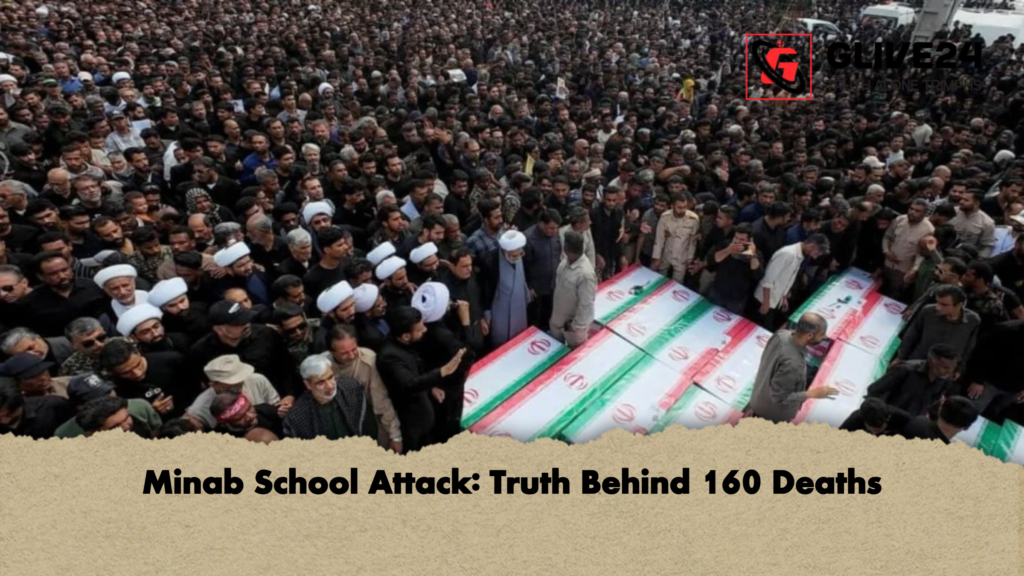
On 28 February, a devastating attack at a primary school in Minab, Iran, claimed the lives of over 160 young girls, sparking international outrage and renewed scrutiny over the perpetrators. Recent investigations and newly released video evidence have introduced a critical twist in understanding the incident.
Video Footage Analysis
A video published by the semi-official Iranian news captures for the first time the moment a missile struck a nearby facility belonging to the Islamic Revolutionary Guard Corps (IRGC). The footage was recorded from a neighbouring construction site and shows a powerful missile hitting an IRGC naval base building. Shortly after, the camera pans to reveal a massive plume of smoke rising from the direction of the Shajareh Tayyeba school, with panicked civilians running to seek shelter.
Sam Lair, a researcher at the James Martin Center for Nonproliferation Studies, told CNN that the missile’s design and wing configuration match that of a U.S. Navy weapon, specifically the BGM/UGM-109 Tomahawk Land Attack Missile. Military analysts note that Israel does not possess such Tomahawk missiles, which are typically launched from American warships or submarines.
Attack Context and Speculation
While the footage does not show the missile directly hitting the school, experts suggest that the damage to the school and the IRGC base were likely part of the same military operation. Prior satellite imagery and analysis by CNN and other international outlets had hinted at possible U.S. involvement. Tomahawk missiles are often deployed to establish air control early in military operations, which aligns with observed strategic patterns in the region.
| Detail | Information |
|---|---|
| Date of Attack | 28 February 2026 |
| Location | Minab, Iran |
| Victims | 160+ primary school girls |
| Target | IRGC naval base near Shajareh Tayyeba School |
| Weapon Identified | BGM/UGM-109 Tomahawk missile (US) |
| Video Source | Mehr News, nearby construction site |
| Investigating Authorities | US Department of Defense, Iranian authorities |
Ongoing Investigations
Investigators are currently collecting and analysing debris from the school to determine the precise origin of the missile. On 8 March, U.S. Secretary of Defense Pete Hegseth confirmed that the United States continues to investigate the incident. The findings are expected to clarify responsibility and guide potential international responses.
The tragedy has not only raised urgent questions about civilian protection in conflict zones but also intensified diplomatic scrutiny of U.S.–Iran relations. Families of the victims, humanitarian organisations, and international observers are closely monitoring the ongoing inquiries to ensure accountability and justice for the lives lost in Minab.
With over 160 children killed, the Minab school attack underscores the devastating human cost of modern missile warfare and highlights the complexities of attributing responsibility in conflict zones, where civilian infrastructure is often perilously close to military targets.