
Khabor Wala Desk
Published: 13th March 2026, 5:20 AM
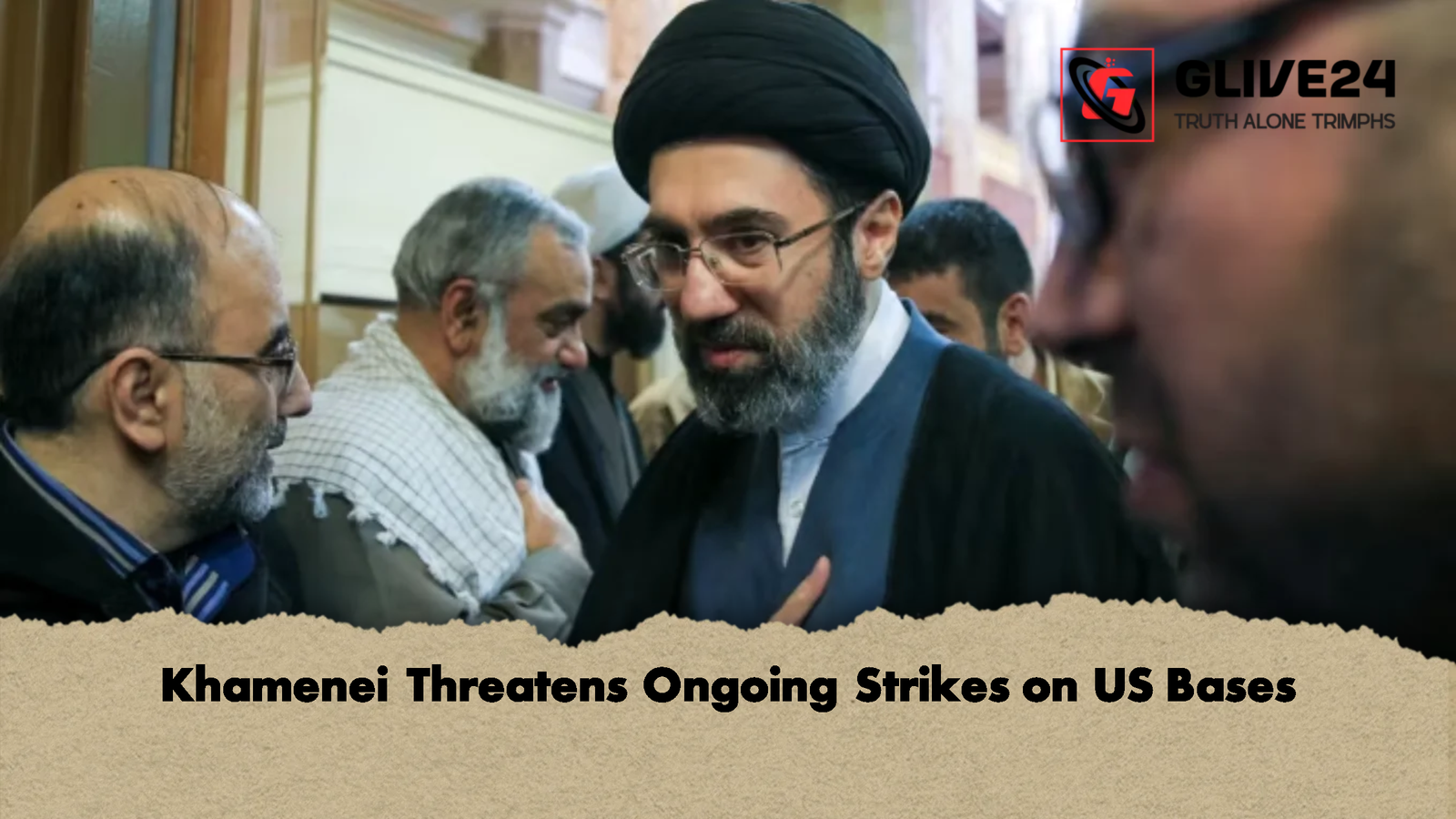
Iran’s newly installed Supreme Leader, Mojtaba Khamenei, has warned that attacks on American military installations in the Middle East will continue, delivering a stern message to Washington in his first televised address to the nation since assuming office.
The speech, broadcast on Iranian state television on Thursday (12 March), was pre-recorded and aired only days after Khamenei took office as the country’s highest political and religious authority. His remarks set the tone for what appears to be a confrontational regional posture under the new leadership.
Table of Contents
In his address, Khamenei emphasised that Iran seeks peaceful relations with neighbouring countries but insisted that United States military bases in the region remain legitimate targets for Iranian operations.
“Iran believes in friendship with its neighbours,” he said. “However, our targets are the American military bases in the region, and these attacks will continue.”
He also demanded the immediate closure of all US military bases in the Middle East, warning that continued American presence would result in further strikes. His comments come amid heightened tensions following recent Iranian drone and missile attacks, which Tehran claims were directed exclusively at US military assets.
| Key Issue | Position Expressed by Mojtaba Khamenei |
|---|---|
| US Military Presence | Called for the closure of all US bases in the Middle East |
| Military Strategy | Warned that attacks on US bases will continue |
| Regional Relations | Stated Iran seeks friendly ties with neighbouring states |
| Strategic Pressure | Confirmed the continued closure of the Strait of Hormuz |
| Domestic Measures | Promised free treatment and compensation for war victims |
Addressing the broader regional crisis, Khamenei urged Iranians to maintain national unity while confronting what he described as external threats.
A central element of Iran’s strategy, he said, is maintaining pressure on adversaries through control of the Strait of Hormuz, one of the world’s most important energy transit routes. A significant portion of global oil shipments passes through the narrow waterway.
“To increase pressure on our enemies, the Strait of Hormuz will remain closed,” Khamenei declared.
He also vowed to avenge the deaths of Iranian fighters killed during recent confrontations, referring to them as martyrs whose sacrifices would not go unanswered.
The new Supreme Leader praised Iran’s armed forces for their performance during the escalating crisis. “I want to thank our brave fighters,” he said. “They are carrying out their duties with remarkable courage in these difficult circumstances.”
Khamenei also highlighted support from allied groups across the region. According to him, resistance fighters in Yemen—widely associated with the Houthi movement—as well as armed factions in Iraq have expressed readiness to assist Iran.
“These groups are prepared to fulfil their responsibilities,” he said, suggesting that regional allies could play a role in Iran’s broader confrontation with US forces.
Despite the strong military rhetoric, Khamenei also used the address to outline several domestic support measures aimed at mitigating the impact of the conflict on Iranian citizens.
He announced that individuals wounded during the fighting would receive free medical treatment provided by the government. Additionally, people who have suffered property damage or financial losses due to the crisis will be eligible for state compensation.
The measures, he said, are intended to support families affected by the conflict and demonstrate the government’s commitment to public welfare during a period of national hardship.
Khamenei’s statements are expected to intensify concern across the Middle East, where tensions involving Iran, the United States, and their respective allies have grown in recent weeks. Although Tehran insists its strikes target only American military facilities, analysts warn that continued escalation could draw more regional actors into the conflict.
The speech marks an early indication of how Khamenei intends to shape Iran’s foreign and security policy—signalling that Tehran’s confrontational stance toward US military presence in the region is likely to persist under his leadership.

Comments