China has announced an emergency humanitarian assistance package worth 200,000 US dollars for Iran following the devastating impact of recent military operations involving the United States and Israel. The pledge was made in response to mounting civilian casualties and particularly the deadly attack on a primary school in southern Iran, which has drawn widespread international concern.
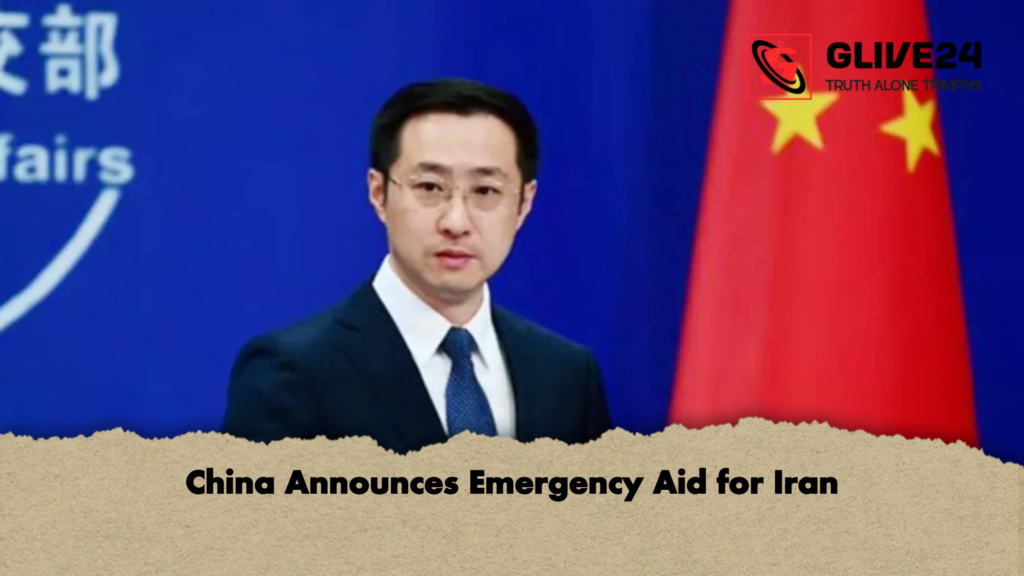
The announcement came during a press briefing on Friday (13 March), when Chinese Foreign Ministry spokesperson Guo Jiakun stated that Beijing strongly condemns what it described as indiscriminate attacks on civilians and civilian infrastructure. According to him, such actions violate the fundamental principles of international humanitarian law.
Guo noted that the humanitarian support would be channelled through the Red Cross Society of China, which has decided to provide the emergency funding to the Iranian Red Crescent Society. The funds are intended primarily to assist the families of those killed and injured in the attack on Shajarah Tayyibah Primary School in the southern Iranian city of Minab.
“The attack on a school and the loss of civilian lives represent a serious violation of international humanitarian law and go beyond the fundamental limits of humanity and conscience,” Guo said. He added that China extends its deepest condolences to the families of the victims and remains committed to supporting the Iranian people during the crisis.
Beijing has also expressed serious concern over the escalating tensions across the Middle East. The Chinese government has called on all parties involved to exercise restraint and return to dialogue in order to prevent the conflict from expanding further.
According to international media reports, the crisis intensified on 28 February when a US Tomahawk missile strike hit the Shajarah Tayyibah Primary School in Minab. The attack reportedly killed at least 150 schoolgirls, making it one of the deadliest incidents involving civilians in the current conflict. The strike was followed by a series of coordinated military operations carried out jointly by the United States and Israel across several Iranian locations.
Iranian authorities claim that more than 1,300 people have been killed since the beginning of the military campaign, with over 10,000 others injured. Among the reported fatalities was Iran’s then Supreme Leader, Ayatollah Ali Khamenei, an event that has further intensified political and military tensions in the region.
In response, Tehran has launched drone and missile attacks targeting American military bases in Israel, Jordan, Iraq and several Gulf countries. Reports suggest that at least eight US soldiers have been killed in retaliatory strikes since the conflict began.
The crisis has also begun to affect global energy markets. Since early March, Iran has effectively restricted traffic through the Strait of Hormuz, one of the most strategically important maritime routes for global energy supplies. Analysts warn that disruptions in this narrow waterway could significantly impact oil and gas markets worldwide.
Key developments in the conflict are summarised below:
| Key Event | Details |
|---|---|
| School attack date | 28 February |
| Location | Shajarah Tayyibah Primary School, Minab |
| Students killed | At least 150 schoolgirls |
| Total deaths in Iran | More than 1,300 |
| Total injured | Over 10,000 |
| US soldiers reportedly killed | 8 |
| Chinese humanitarian aid | $200,000 |
| Aid channel | Red Cross Society of China to Iranian Red Crescent |
The Strait of Hormuz carries roughly 20 million barrels of oil each day, representing a significant portion of the world’s petroleum supply. In addition, nearly 20 per cent of global liquefied natural gas trade passes through this route, making it a vital artery for international energy markets.
China has reiterated its stance that the sovereignty, security and territorial integrity of all nations must be respected. Beijing also urged an immediate cessation of military operations and called on the international community to prioritise diplomatic solutions.
Observers note that China’s humanitarian pledge, though modest in scale, signals Beijing’s growing diplomatic engagement in Middle Eastern affairs and its attempt to position itself as a stabilising force amid one of the region’s most dangerous escalations in recent years.