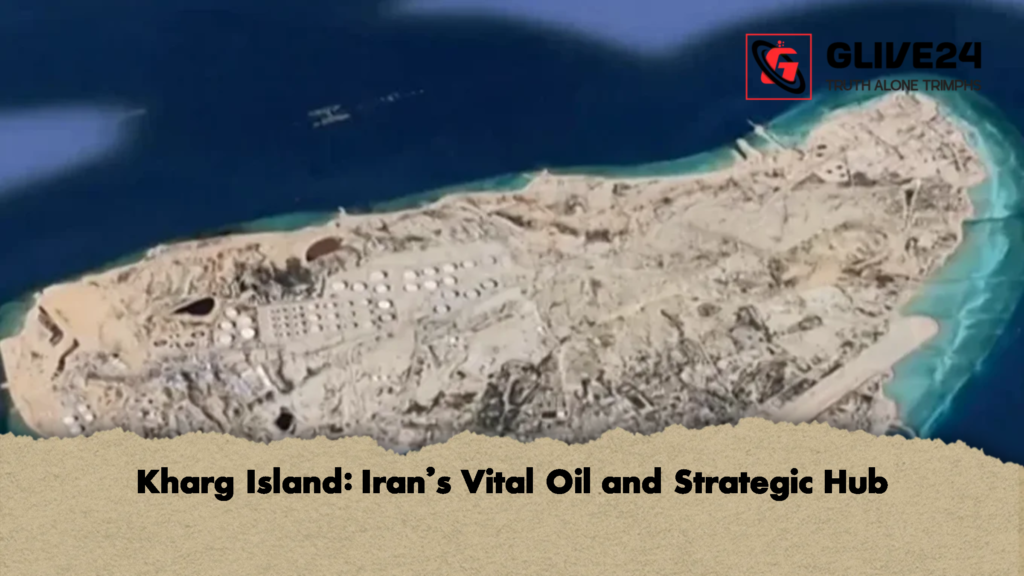
Kharg Island, Iran’s foremost oil-export hub, has once again emerged as a critical focal point amid escalating tensions in the Middle East. The United States recently conducted a major airstrike targeting military facilities on the island—a strike that former President Donald Trump described as one of the most powerful in the region’s history. According to Trump, Iran’s military infrastructure on Kharg was “completely destroyed,” although the island’s oil facilities remain intact—for the moment—pending further developments in the strategically vital Strait of Hormuz.
In response, the Iranian Armed Forces have issued threats of retaliatory strikes on U.S.-linked energy and fuel installations in the region. These developments underscore Kharg Island’s dual significance as both a military asset and an economic lifeline, making it a central concern for Tehran and global energy markets alike.
Table of Contents
Strategic Importance of Kharg Island
Located roughly 25 kilometres off Iran’s southern coast in the Persian Gulf, Kharg Island may be relatively small in area, but it plays a disproportionately large role in Iran’s oil economy. The island hosts:
-
Extensive oil storage tanks
-
Multiple loading terminals for supertankers
-
Jetty and pipeline networks linking key oil fields
Analysts estimate that between 80 and 90 percent of Iran’s oil exports pass through Kharg, highlighting its indispensable role in national revenue generation and foreign currency inflows.
| Aspect | Detail | Commentary |
|---|---|---|
| Location | Kharg Island, Persian Gulf | ~25 km from Iranian coast; central to oil exports |
| Oil Infrastructure | Storage tanks, loading terminals, pipelines | Facilitates the bulk of Iran’s crude exports |
| Economic Role | Key source of foreign currency | Critical for Iran’s revenue and international trade |
| Historical Target | Iran–Iraq War (1980–1988) | Repeatedly attacked but rapidly rebuilt |
| Strategic Threat | Potential U.S. and regional attacks | Disruption could halt 80–90% of exports and impact global markets |
Economic Lifeline
Iran’s economy is heavily reliant on oil exports, making Kharg Island a critical economic artery. Any sustained disruption could severely affect foreign currency inflows, exacerbating the economic strain caused by international sanctions. Experts warn that even temporary suspension of operations could create supply bottlenecks, triggering sharp increases in global oil prices and affecting energy-dependent nations worldwide.
Historical and Military Significance
Kharg Island has long been a strategic military target. During the Iran–Iraq War, Iraqi forces repeatedly attacked the island’s oil infrastructure, yet Iran consistently restored operations to maintain uninterrupted exports. Today, amid escalating tensions involving the U.S. and its allies, analysts predict Kharg could once again become a flashpoint. Its combination of military installations and high-value economic infrastructure makes it uniquely sensitive in any regional escalation.
Global Energy Implications
Beyond Iran, Kharg Island is a key node in the global energy market, with millions of barrels of crude oil exported daily. Disruptions at Kharg could:
-
Cause global crude oil prices to spike
-
Interrupt Persian Gulf supply chains
-
Affect energy security in Europe, Asia, and beyond
Kharg’s strategic location, dense infrastructure, and centrality to Iran’s oil economy have led international experts to frequently refer to it as Iran’s “lifeline.” Any conflict involving the island has immediate repercussions not only for Tehran but also for the global energy market, making it a critical point of focus for analysts, policymakers, and energy traders alike.
Sources: Middle East Eye, Financial Times, Energy Intelligence Reports