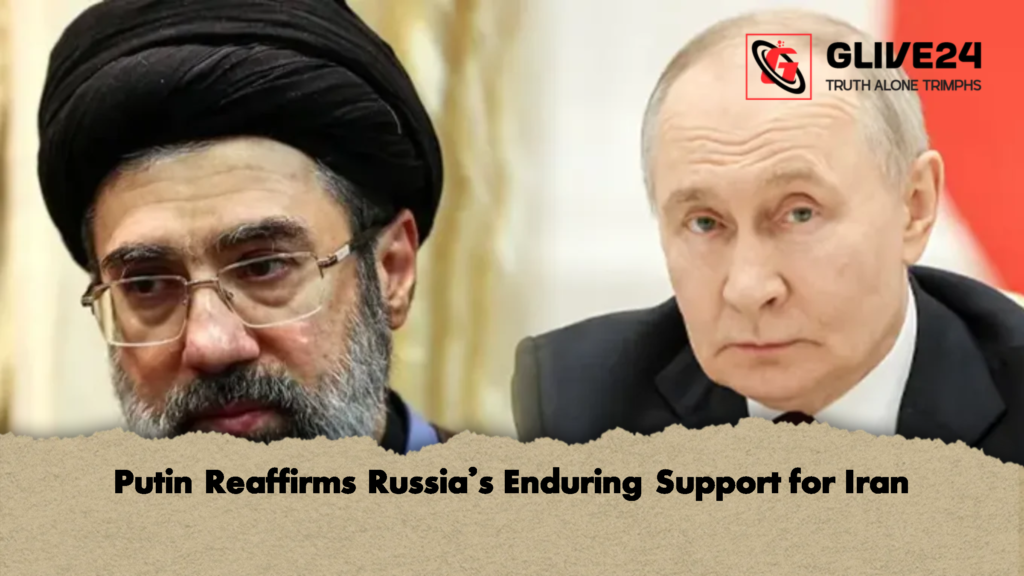
Russian President Vladimir Putin has extended Nowruz greetings to Iranian leaders, reaffirming Moscow’s position as a close and dependable partner of Tehran. The Kremlin announced the message on Saturday, highlighting Russia’s commitment to sustaining strong bilateral ties despite ongoing debates about the depth and practical extent of Moscow’s support for Iran.
Iranian sources note that since the 1979 revolution, which overthrew the US-backed Shah, Tehran has not consistently received substantial aid from Moscow during its most critical crises. Nonetheless, Putin’s recent message signals a strategic effort to project solidarity and reassurance amid heightened regional tensions.
The Kremlin statement confirmed that President Putin congratulated Iran’s Supreme Leader Ayatollah Ali Khamenei and President Masoud Pezeshkian on the Persian New Year, expressing wishes for courage and resilience for the Iranian people during challenging times. Putin emphasised that Russia would remain a steadfast friend and reliable ally to Tehran, reinforcing diplomatic and political ties.
Russia also contextualised the situation within wider regional instability. The Kremlin cited ongoing US and Israeli military operations, which have contributed to a broader Middle East crisis and disrupted global energy markets. Moscow condemned alleged threats to Iran’s Supreme Leader, describing an attempted assassination of Ayatollah Khamenei as a “cruel act.”
In a related development, media outlets, including Politico, reported that Moscow had proposed a reciprocal intelligence arrangement with Washington: the United States would halt the provision of Russia-related intelligence to Ukraine in exchange for Moscow ceasing intelligence sharing with Iran. Washington reportedly rejected the proposal, and the Kremlin has since dismissed these claims as false.
Observers suggest that Putin’s Nowruz message serves multiple purposes: consolidating Russia-Iran relations, signalling support amid Western pressure, and strengthening Moscow’s influence across the Middle East. The declaration comes at a time when Iran faces economic, political, and security challenges, while Russia seeks to expand its regional partnerships and counterbalance US and Israeli influence.
Russia-Iran Ties: Key Details
| Aspect | Details |
|---|---|
| Occasion | Nowruz (Persian New Year) 2026 |
| Russian Leader | President Vladimir Putin |
| Iranian Leaders Addressed | Supreme Leader Ayatollah Ali Khamenei, President Masoud Pezeshkian |
| Message Highlights | Solidarity, resilience, Moscow as a dependable partner |
| Regional Context | US and Israeli military operations in the Middle East; global energy supply challenges |
| Controversies | Alleged assassination plot against Khamenei; intelligence-sharing claims between Russia and US |
| Kremlin Position | Dismissed intelligence report as false |
| Historical Context | Diplomatic and strategic ties since 1979 revolution; ongoing regional cooperation amid crises |
Putin’s Nowruz message underscores Russia’s strategic engagement with Iran during a period of global and regional uncertainty. While questions remain about the practical level of support, Moscow clearly seeks to portray itself as a reliable ally, projecting influence across the Middle East while challenging Western interventions.