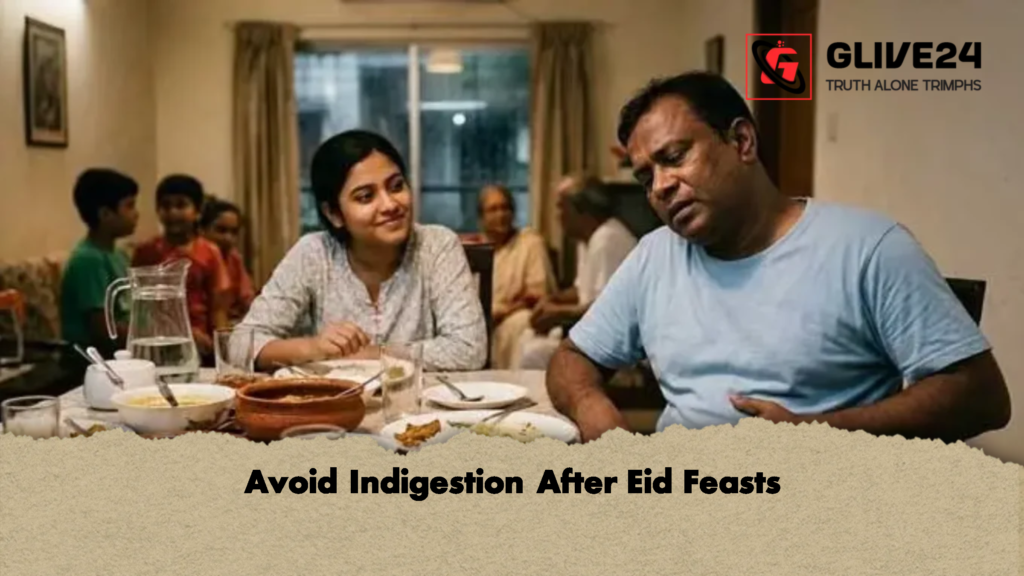
Eid is a time for celebration, family gatherings, and, naturally, abundant food. From your own kitchen to relatives’ homes, festive tables overflow with rich, aromatic dishes. While indulging is part of the joy, overconsumption can often result in discomfort — bloating, heaviness in the chest, or shortness of breath are common complaints after a hearty feast.
Fortunately, there are simple, practical steps you can take to relieve these symptoms and enjoy the festivities without distress.
Why Overeating Causes Discomfort
After a month of fasting during Ramadan, consuming large quantities of food suddenly can overstretch the stomach. This slows digestion, produces excess gas, and leads to chest heaviness. Acid reflux or heartburn may also occur, compounding discomfort.
Practical Tips to Ease Symptoms
- Avoid lying down immediately: Take a gentle walk for 10–15 minutes after eating to stimulate digestion and reduce stomach pressure.
- Wear loose clothing: Tight garments compress the abdomen, worsening discomfort. Opt for comfortable, relaxed attire.
- Drink water gradually: Sip water slowly rather than consuming large amounts at once; this aids digestion and reduces gas formation.
- Warm water with lemon: A small cup of warm water mixed with lemon juice can relieve heaviness and promote digestion.
- Herbal aids: Ginger tea or mint leaves naturally soothe the stomach and reduce bloating.
- Sit upright after eating: Remain seated for 30–40 minutes post-meal to help food settle and prevent acid reflux.
- Use antacids if necessary: Mild antacids may relieve acute discomfort, but persistent issues require consultation with a physician.
Habits to Avoid
| Avoid After Feasting | Reason |
|---|---|
| Lying down immediately | Increases risk of indigestion and acid reflux |
| Cold or carbonated drinks | Can lead to gas and bloating |
| Excessive tea or coffee | Stimulates acid production, worsening heartburn |
| Tight clothing | Adds pressure on the stomach, increasing discomfort |
When to Seek Medical Advice
Repeated discomfort, severe chest burning, vomiting, or intense abdominal pain may indicate gastritis or another digestive problem. In such cases, immediate medical consultation is essential.
Adopting the habit of eating small portions more frequently rather than overindulging in a single sitting can significantly reduce the risk of post-Eid digestive issues, allowing you to enjoy the festivities comfortably and safely.