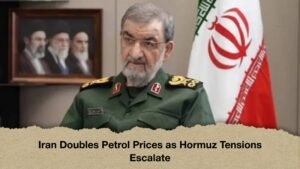
Global oil markets have experienced notable volatility in recent days, largely driven by heightened geopolitical tensions in the Middle East. Investor sentiment shifted rapidly after Donald Trump announced a delay in the potential timeline for military action against Iran’s energy infrastructure. This development provided immediate relief to markets, prompting a modest decline in oil prices following a sharp surge just a day earlier.
On Thursday, crude prices rose significantly as fears intensified that escalating tensions involving Iran could spiral into a broader military confrontation. Such a scenario raised concerns over severe disruptions to global oil supply chains, particularly given Iran’s strategic role as a major oil producer and exporter. The market reaction was swift, with traders pricing in the risk of supply shortages and pushing prices sharply higher within a single trading session.
However, by Friday, a more measured outlook began to emerge. The postponement of potential military action signalled a temporary easing of immediate risks, restoring a degree of confidence among investors. As a result, oil prices retreated slightly, though they remained elevated compared to earlier levels.
A brief overview of the market movement over the two days is presented below:
| Day | Market Conditions | Price Trend |
|---|---|---|
| Thursday | Rising geopolitical tensions | Sharp increase |
| Friday | Partial easing of tensions | Moderate decline |
Despite the short-term dip, analysts caution that the downward movement may prove temporary. The underlying geopolitical risks remain unresolved, and any renewed escalation could once again trigger price spikes. Iran’s position within the global energy landscape means that even limited disruptions to its production or export capacity could significantly tighten supply and drive prices upward.
Experts warn that in the event of prolonged conflict in the Middle East, oil prices could surge dramatically, potentially reaching between $150 and $200 per barrel. Such an increase would have far-reaching consequences for the global economy, placing additional strain on energy-dependent industries and disproportionately affecting developing nations already grappling with inflationary pressures.
Conversely, there remains cautious optimism that diplomatic efforts could de-escalate the situation. If negotiations succeed in reducing tensions, markets may stabilise over the coming months, with the possibility of further price corrections. For now, investors are closely monitoring political developments, recognising that even minor shifts in policy or rhetoric can have immediate and significant impacts on oil prices.
In summary, the oil market remains highly sensitive, with geopolitical developments acting as a key driver of price fluctuations. The coming weeks are likely to be critical in determining whether stability can be restored or volatility will persist.